New Russian law allows bank employees to take down Ukrainian drones
New Russian Law Empowers Bank Workers to Intercept Ukrainian Drones New Russian law allows bank employees - The Russian State Duma recently approved

New Russian Law Empowers Bank Workers to Intercept Ukrainian Drones
Poinews.com – The Russian State Duma recently approved legislation granting bank employees the authority to neutralise Ukrainian drones, reflecting the Kremlin’s growing challenges in countering attacks that have escalated in both frequency and reach. This development comes as Moscow continues its fifth year of full-scale war against Ukraine, with drone strikes becoming a persistent threat to critical infrastructure and military assets. The law, adopted on Tuesday, shifts responsibility from specialized security forces to civilian personnel, marking a significant expansion of operational capabilities beyond traditional military and law enforcement domains.
Expanded Scope of Drone Defense Powers
Under the newly enacted bill, Russian banks will bear the cost of installing electronic warfare systems at their premises. Selected staff will now be permitted to disrupt drone control signals, intercept unmanned aerial, underwater, and ground vehicles, and take defensive actions against threats to their facilities. This marks a notable shift, as such authority has historically been reserved for militarized entities like Rosgvardiya, Russia’s National Guard. The law’s novelty lies in its delegation of combat-like responsibilities to non-military personnel, aiming to address the increasing strain on Russia’s security apparatus.
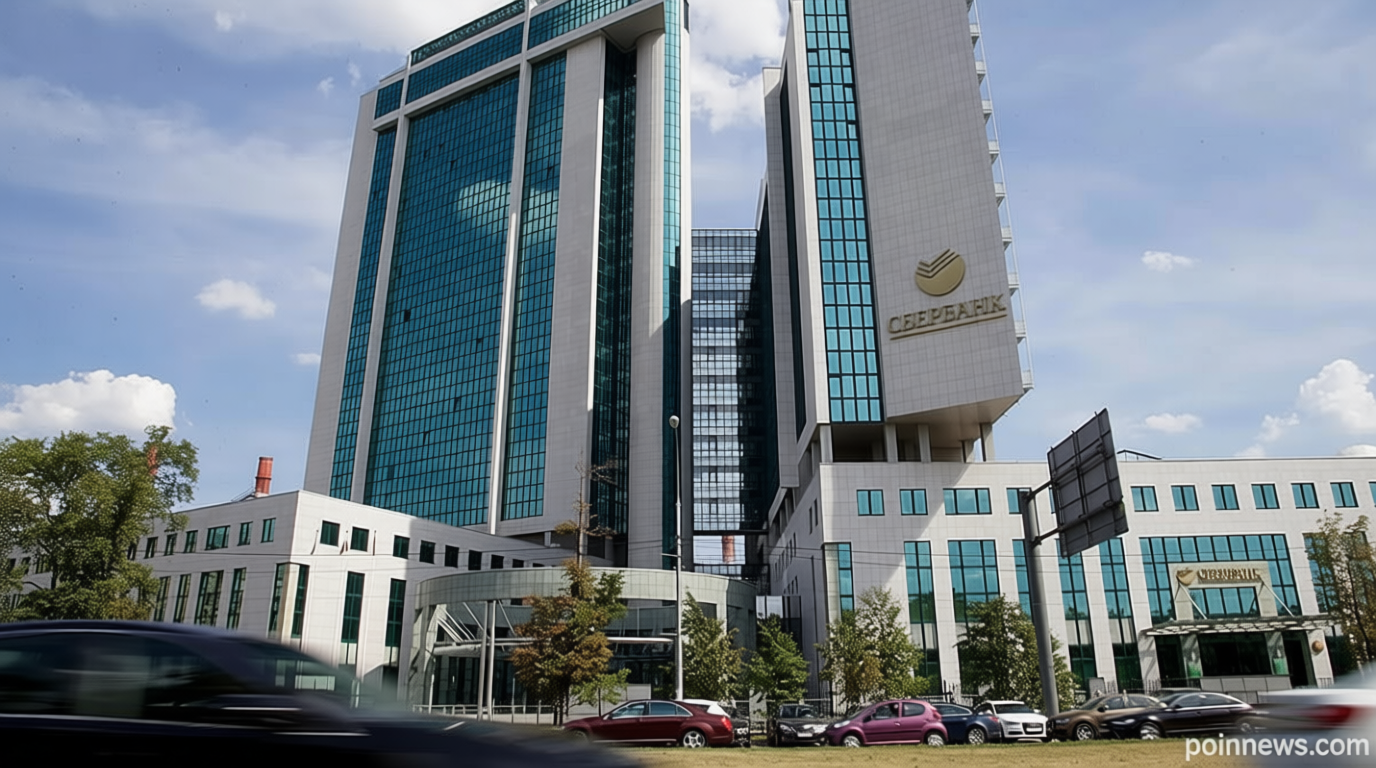
The original version of the law, introduced in August 2024, focused on the Bank of Russia and the state-run Rosinkas agency, responsible for managing cash flows. However, the final iteration broadens its reach to include Sberbank, the country’s largest financial institution, and the Federal State Unitary Enterprise Main Centre for Special Communications. These additions underscore the Kremlin’s intent to create a more comprehensive defense network, leveraging the logistical resources of the banking sector to counter drone threats.
Expert Analysis on the Growing Drone Threat
Thomas Withington, an associate fellow at the Royal United Services Institute in London, explained to AP that the law may signal a decline in Russia’s ability to defend itself against Ukrainian drone operations. “Military-level drone defense capabilities are failing, because if they were working you wouldn’t need to do that,” he noted. This assessment aligns with reports indicating that Ukrainian drones have grown more sophisticated, enabling them to strike targets far beyond the frontlines, including regions like the Caspian Sea and western Siberia.
According to analysis by the Kyiv Post, the number of drone attacks on Russian territory has surged sharply in 2026. By early 2026, these strikes were occurring at a rate of approximately four per night, doubling the previous pace observed in late 2025. Such swarms, often consisting of 100 to 200 drones, have forced Moscow to adapt its strategies. The bill is designed to reduce the burden on security services, allowing banks to play a proactive role in safeguarding their assets from aerial threats.
The law’s practical implications remain unclear, as the details of implementation have not been fully specified. Mass deployment of electronic warfare equipment across banking institutions would require substantial coordination and resources. Additionally, training employees to operate this technology efficiently poses a challenge, particularly given the current limitations of Russia’s defense systems. With the war intensifying, the bill may serve as a temporary solution to address gaps in coverage, but its long-term effectiveness is yet to be determined.
Strategic Shift in Moscow’s Defense Approach
As drone attacks become more frequent, the Kremlin has acknowledged its vulnerabilities, a departure from earlier claims of unassailable military strength. This new framework represents a strategic adjustment, as Russia seeks to mitigate risks to its economic centers. The authors of the bill emphasized the need to protect valuables in transit, including precious metals and classified documents, which are often targeted during strikes on financial hubs.
While Russian banks have not been primary targets in the war’s first four years, the recent uptick in drone activity has raised concerns. With strikes now reaching remote areas, the threat to financial institutions has become more pronounced. The law aims to position banks as frontline defenders, reducing reliance on military assets and enabling quicker responses to emerging threats. However, critics argue that the lack of specificity could lead to confusion or misapplication of the powers.
As the war enters its fifth year, the Russian military has struggled to keep pace with Ukrainian innovations in drone technology. This has led to a situation where civilian entities are being integrated into the defense effort, a move that may also influence public perception. By involving non-military personnel in drone interception, the Kremlin seeks to demonstrate a collective effort against the enemy, potentially softening the impact of repeated failures in military operations.
Impact on Russian Society and Perception of the War
The law’s implementation could have broader implications beyond military strategy. By assigning defensive duties to bank employees, Moscow may inadvertently highlight the growing visibility of its war’s consequences to ordinary citizens. This could challenge the Kremlin’s narrative of military success, as the public witnesses firsthand the vulnerabilities of critical infrastructure.
Moreover, the bill’s scope extends the responsibility of drone defense to sectors traditionally considered less militarized. This shift reflects the urgency of the situation, as attacks on Russian territory have intensified. The Federal State Unitary Enterprise Main Centre for Special Communications, a key player in the country’s communication networks, is now included in the framework, signaling a more integrated approach to security.
While the law is framed as a response to escalating drone threats, it also raises questions about the effectiveness of Russia’s overall defense strategy. The need for such measures highlights the strain on the military and the necessity for alternative solutions. As the bill awaits approval from the Federation Council and a presidential signature, its success will depend on how well it addresses the challenges of drone warfare while maintaining operational clarity.
Legacy of the War and Future Challenges
With the war’s fifth year underway, the Russian military has faced mounting difficulties in countering Ukrainian advancements. Drone attacks, once confined to specific regions, now threaten a wide range of locations, from industrial zones to strategic points in the east. This has prompted a reevaluation of defensive priorities, with the banking sector emerging as a critical player in the effort to protect vital resources.
Despite the law’s expansion, the question remains whether it will be sufficient to counter the growing sophistication of Ukrainian drone technology. The Kyiv Post’s analysis suggests that the rate of attacks has increased dramatically, indicating a need for more robust measures. The inclusion of banks in this defense framework may also serve as a symbolic gesture, reinforcing the idea that all sectors of Russian society are involved in the war effort.
As the bill progresses through legislative stages, its implementation will be closely watched. The ability of bank employees to intercept drones could set a precedent for civilian involvement in military operations, potentially reshaping Russia’s approach to defense. However, the challenges of training personnel and maintaining operational efficiency will determine the law’s impact on the ongoing conflict.
In summary, this legislative move reflects a broader trend in Russia’s strategy to adapt to the evolving nature of warfare. By empowering bank workers with drone defense capabilities, the Kremlin aims to address immediate threats while also signaling a shift in how it perceives and responds to the war. The law’s success will hinge on its ability to integrate these new powers into the existing defense structure, ensuring that both military and civilian actors can effectively protect Russian interests.