Trump and Sánchez meet at World Cup final after nearly two years of diplomatic tensions
Trump and Sánchez Meet at World Cup Final After Two Years of Diplomatic Strain Trump and Sánchez meet at World - At the 2026 FIFA World Cup final in New

Trump and Sánchez Meet at World Cup Final After Two Years of Diplomatic Strain
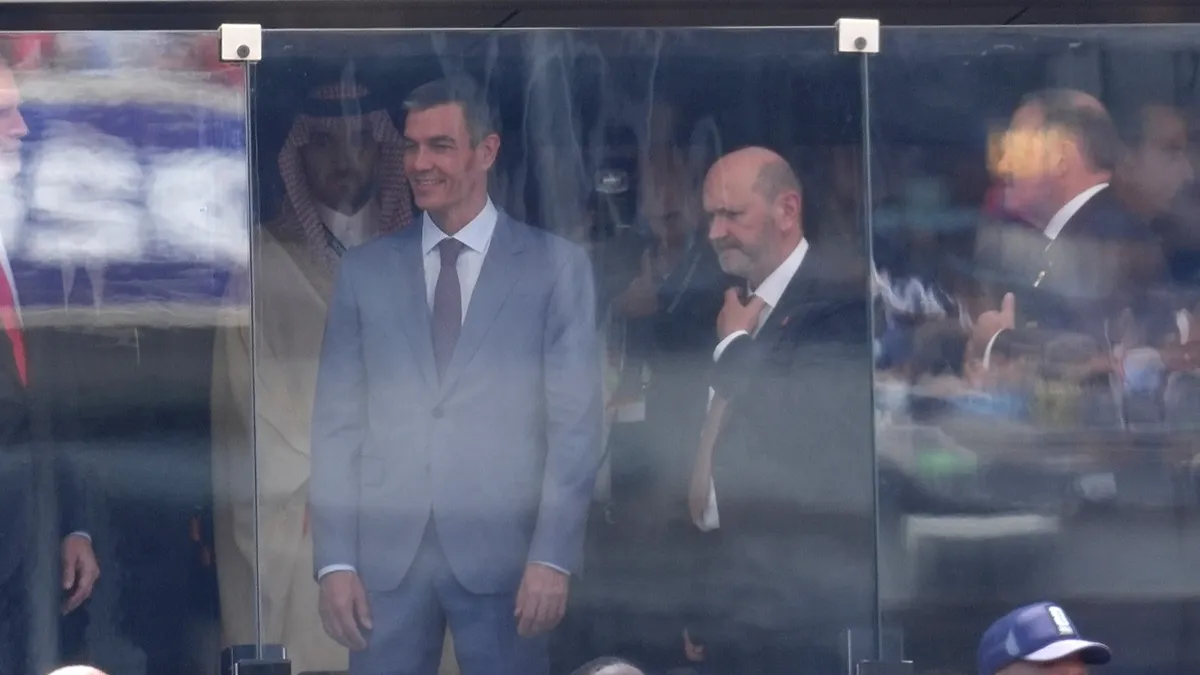
Poinews.com – At the 2026 FIFA World Cup final in New Jersey, a notable moment occurred when U.S. President Donald Trump and Spanish Prime Minister Pedro Sánchez reunited, signaling a thaw in their nearly two-year diplomatic standoff. The historic meeting took place in the VIP section of MetLife Stadium as Spain competed against Argentina for the championship title. This encounter, widely seen as a symbolic gesture, came after months of unresolved tensions over defense spending and geopolitical alignments. While the focus of the event was the football match, the political significance of the meeting quickly became a focal point for global observers.
Rekindling Ties Amid NATO Commitments
Despite their public disagreements, the meeting between Trump and Sánchez was facilitated by recent developments in their bilateral relationship. Spain’s increased defense spending, following commitments made at the NATO summit in Ankara, eased some of the friction that had previously characterized their interactions. Trump, who once called Spain a “lost cause” during a heated exchange, appeared to soften his stance, while Sánchez reiterated Madrid’s dedication to meeting NATO’s targets. The leaders’ presence at the World Cup final was interpreted as a strategic move to demonstrate unity between the U.S. and Spain, even as broader issues remained unresolved.
“What matters to me is not who presents it, but who receives it.”
Sánchez’s remarks before the meeting highlighted the political calculus at play. He used an interview with Spain’s public broadcaster RTVE to reaffirm the importance of the U.S.-Spain alliance, framing the World Cup event as a platform to showcase diplomatic progress. The prime minister also chose to avoid direct criticism of the event’s presentation, focusing instead on the significance of the match as a unifying symbol for both nations. Trump, meanwhile, praised Sánchez’s leadership and expressed hope that the World Cup would serve as a bridge for improved relations.
Argentina’s Absence and the Shadow of Tensions
Argentina’s President Javier Milei did not attend the final, an absence that added intrigue to the event. Milei cited personal superstitions as his reason for staying away, a claim that sparked debate among analysts. Trump, however, took the opportunity to commend Milei as a “friend” and acknowledged Argentina’s strong football tradition, noting that “It’s hard to bet against Messi.” This light-hearted remark contrasted with the more serious diplomatic discussions taking place behind the scenes, underscoring the dual nature of the meeting—both a celebration of sport and a chance to address geopolitical concerns.
The core of the Trump-Sánchez diplomatic rift has been Spain’s defense budget, which had not met NATO’s 5% GDP target for military expenditure. Sánchez argued that the goal was “unreasonable and counterproductive,” while Trump had previously criticized Madrid for its spending habits. This disagreement, however, did not prevent the leaders from engaging in a cordial exchange at the World Cup. Their meeting was seen as a positive sign, with analysts suggesting that the event provided a neutral ground for resolving lingering disputes, such as those over the Gaza conflict and the U.S.-Iran standoff.
Broader Implications for U.S.-Spain Relations
While the meeting at the World Cup final was a brief but meaningful gesture, it reflected the broader challenges in U.S.-Spain relations. The two nations have had differing views on international issues, including the Israel-Gaza conflict, where Spain’s designation of Israel’s actions as genocide contrasted with the U.S. position. Additionally, Spain’s support for the U.S. during the Iran crisis, including its invocation of defense pacts to limit military base use, had further strained their relationship. The World Cup encounter, though brief, offered a rare opportunity to reset the narrative and focus on shared interests rather than divergent policies.
As the final unfolded, the political implications of Trump and Sánchez’s meeting were evident. Their presence at the event not only highlighted the importance of sports diplomacy but also signaled a willingness to engage despite past disagreements. The atmosphere in MetLife Stadium, filled with anticipation and national pride, provided a fitting backdrop for their reconciliation. While the football match itself was the primary attraction, the leaders’ interaction added a layer of intrigue, reminding the world that international relations often find unexpected stages on the global stage.
Legacy of the Encounter
The meeting between Trump and Sánchez at the World Cup final is likely to be remembered as a turning point in their diplomatic relationship. It demonstrated that even in the face of longstanding disagreements, high-level engagement remains possible. For Spain, the encounter was a chance to reaffirm its commitment to NATO and its alliance with the U.S., while for Trump, it was an opportunity to restore a sense of partnership after months of friction. The World Cup, in this context, served as more than just a sporting event—it became a symbol of renewed cooperation between two nations with a complex relationship.