Planned 1.7 million satellites ‘devastating’ for astronomy by making night sky brighter
Planned 1.7 Million Satellites Threaten Astronomy with Bright Night Skies Planned 1 7 million satellites devastating - With the planned deployment of over 1.7

Planned 1.7 Million Satellites Threaten Astronomy with Bright Night Skies
Poinews.com – With the planned deployment of over 1.7 million satellites, the field of astronomy faces a significant challenge as these orbital objects begin to brighten the night sky. The European Southern Observatory (ESO) has highlighted that the growing number of satellites, particularly those in low Earth orbit, could severely impact scientific observations by creating artificial light that interferes with the clarity of the cosmos. A recent study published in Astronomy & Astrophysics warns that this surge in satellite activity might make the night sky so bright that it undermines the ability to study celestial objects effectively.
Projected Satellite Swarms and Their Impact
As companies like SpaceX and Reflect Orbital push forward with ambitious satellite constellations, the number of artificial objects orbiting Earth is set to increase dramatically. SpaceX’s Starlink project, for instance, aims to launch more than 4,000 satellites by 2028, while Reflect Orbital’s initiative plans to deploy 50,000 satellites with reflective surfaces. These planned 1.7 million satellites, combined with other space-based projects, are expected to create a dense network of luminous objects that could interfere with both amateur and professional astronomical research. The ESO argues that the cumulative effect of such satellite swarms could lead to long-term damage for optical astronomy.
Light Pollution and Observational Challenges
One of the most pressing concerns is the effect of light pollution caused by the planned 1.7 million satellites. Satellites equipped with reflective materials, such as those in Reflect Orbital’s “Cinnamon” project, could become as bright as Venus when illuminated by the sun. ESO astronomer Olivier Hainaut explained,
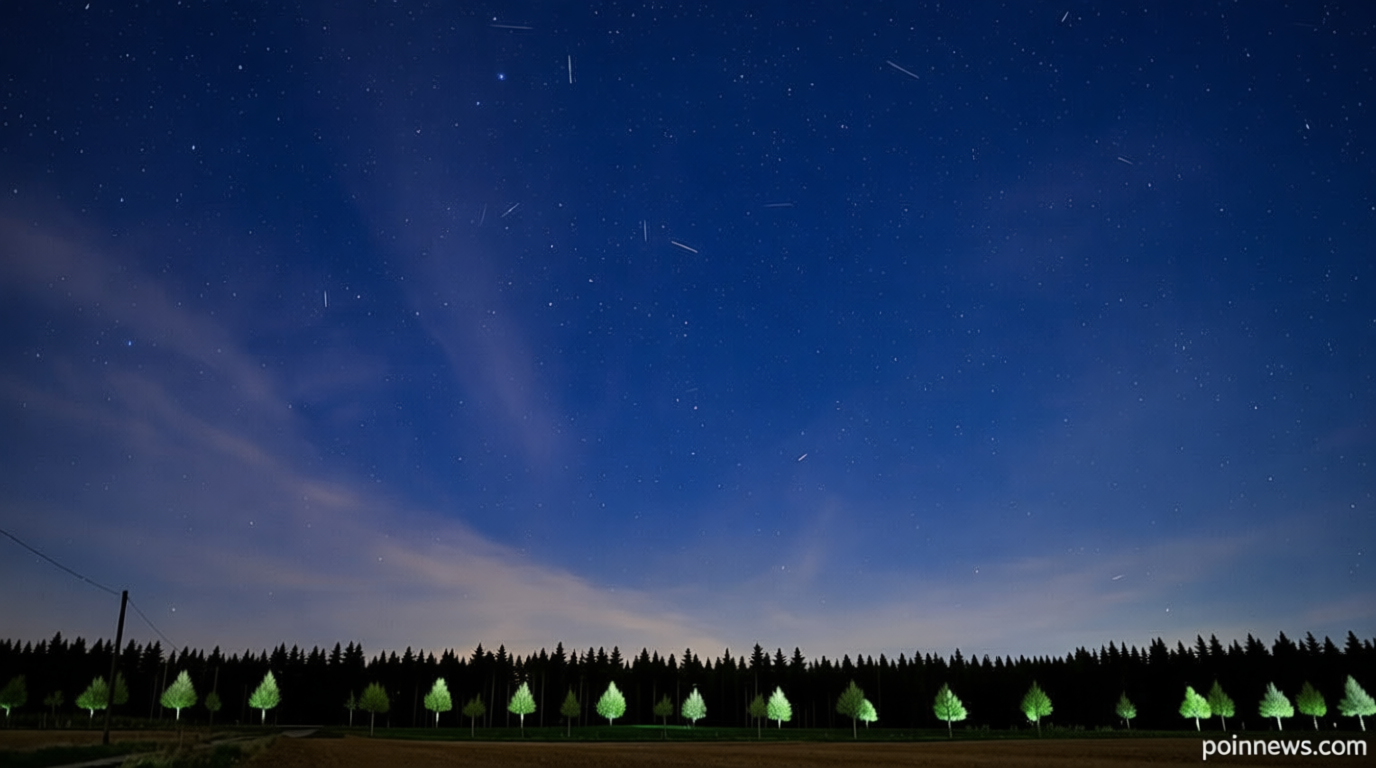
“When a satellite crosses our field of view, it leaves a bright streak on the image, effectively obscuring whatever lies beyond it.”
This phenomenon poses a direct threat to ground-based telescopes, which rely on clear, dark skies to capture high-quality data. The increase in satellite numbers could make it difficult for astronomers to observe faint celestial objects, such as distant galaxies or exoplanets.
Broader Environmental and Ecological Concerns
The challenges posed by the planned 1.7 million satellites extend beyond astronomy. Light pollution from these satellites is disrupting the natural rhythms of nocturnal animals, affecting their behavior and survival. Additionally, the environmental cost of manufacturing and launching nearly two million satellites is rising, with concerns about resource consumption and carbon emissions. The risk of space debris accumulation—known as Kessler syndrome—also looms large, as collisions between satellites could create a cascading effect of orbital clutter. Even the most advanced telescopes, such as the Vera C. Rubin Observatory’s massive camera, may struggle to function optimally in this new light-polluted environment.
Global Implications and Technological Progress
While the planned 1.7 million satellites represent a major technological advancement, their impact on astronomy raises questions about the balance between innovation and scientific preservation. These satellites are designed to support global internet access, enhance communication technologies, and enable real-time data transmission. However, their brightness and density could diminish the effectiveness of optical telescopes, which are crucial for studying the universe in detail. The ESO has called for stricter regulations to ensure that these satellites are engineered to minimize their interference with astronomical research, emphasizing the need for collaboration between industry and the scientific community.
Efforts to mitigate the effects of the planned 1.7 million satellites include the development of dimming technologies and adjusting satellite orbits to reduce light pollution. Some companies are exploring solutions such as using non-reflective coatings or limiting the number of satellites visible at any given time. Despite these measures, the sheer scale of the planned 1.7 million satellites means that their collective brightness could overshadow natural starlight. This issue is not limited to a single country or organization, as multiple nations and private entities are contributing to the growing satellite population. The long-term consequences of this expansion could reshape how we observe the universe, necessitating a global approach to address the problem.