UK Typhoon fighter jets to fly ‘defensive’ missions to help protect Saudi Arabia from Houthi attacks
The United Kingdom will send additional military support to Saudi Arabia as Houthi attacks from Yemen intensify, with Royal Air Force Typhoon fighter jets set

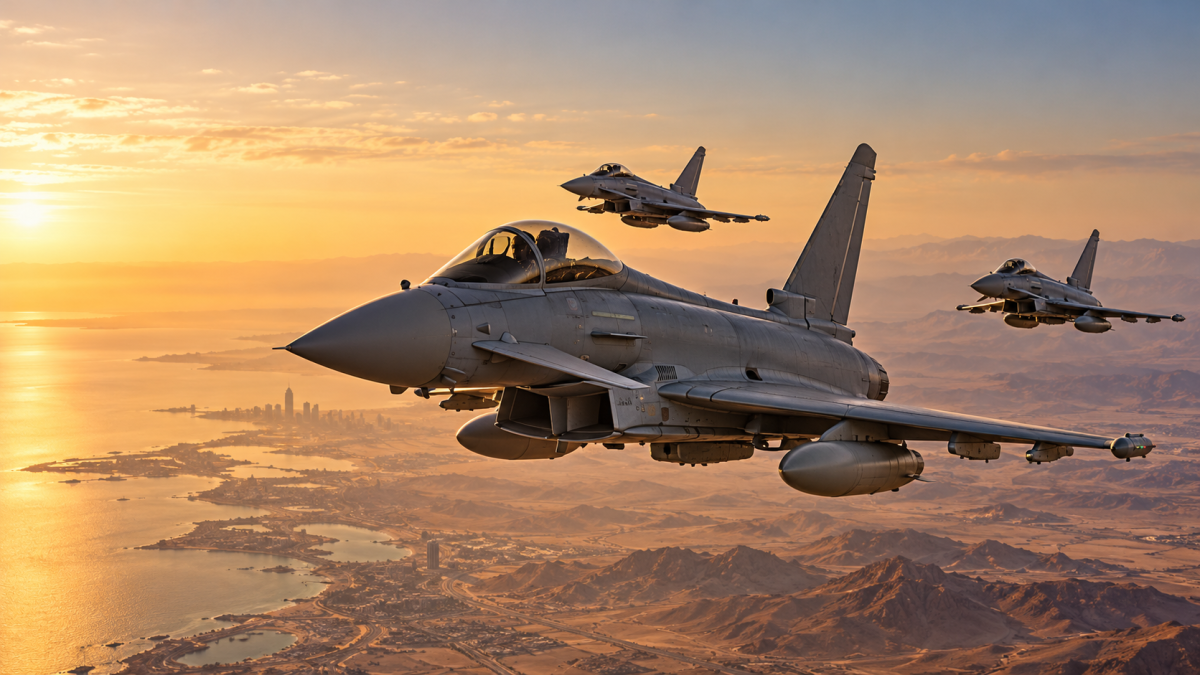
Table of Contents
Britain to bolster Saudi air defence with RAF Typhoon missions
Poinews.com – The United Kingdom will send additional military support to Saudi Arabia as Houthi attacks from Yemen intensify, with Royal Air Force Typhoon fighter jets set to carry out defensive counter-air operations over the kingdom.
The Ministry of Defence announced the move on Tuesday, saying the missions are intended to help defend Saudi cities and vital national infrastructure from airborne threats. The deployment comes after a series of missile and drone attacks that have increased regional tensions and raised concern over civilian safety and commercial transport links.
“These aircraft will operate in a defensive role and will not conduct offensive strikes against the Houthis.”
The distinction is central to the British plan: the Typhoons are being assigned to protective air-defence duties rather than attacks inside Yemen. Their role will focus on helping Saudi forces respond to aerial threats targeting populated areas, airports and other strategically important sites.
Transport aircraft and advisers included
Britain’s contribution will extend beyond fighter aircraft. An RAF A400M transport plane will be made available to help move defence equipment around Saudi Arabia, while British military advisers will assist Saudi staff officers.
That combination of aircraft, logistical support and advisory personnel is designed to reinforce Saudi Arabia’s ability to manage the immediate security challenge. The announcement did not set out a timetable for the deployment or specify how long the support would remain in place.
British Defence Secretary Wes Streeting condemned the Houthi campaign, describing the attacks as a serious danger to the wider region. He pointed to strikes on civilian aviation facilities that have resulted in large numbers of casualties.
“Absolutely despicable and dangerous for the region.”
Streeting called the recent escalation intolerable, highlighting the human consequences of attacks directed at civilian locations. His comments reflect the concern that continued strikes could place more people at risk and further destabilise an already volatile part of the Middle East.
Rising attacks after blockade declaration
Saudi Arabia has faced increasing missile attacks in recent weeks from the Houthi movement, which controls significant territory in Yemen. The Saudi-led coalition was established in 2015 in support of Yemen’s internationally recognised government, placing the kingdom at the centre of a conflict that has persisted for more than a decade.
In July, the Houthis declared a naval blockade of Saudi Arabia. Since then, attacks have expanded in frequency and scope, affecting Saudi cities as well as shipping. The threat to maritime activity adds another dimension to the confrontation, given the importance of regional sea routes for trade, energy supplies and international shipping.
The latest British commitment is therefore aimed at a security environment that reaches beyond a single incident or target. Air-defence operations can be used to protect urban areas and key facilities, while transport and advisory support can help sustain the equipment, planning and coordination needed during a period of heightened alert.
Airport attack underscores civilian risk
The consequences of the campaign were made stark earlier this month when a Houthi attack struck Riyadh’s King Khalid International Airport. Saudi Arabia’s General Authority of Civil Aviation said 13 people were killed and more than 300 others were injured.
The attack drew attention to the vulnerability of civilian airports during the conflict. Aviation hubs are not only points of travel; they also support emergency services, trade, business activity and links between communities. Damage or disruption at such facilities can have effects far beyond the immediate site of an attack.
British officials have framed the new assistance as a response to precisely that danger. By limiting the Typhoons’ task to defensive missions, London is presenting the deployment as a measure to protect Saudi territory and civilian infrastructure while avoiding a direct offensive role against Houthi forces.
The development also illustrates how the Yemen conflict continues to shape security decisions across the region. What began as a domestic struggle has repeatedly affected neighbouring states, international shipping and civilian travel. With attacks continuing and Saudi targets facing renewed pressure, air defence has become an increasingly prominent part of the response.
For Saudi residents, the practical purpose of the additional British support is protection against further aerial attacks. For the wider region, the deployment signals that international partners view the recent escalation as a significant threat to stability, civilian safety and the security of critical infrastructure.
Related Reading
Frequently Asked Questions
What is UK Typhoon fighter jets to fly defensive?
UK Typhoon fighter jets to fly defensive is the main topic of this guide. The article explains the context, practical details, and next steps readers should understand.
Why does UK Typhoon fighter jets to fly defensive matter?
UK Typhoon fighter jets to fly defensive matters because readers are looking for a useful answer, not just a short summary. Good content should match search intent and help them decide what to do next.