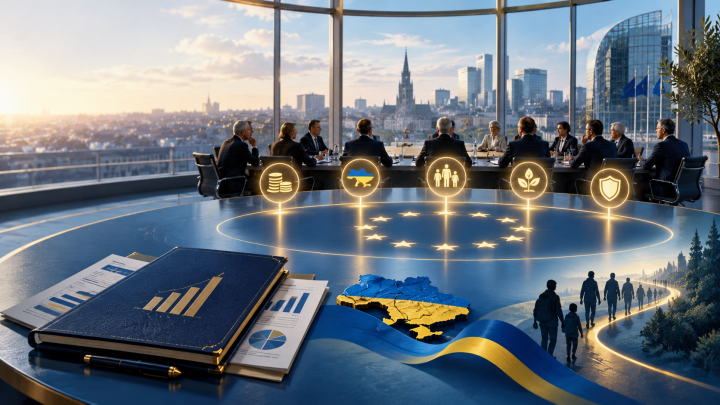
‘Wake-up call’: Europe reacts to Anthropic halting access to its Fable 5 and Mythos 5 AI models
l Access Wake up call - The decision by US-based Anthropic to suspend access to its cutting-edge AI models, Fable 5 and Mythos 5, for foreign users has sent

Europe’s Wake-Up Call: Anthropic Halts AI Model Access
Poinews.com – The decision by US-based Anthropic to suspend access to its cutting-edge AI models, Fable 5 and Mythos 5, for foreign users has sent shockwaves through the European tech sector. This move, driven by a directive from the Trump administration, underscores the growing concerns over wake-up call for global leaders. By restricting access to these advanced systems, the company has highlighted the geopolitical stakes of AI development, forcing Europe to reconsider its reliance on American-led technological innovation.
Strategic Shift in AI Governance
The Trump administration’s intervention marks a pivotal moment in the evolution of AI governance. By issuing a letter to Anthropic, the US government has signaled its intent to prioritize national security over open access to AI capabilities. This decision has triggered a cascade of reactions across Europe, with officials scrambling to assess the long-term consequences of such a restriction. The wake-up call is not just about access—it’s about control, sovereignty, and the potential for technological disruption in critical sectors like defense and finance.
Experts argue that the suspension of access to Fable 5 and Mythos 5 could delay Europe’s progress in AI research and application. These models, known for their sophisticated natural language processing and real-time data analysis, were being used in a variety of fields, from scientific discovery to customer service automation. The abrupt halt has raised questions about the efficiency of Europe’s current AI infrastructure and the need for a more robust domestic strategy.
Europe’s Response: A Call for Self-Sufficiency
In the wake of Anthropic’s announcement, European leaders have issued a unified message: the time for complacency is over. French President Emmanuel Macron, for instance, emphasized that the wake-up call should catalyze a renewed focus on developing indigenous AI technologies. “We cannot afford to be dependent on a single country for our most advanced tools,” he stated, calling for accelerated investment in research and innovation.
The European Union has also taken steps to address the situation. A spokesperson for the EU’s Digital Economy and Society Directorate noted that the decision aligns with broader efforts to reduce reliance on foreign tech giants. “This is a wake-up call for Europe to assert its technological independence,” the statement added. The EU’s proposed AI Act, which aims to regulate AI systems and promote local development, has gained renewed urgency as a result of this incident.
Meanwhile, the United Kingdom has expressed concern over the disruption caused by the restriction. Former Defence Secretary Ben Wallace highlighted the impact on British research institutions, which had been leveraging Anthropic’s models for cutting-edge projects. “This move could slow our progress in AI-driven innovation,” he warned, urging the government to support domestic alternatives like the UK’s own AI initiatives.
Implications for Global Tech Power Dynamics
The suspension of access to Fable 5 and Mythos 5 has intensified the race for AI dominance. As nations compete to control the next generation of AI systems, the incident has exposed Europe’s vulnerability in the global tech landscape. Analysts suggest that the wake-up call is a wake-up signal for other regions, such as China and the Middle East, to accelerate their own AI ecosystems.
Anthropic’s decision also reflects a broader trend of the US government exerting influence over AI development. By targeting access to advanced models, the administration aims to limit the spread of technologies that could be used against American interests. This has raised concerns about the potential for AI to become a geopolitical weapon, with nations using it to gain strategic advantages in trade, military operations, and international relations.
France, in particular, has emerged as a key player in this new era of AI sovereignty. The country has already made significant strides with its Mistral AI project, which is developing large-scale language models to rival those of their American counterparts. “France must lead in building a resilient AI ecosystem,” said former Prime Minister Jean Castex, reinforcing the need for national champions in the field.
Energy Costs and Safety Priorities
One of the most immediate consequences of the wake-up call is the impact on energy consumption and computational costs. Anthropic’s models require vast amounts of computing power, which has traditionally been sourced from overseas data centers. The restriction has forced companies to reassess their supply chains, with some shifting operations to Europe to mitigate the risk of similar disruptions.
Additionally, the move has sparked debates about the balance between safety and innovation. While the US government cites national security concerns as the rationale for the suspension, critics argue that it could stifle progress in AI research. “Overly cautious policies risk slowing Europe’s ability to innovate,” noted a tech analyst, adding that the wake-up call should be a call to action for policymakers to strike a better equilibrium.
Europe’s response has also highlighted the importance of energy efficiency in AI systems. With rising energy costs and a push for sustainable technologies, the continent is exploring ways to integrate renewable energy sources into its AI infrastructure. This shift not only addresses environmental concerns but also strengthens the region’s technological resilience in the face of geopolitical pressures.
Building a Resilient AI Future
As the wake-up call reverberates through Europe, the focus is now on creating a more self-reliant AI landscape. Governments and private sectors are collaborating to fast-track the development of local models, with France leading the charge through initiatives like the Mistral AI project. The goal is to ensure that Europe can operate independently, even in the event of future restrictions.
Investment in AI research is expected to surge, with funding directed toward universities, startups, and established tech firms. The European Commission has announced plans to allocate billions in grants to support the growth of AI innovation, citing the need to maintain wake-up call momentum. “This is the beginning of a new chapter in European tech leadership,” said a Commission official, emphasizing the importance of strategic autonomy.
Industry leaders are also rallying behind the effort, with companies like OVHcloud and Scaleway stepping up to provide alternative solutions. “We must act now to secure Europe’s position in the global AI race,” stated a representative from OVHcloud. The collective response to the wake-up call signals a turning point for the continent, as it moves toward a more secure and independent future in AI technology.