Video. Philippines earthquake: Residents clear debris amid concerns over aftershocks
Philippines Earthquake: Debris Clearing Amid Aftershock Fears Philippines earthquake - A powerful Philippines earthquake struck on 9 June, shaking the region

Philippines Earthquake: Debris Clearing Amid Aftershock Fears
Poinews.com – A powerful Philippines earthquake struck on 9 June, shaking the region with a magnitude 7.8 tremor near Mindanao. The disaster disrupted daily life, triggering emergency operations as at least 41 people lost their lives and over 450 were injured. Thousands of families evacuated their homes, with rescue teams racing to stabilize the situation. The quake, the strongest of the year, initially raised fears of a tsunami across the Pacific, but alerts were soon canceled as the threat diminished.
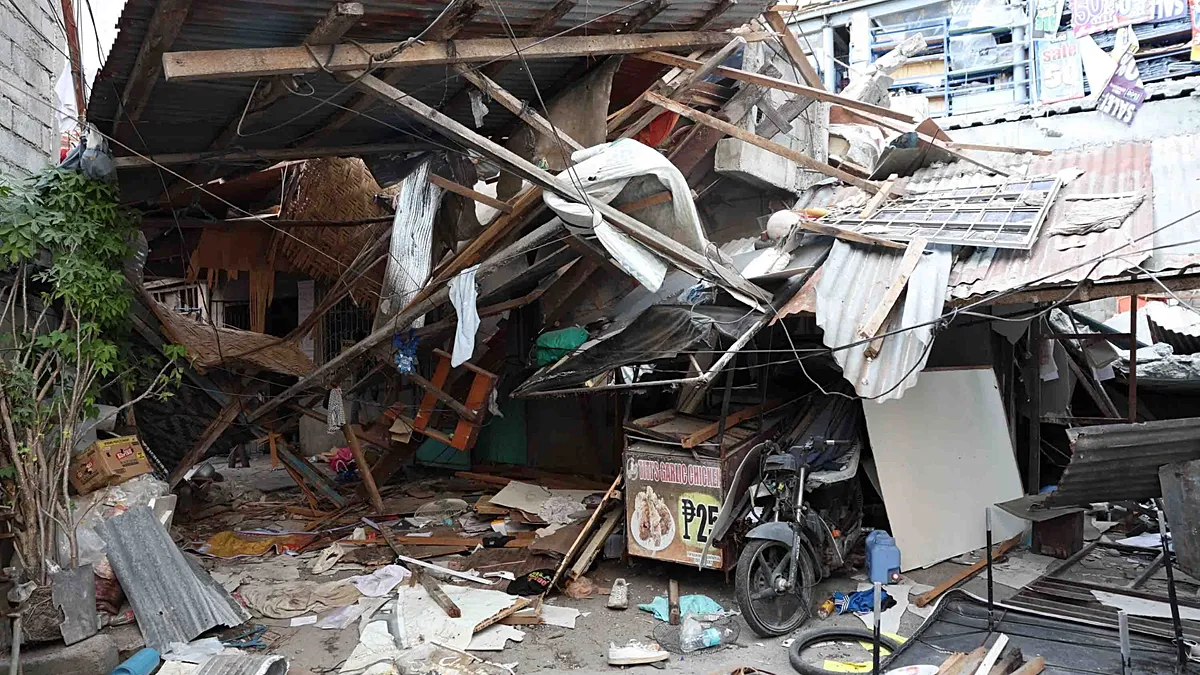
Widespread destruction was reported across southern Mindanao, with General Santos City bearing the brunt of the devastation. Collapsed buildings, shattered infrastructure, and blocked roads left communities scrambling to clear debris and restore basic services. Engineers meticulously surveyed damaged structures for cracks, partial collapses, and potential hazards, while utility companies worked to restore power and water supplies. Despite efforts, some areas remained isolated, complicating relief operations and increasing the risk of secondary injuries from unstable rubble.
Impact on Education and Health Services
The Philippines earthquake coincided with the start of the academic year, disrupting the education of millions of students. Over 3.2 million children were affected, with more than 6,200 public and private schools forced to close temporarily. In Sarangani, a provincial hospital had to relocate patients outdoors to avoid damage from subsequent tremors, highlighting the strain on healthcare resources. Authorities warned that the region’s infrastructure, including schools and hospitals, would require extensive repairs, while the number of aftershocks—exceeding 450 since the main event—remained a constant threat to ongoing recovery efforts.
“The ground split like a crack in the earth, and walls crumbled as if they were made of sand,” recalled a local resident. “We had to run for our lives, but we’re doing everything we can to rebuild and keep our families safe.”
Residents took matters into their own hands, venturing into the debris-strewn streets to salvage belongings and assist in cleanup. However, the threat of aftershocks kept many cautious, with some property owners warning that buildings near fault lines might need to be torn down entirely. The Philippines earthquake’s aftermath underscored the resilience of the community, even as concerns over future tremors lingered. Emergency shelters were set up, and aid workers distributed supplies to those displaced by the disaster.
Community Efforts and Ongoing Challenges
Amid the chaos of the Philippines earthquake, local volunteers and families joined forces to clear debris and restore order. In areas like General Santos City, neighborhoods transformed into makeshift recovery zones as residents worked alongside rescue teams to search for survivors and assess damage. The physical and emotional toll of the event was evident, with many describing the sight of collapsed structures and scattered personal items as a haunting reminder of the quake’s impact.
Authorities emphasized the importance of community involvement in the recovery process, noting that sustained efforts would be critical to rebuilding homes and infrastructure. However, the frequency of aftershocks, including several with magnitudes between 6.5 and 6.7, continued to challenge progress. These secondary quakes forced rescuers to pause operations in certain zones, creating a cycle of damage and repair that stretched across days. The Philippines earthquake also disrupted transportation networks, leaving some areas without access to essential resources for extended periods.
While the immediate death toll remains at 41, the human cost of the disaster extends beyond statistics. Families faced the emotional burden of losing loved ones, homes, and livelihoods. In many cases, parents took on the role of first responders, searching for children in rubble or organizing relief drives in their neighborhoods. The resilience shown by the people of Mindanao, despite the scale of destruction, has become a symbol of hope in the face of adversity. Yet, the Philippines earthquake has left a lasting mark on the region’s landscape and psyche.