French presidential race: De Villepin set to run, Faure enters socialist primary
The French presidential race is entering a phase where speculation gives way to formal commitments. Two developments announced within the same weekend

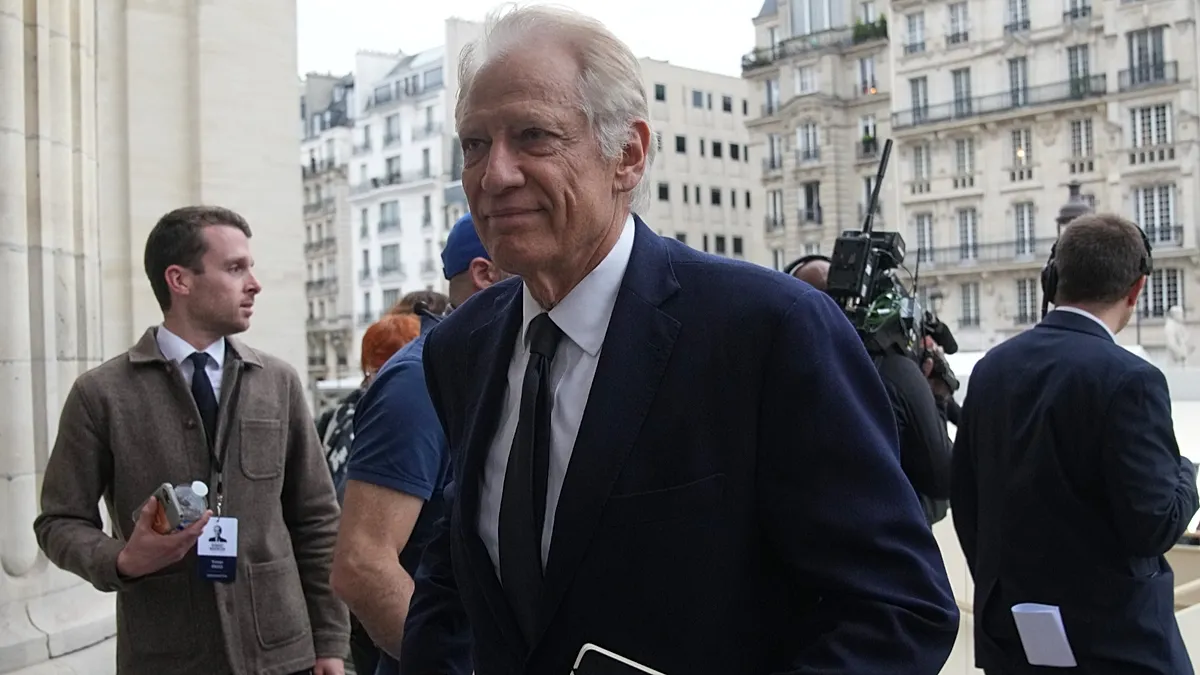
Table of Contents
French Presidential Race: Faure and De Villepin Step Up
Poinews.com – The French presidential race is entering a phase where speculation gives way to formal commitments. Two developments announced within the same weekend reshaped the field: the Socialist Party’s first secretary confirmed he will contest the party’s internal selection, while a former head of government signalled that his own candidacy is a matter of timing rather than doubt. Both moves arrive with the 2027 ballot still more than a year distant, yet they already constrain the strategic options available to every other actor in the contest.
Faure Commits to the Socialist Primary
Olivier Faure made his intention explicit through a message sent to members of his parliamentary group in the small hours between Saturday and Sunday, followed by a televised announcement scheduled for Sunday evening on TF1. As first secretary of the Parti Socialiste, Faure now stands as the principal challenger to Raphaël Glucksmann, who has staked out the lead position within the social-democratic primary.
The stakes of this internal contest extend well beyond party mechanics. Having ceded its historic electoral dominance in every major vote since 2017, the PS must demonstrate it can still field a nationally viable ticket. Faure’s entry is a signal that the party leadership intends to contest the French presidential race on its own terms rather than fold into a broader left coalition or defer to allied movements.
De Villepin Declares Intent, Rejects the Primary Format
Dominique de Villepin, who served as prime minister under Jacques Chirac and now heads the La France Humaniste party, appeared on BFM TV on Sunday to state that he will formally register his candidacy “once the election campaign has begun.” No official filing exists yet, but the language leaves no realistic path to a different conclusion.
More consequential was his dismissal of the primary mechanism itself. Asked about competitive selection processes, de Villepin called them
“not the right way of doing things” and “the latest gimmick for the desperate.”
That verdict carries institutional weight coming from a former head of government with a national party apparatus behind him. It crystallises a recurring tension in French politics: established figures who regard themselves as natural candidates versus the grassroots selection tools that smaller formations depend on to manufacture legitimacy.
Pressure Builds for a Centrist-Right Primary
On Wednesday, more than two hundred elected French politicians co-signed a column in Le Figaro calling for a unified primary across the centrist and right-wing bloc. The stated objective is to produce a single candidate capable of confronting both the far-left and the far-right in the general election. The column marks a sharp escalation in pressure on centrist leadership to accept competitive selection rather than top-down designation.
Gabriel Attal, the Renaissance party’s declared candidate and a former prime minister appointed by President Emmanuel Macron, responded with deliberate ambiguity, noting that he had “never ruled out a primary.” The phrasing threads a needle: appearing open to democratic selection while safeguarding his standing within the party structure.
De Villepin Takes Aim at Philippe
The sharpest barbs in the BFM interview were reserved for Édouard Philippe, leader of the Horizons party and a declared candidate. De Villepin accused Philippe of
“playing into the hands” of Marine Le Pen
through what he termed a form of “one-upmanship” centred on proposals to tighten immigration controls directed at Mayotte, the French overseas department in the Comoros archipelago. The implication is that Philippe’s hardline migration posture functions less as substantive policy than as a tactical manoeuvre to outflank Le Pen on her own terrain.
The backdrop to this exchange is layered. Philippe had been hosted in Tourcoing on Sunday by Gérald Darmanin, the sitting justice minister, for the opening rally of Darmanin’s political movement, Populaires. In mid-August, Darmanin had formally announced his endorsement of Philippe, describing him as a “friend of twenty years” and pledging support in the French presidential race. The Tourcoing event thus marked the public launch of a pairing between a sitting minister and a party leader who together command substantial institutional resources.
Frequently Asked Questions
When will the 2027 French presidential election take place?
The first round of France’s next presidential election is scheduled for spring 2027, with the second round typically held two weeks later. Campaign activity and candidate registration open in the months preceding the vote.
Who are the confirmed candidates so far?
Gabriel Attal (Renaissance) and Édouard Philippe (Horizons) have formally declared. Olivier Faure is entering the Socialist Party primary, and Dominique de Villepin has signalled his candidacy will be filed once the campaign period opens. Raphaël Glucksmann is competing within the socialist primary as well.
What is the role of party primaries in the French system?
Unlike the United States, France has no constitutionally mandated primary system. Parties choose their nominees through internal conventions, primaries, or leadership designation. The current debate over a centrist-right primary reflects pressure to adopt a competitive mechanism, though established figures such as de Villepin have publicly rejected the format.
What is Mayotte’s significance in this debate?
Mayotte is a French overseas department located in the Comoros archipelago. Proposals to tighten immigration controls there became a flashpoint when de Villepin accused Philippe of using the issue tactically to position himself against Marine Le Pen rather than to advance a coherent migration policy.