Suspected Russian shadow fleet oil tanker boarded by EU forces in the Mediterranean
EU naval personnel attached to Operation Irini climbed aboard a suspected Russian shadow fleet oil tanker on Sunday, marking the sixth such interception in

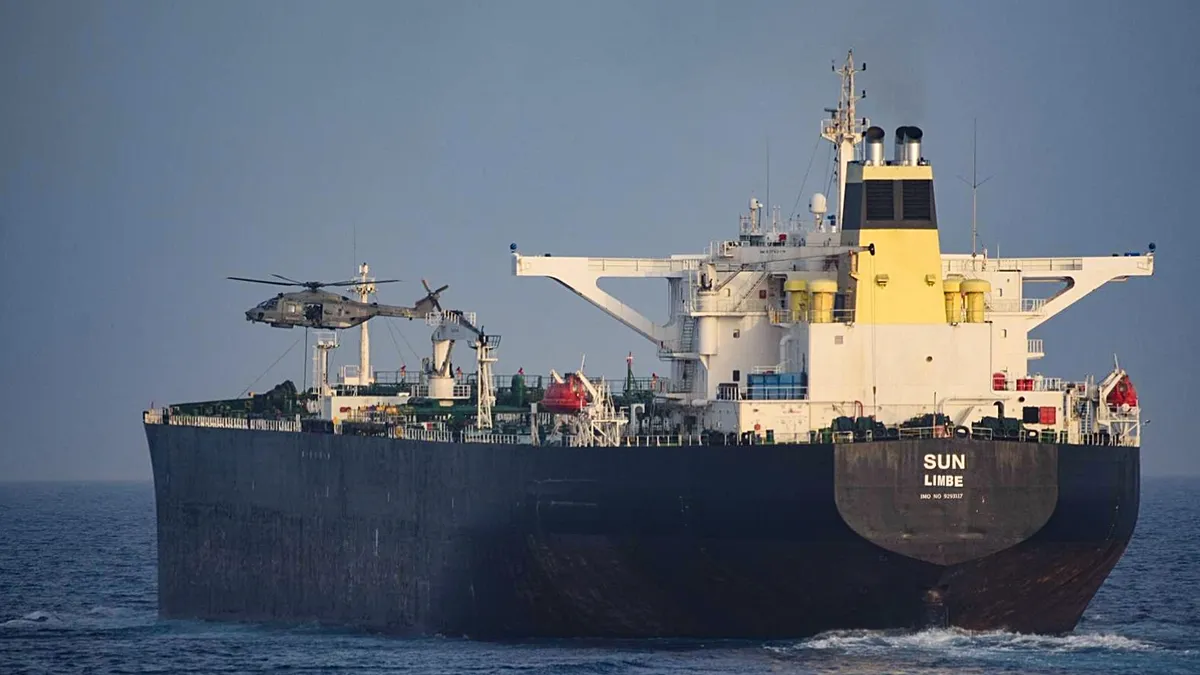
Table of Contents
EU Forces Board Suspected Russian Shadow Fleet Tanker
Poinews.com – EU naval personnel attached to Operation Irini climbed aboard a suspected Russian shadow fleet oil tanker on Sunday, marking the sixth such interception in recent months. The MV Sun was stopped in the Mediterranean under a “flag verification” procedure, a procedural step that lets inspectors confirm whether a vessel’s displayed nationality matches its actual registration.
Kaja Kallas, the EU’s foreign affairs and security policy chief, confirmed the operation in a public statement posted to X. She framed the boarding as part of a sustained effort to sever the revenue streams that keep Russia’s war machine supplied.
“Illegal oil sales from shadow fleet ships are a need lifeline for Russia’s war in Ukraine, and we’ll continue to cut them off,” Kallas wrote.
The statement carried photographs of the boarding in progress. Kallas noted that the MV Sun was the sixth vessel inspected under the campaign in recent months, underscoring the tempo of enforcement operations now running across the basin.
Defence Ministers Convene in Ireland
The timing of the interception is deliberate. Measures targeting the sanctioned tanker network will feature on the agenda when EU defence ministers gather in Ireland on Tuesday. That session is expected to yield coordinated policy responses, potentially including expanded inspection protocols, shared intelligence frameworks among member-state navies, and tighter coordination with allied forces operating in adjacent waters.
Each boarding removes a tanker from the flow of sanctioned crude for days or weeks, disrupting delivery schedules and forcing operators to reroute or secure alternative carriers at premium rates. The Mediterranean has become a theatre of economic warfare, with Western navies applying sustained, overlapping pressure on the same fleet.
A Run of Interceptions Across Multiple Navies
The MV Sun is not an isolated event. In early August, Operation Irini forces executed a comparable mission against the sanctioned tanker MV Toa Payoh. That vessel was stopped by the Italian navy’s frigate Thaon di Revel west of Pantelleria while en route from Cotonou, Benin, toward Istanbul, according to Italy’s Defence Ministry. The stated purpose was again flag verification.
Earlier in June, French President Emmanuel Macron announced that French naval units had intercepted the tanker Deliver off the coast of Sicily, describing the vessel’s conduct as occurring “in violation of maritime law.”
Also in June, British forces conducted a six-hour boarding of the Russian vessel Smyrtos in the English Channel. Royal Marine Commandos worked alongside officers from the National Crime Agency to inspect the ship. Ukraine’s foreign minister subsequently thanked London for its “leadership and decisive action” in the operation.
Together, these incidents illustrate a widening coalition of Western navies applying pressure on the same fleet, often within weeks of one another and sometimes in overlapping geographic zones.
How the Sanctioned Fleet Operates
Western sanctions on Russia’s oil industry effectively bar Moscow from chartering or insuring tankers through conventional Western channels unless specific conditions are met. To circumvent those barriers, Russia has assembled a network of aging vessels operated through layers of corporate ownership spread across multiple jurisdictions, registered under flags of convenience, and often insured by non-Western underwriters.
The result is a fleet that can move crude and refined products to buyers in Asia, the Middle East, and elsewhere while obscuring the true origin of the cargo and the ultimate beneficiary of the sale. Flag verification inspections target precisely this opacity: by confirming the vessel’s actual registration, inspectors determine whether it operates in compliance with international maritime law or exploits a borrowed identity.
FAQ
What is Operation Irini? Launched in March 2020 to enforce the UN arms embargo on Libya, Operation Irini has since expanded its mandate to include countering oil smuggling, collecting maritime intelligence, and monitoring vessel traffic across the Mediterranean.