Mass burials of unidentified victims continue in Nepal as death toll exceeds 1,100 one week after flash floods
Mass burials of unidentified victims continue across Nepal as families conduct symbolic last rites for loved ones lost in the catastrophic flash floods of 26

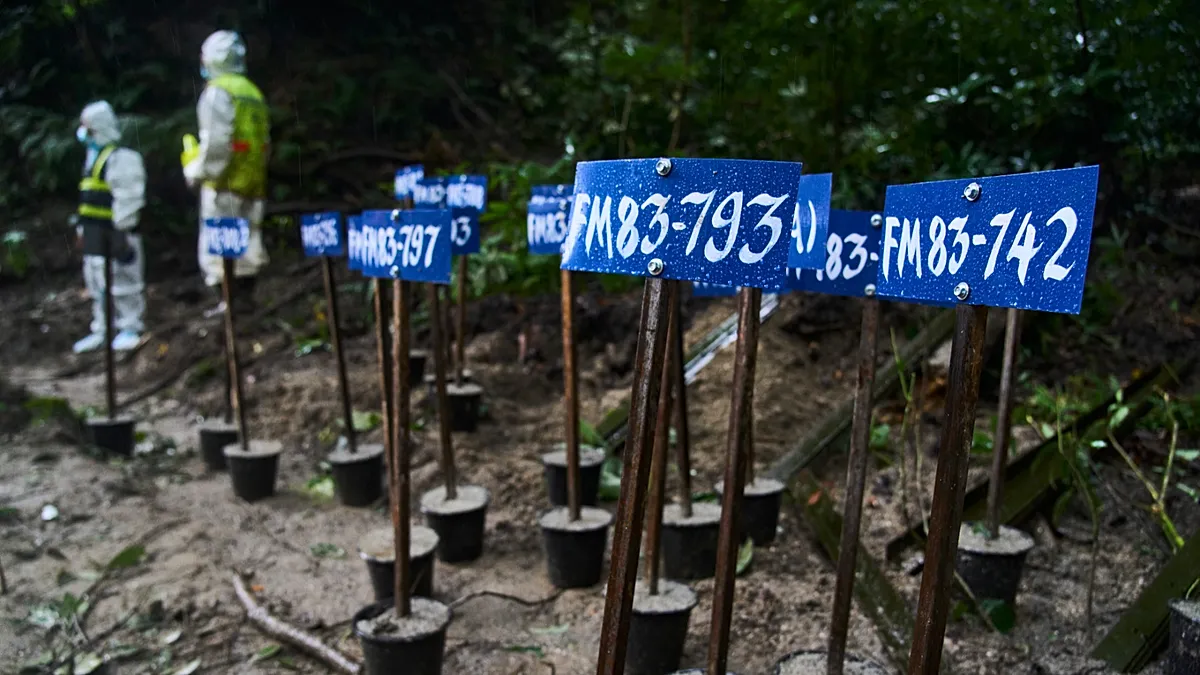
Table of Contents
Mass Burials of Unidentified Victims in Nepal
Poinews.com – Mass burials of unidentified victims continue across Nepal as families conduct symbolic last rites for loved ones lost in the catastrophic flash floods of 26 August. With more than 1,100 confirmed dead and nearly 4,000 still missing, emergency crews have exhausted most accessible search zones. Relatives, unable to recover bodies, have turned to ritual ceremonies to “liberate the souls” of those swept away by the glacial collapse along the China-Nepal border, marking a week of unimaginable grief in the Himalayan region.
Rescue Efforts and the Grief of Missing Families
At funeral sites across the affected districts, grieving relatives performed Hindu rites intended to release the spirits of those presumed dead. Dolma Newar Tamang, standing beside her weeping son, explained the ceremony for her husband, who had been traveling toward China when the wall of ice, rock, and debris struck. “I saw the news and called him,” she recalled. “I called repeatedly, but he never picked up.” A week after the disaster, rescuers maintained cautious optimism, particularly around the tunnel networks of regional hydropower plants where survivors might still be trapped beneath layers of sludge and rubble.
“Miracles do happen. At this point, I do not want to completely give up hope.” — Foreign Minister Shisir Khanal
Teams continued digging, drilling, and blasting through blocked passages, though so far only bodies have been recovered from those tunnels. Prime Minister Balendra Shah framed the catastrophe as evidence that Himalayan risks are escalating in step with climate change. “Climate change is a global contribution, and disaster response is also a global responsibility,” he wrote on Facebook, calling on the international community to share the burden of recovery and reconstruction.
Climate Pressures and the Cost of Reconstruction
Scientists note that the Himalayas—the world’s highest mountain range—are warming faster than the global average, accelerating glacier melt across the range. Glaciers in the broader Himalayan and Hindu Kush systems feed rivers that sustain roughly 240 million people in mountainous areas and an additional 1.65 billion in South and Southeast Asian river valleys. Nepal, a largely rural nation of about 30 million, has contributed minimally to the greenhouse gas emissions driving this warming, yet bears disproportionate consequences. Kathmandu has warned that reconstruction costs could reach “billions of dollars,” straining an economy already operating with limited fiscal headroom and scarce resources to respond to a disaster of this scale.
The mass burials of unidentified victims have also ignited public anger. With mortuaries overflowing, authorities buried hundreds of bodies in mass graves after DNA sampling, a practice that clashed with the religious burial rites of Nepal’s predominantly Hindu population. Families accused the government of disregarding sacred customs and treating the dead as administrative cases rather than departed souls. As of Wednesday morning, confirmed deaths stood at 1,114, while 3,916 people remained unaccounted for—a figure that continues to shape both rescue operations and the emotional landscape of an entire nation.
Frequently Asked Questions
What caused the Nepal flash floods of 26 August? A high-altitude glacial collapse along the China-Nepal border released a massive wave