Nobody knew what the ref was saying and the internet loved it. World Cup’s first meme is alredy here
: World Cup's First Meme Already Here A Confusing Red Card Sparked the World Cup's First Viral Moment Nobody knew what the ref was saying, and the internet

Nobody Knew What the Ref Was Saying: World Cup’s First Meme Already Here
A Confusing Red Card Sparked the World Cup’s First Viral Moment
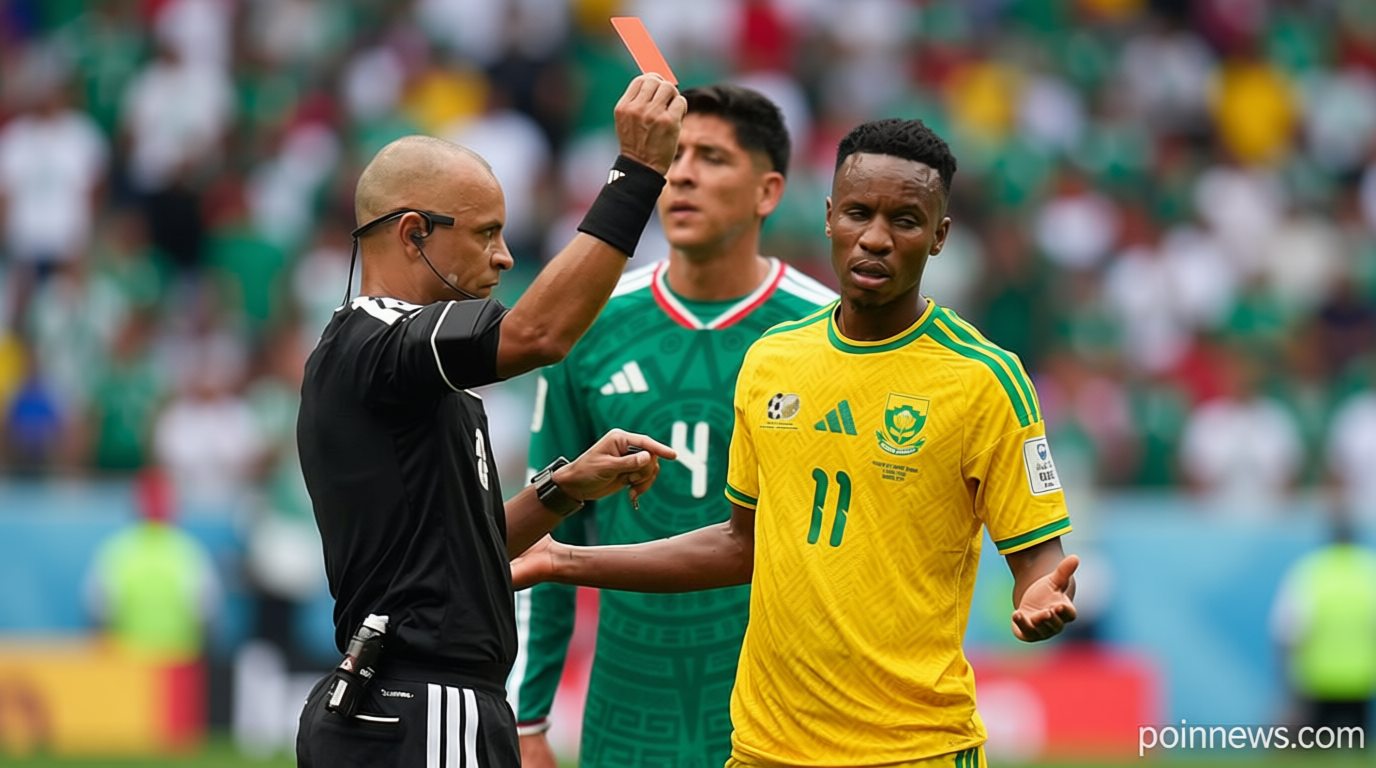
Poinews.com – Nobody knew what the ref was saying, and the internet instantly turned it into a global phenomenon. The 2026 FIFA World Cup opened with a dramatic twist as Brazilian referee Wilton Sampaio’s controversial red card decision left players and fans equally puzzled. During Mexico’s 2-0 win over South Africa, the referee’s unclear communication during a critical moment in the 84th minute created a viral sensation, cementing itself as the tournament’s first iconic meme. South Africa’s Themba Zwane, after a clash with a Mexican player, received a straight red card, but Sampaio’s explanation in English over the stadium microphone sparked a wave of online reactions. The confusion, captured in real time, became a shared experience across social media platforms, with fans dissecting the referee’s words for hidden meanings.
The Referee’s Unpredictable Style Goes Viral
Sampaio’s reputation for making high-stakes decisions has already been tested in previous World Cups. His 2022 Qatar World Cup performance, particularly in the France vs. England quarterfinal, showcased his tendency to deliver dramatic calls that often left players scrambling. This time, the chaos in Mexico City mirrored that pattern, as the referee’s explanation of Zwane’s red card was met with a mix of disbelief and humor. The moment became a talking point, with commentators and fans alike questioning the clarity of his message. In an age where social media thrives on relatable content, the ambiguity of Sampaio’s words struck a chord, turning a simple officiating moment into a cultural landmark.
“Nobody knew what the ref was saying, but the internet loved the mystery,” fans shared on platforms like Twitter and TikTok, sparking a frenzy of interpretations and memes. The incident quickly went viral, with users labeling it the “first meme of the World Cup” and comparing it to iconic moments in sports history. The confusion was so palpable that it captured the attention of both casual viewers and dedicated football enthusiasts, creating a unique blend of entertainment and analysis. Sampaio’s explanation, though brief, became a meme-worthy statement, with fans reenacting his words in humorous videos and hashtags.
Why This Moment Became a Cultural Phenomenon
What made Zwane’s red card so unforgettable wasn’t just the decision itself, but the way it unfolded. Sampaio’s attempt to clarify the call, combined with the players’ stunned reactions, provided a perfect narrative for social media. The referee’s words, such as “I think he touched it” or “he was in the box,” were taken out of context, leading to a cascade of memes that highlighted the absurdity of the situation. As the game continued, the moment lingered in the public consciousness, with fans debating whether the referee was confused or intentionally cryptic. The lack of clarity became a shared joke, demonstrating how a single moment can define a tournament’s early legacy.
Meanwhile, the viral nature of the incident also showcased the power of modern media to transform confusion into content. Platforms like YouTube and Instagram amplified the moment, with users creating parodies and analyzing the referee’s tone. The meme culture surrounding the event quickly spread, proving that even the most unexpected moments can become part of a larger narrative. Sampaio’s involvement in the 2018 and 2022 World Cups had already established him as a figure who could create memorable scenes, but this particular moment surpassed all previous ones in its internet appeal. The ambiguity of his message resonated with a global audience, making it a defining image of the 2026 World Cup.
The Role of Social Media in Shaping Football Narratives
The rise of social media has redefined how football moments are consumed and shared, and this incident exemplifies that shift. Nobody knew what the ref was saying, yet the confusion became a catalyst for creative content, with fans and creators alike turning the moment into a meme. The rapid spread of the video on platforms like X (formerly Twitter) and TikTok demonstrated how digital platforms can elevate a single moment into a viral sensation. As users reenacted the scene, the phrase “Nobody knew what the ref was saying” became a hashtag, further embedding it in the collective memory of the tournament. The event also sparked discussions about the importance of clear communication in high-pressure environments, with analysts questioning whether the referee’s words were a result of language barriers or intentional ambiguity.
Sampaio’s performance in this match has already set the tone for the 2026 World Cup, with fans eager to see if his style will repeat itself. The referee’s past involvement in major tournaments, including the Copa Libertadores, has made him a familiar figure in high-stakes football. However, this moment proved that even seasoned officials can create moments that transcend the sport itself. The internet’s love for the ambiguity of the call highlights a growing trend where fans seek entertainment in the unpredictability of the game. As the tournament progresses, the meme created by this incident may evolve, but its impact on the early stages of the World Cup is already undeniable.
What This Means for the Future of the World Cup
As the 2026 World Cup continues, the legacy of this confusing moment will likely persist. Nobody knew what the ref was saying, but the internet turned it into a shared experience, proving that football’s most iconic moments often arise from the unexpected. The incident has sparked a new era of fan engagement, where the humor and speculation surrounding officiating decisions could become a recurring theme. With the tournament’s first meme already established, fans are primed to look for more moments that blend drama with digital creativity. Sampaio’s decision in this match may serve as a blueprint for future viral incidents, showing that clarity is not always the goal—it’s often the absence of it that creates the most shareable content.