British artist David Hockney, whose vibrant pool paintings defined an era, dies aged 88
rtist David Hockney Dies at 88 British artist David Hockney whose vibrant - Renowned British artist David Hockney, known for his vivid and dynamic depictions

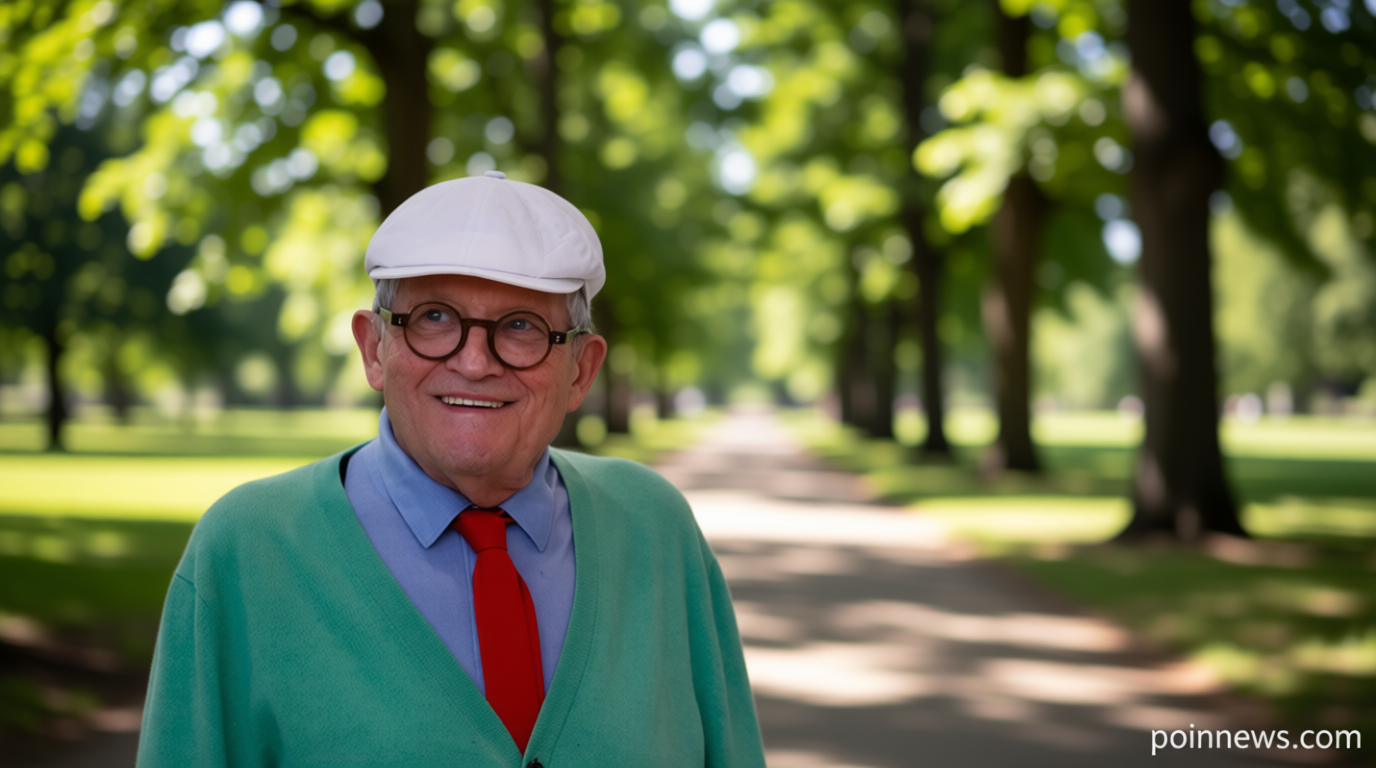
British Artist David Hockney Dies at 88
Poinews.com – Renowned British artist David Hockney, known for his vivid and dynamic depictions of pools, has passed away at the age of 88. His iconic works, which often captured the essence of everyday life with striking visual energy, have become defining pieces of modern art. According to his publicist, Erica Bolton, Hockney died in his London home on Thursday, just weeks before his 89th birthday.
Early Life and Career Beginnings
Born in Bradford, northern England, in 1937, David Hockney’s artistic journey began in the 1960s, a time when his bold, colorful style began to attract attention. His early works, such as those from the 1960s pop art movement, showcased a unique ability to blend traditional techniques with contemporary themes. Hockney’s career took him across the globe, with significant periods spent in Britain, the United States, and France. His reputation as a British artist David Hockney whose work defied conventions grew steadily throughout his six-decade-long career.
A Legacy of Innovation
David Hockney whose art has consistently pushed boundaries is perhaps best remembered for his pool paintings. These vibrant compositions, inspired by the geometric landscapes of Southern California, where he relocated in 1963, redefined how viewers perceive simple scenes. His 1967 masterpiece, A Bigger Splash, stands as a testament to his ability to transform the mundane into the extraordinary. As he once remarked to the Los Angeles Times, “London has lots of dreary parts but I never find anything dreary in Los Angeles.” This sentiment reflects his deep connection to the light and color of the American West.
Throughout his career, Hockney’s artistic vision evolved, incorporating a range of mediums from traditional painting to digital art. His recent iPad creations, such as A Year in Normandie, a sprawling 70-meter artwork completed during the pandemic, blended classical influences with modern technology. This project, which was displayed alongside other works in his Drawing from Life exhibition at London’s National Portrait Gallery, highlighted his continued innovation as a British artist David Hockney whose methods remain ahead of their time.
Art historians have often praised Hockney’s ability to merge personal expression with universal appeal. “The popularity and durability of David Hockney’s art, through all his shape-shifts and restlessly inventive experiments, are really no mystery,” noted historian Simon Schama in a 2025 essay accompanying a Paris exhibition. “His work is admired—loved is not too strong a word—by the millions who, worldwide, flock to see it because it presupposes an expectation of pleasure.” Such acclaim underscores his enduring impact on the art world.
In his early years, Hockney’s work also challenged societal norms, particularly in Britain where homosexuality was criminalized. His depictions of queer intimacy and desire in the 1960s and 1970s earned both critical praise and controversy. As he later reflected, his artistic evolution was closely tied to personal experiences. “It’s my work that keeps me young,” he told the Sun in 2017. “I’ve been a professional painter for 60 years. Sixty years of getting up every day and doing exactly what I want to do.” This philosophy of creative freedom shaped his entire oeuvre.
Even in his later years, David Hockney whose passion for art never waned. His return to Europe, particularly Yorkshire and Normandy, inspired new series of landscapes that reflected his deep appreciation for natural beauty. These works, alongside his digital collages, demonstrated his ability to adapt and innovate. As art curator Norman Rosenthal once said, Hockney is “the Picasso of our times,” though he acknowledged the comparison was bold. “When I say that, people laugh at me, as Picasso was the archetypal artist of the 20th century,” Rosenthal explained. “But David Hockney is also an incredibly popular artist whose work changes how we see things.”