China claims ‘spy sea turtles’ are studying its coastline
Its Coastal Zones China claims spy sea turtles are studying - China has accused foreign entities of equipping sea turtles with advanced surveillance

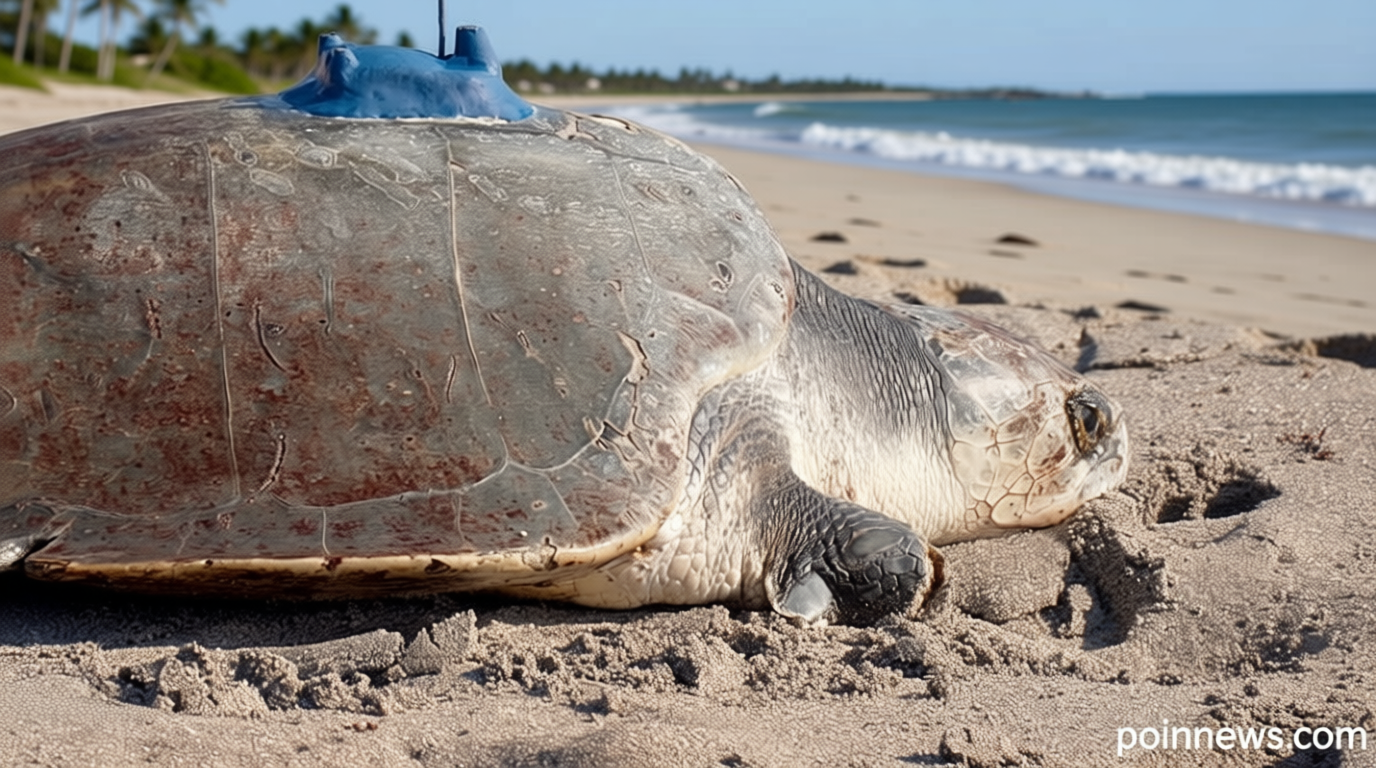
China Alleges ‘Spy Sea Turtles’ Are Mapping Its Coastal Zones
Poinews.com – China has accused foreign entities of equipping sea turtles with advanced surveillance technology to gather intelligence on its coastline. In a recent statement by the Ministry of State Security, officials highlighted the use of these marine animals as covert tools for monitoring China’s strategic maritime areas. The claim suggests that the turtles, fitted with espionage devices, are being deployed to collect data that could reveal critical information about underwater infrastructure, military installations, and environmental conditions along the coast.
How Spy Sea Turtles Work
According to the report, the spy sea turtles are believed to be equipped with micro-sensors capable of detecting changes in water pressure, temperature, and salinity. These devices, possibly linked to satellite networks, transmit the collected data to foreign intelligence agencies in real-time. The Ministry of State Security claims that the turtles are not only tracking environmental patterns but also mapping the seabed and identifying potential vulnerabilities in China’s coastal defenses. While the exact technology remains unspecified, experts suggest that such systems could be used to monitor shipping lanes or detect submarine movements.
The allegations come as part of a broader narrative of China’s concerns about foreign espionage in its territorial waters. The ministry emphasized that these marine animals are part of a larger network of covert surveillance methods, including the use of unmanned underwater vehicles and acoustic sensors. By leveraging natural habitats, China argues that these animals provide an undetectable means of gathering intelligence, making it difficult to trace the source of the data. The report also mentions that the turtles are often found near key ports and naval bases, further supporting the claim of their strategic value.
International Reactions and Skepticism
While China’s claim has sparked debate among scientists and intelligence analysts, some experts remain skeptical about the feasibility of using sea turtles as active spies. Dr. Li Wen, a marine biologist at the Chinese Academy of Sciences, noted that although sea turtles can carry small tracking devices, the scale of such an operation would require significant coordination between researchers and intelligence agencies. However, the ministry’s assertion that the turtles are being used for “underwater mapping” aligns with existing reports of biotelemetry experiments conducted by other nations. The focus keyword “China claims spy sea turtles” is central to this discussion, as it underscores the nation’s belief in the dual-purpose use of marine life for scientific and military research.
Some analysts argue that the spy sea turtles could be part of a larger effort to monitor China’s maritime resources. The Ministry of State Security has also raised concerns about the potential for these animals to be used in tracking oil reserves, fishing activities, or even underwater communication networks. In a recent press briefing, a spokesperson for the ministry stated, “China claims spy sea turtles are studying its coastline, and the data they gather could be vital for strategic planning.” This statement reinforces the idea that the turtles are not just passive creatures but active participants in a sophisticated intelligence operation.
The accusation of spy sea turtles is not isolated to China’s claims. Similar allegations have been made by other countries regarding the use of marine life for espionage. For example, the United States has long suspected that China is deploying biologically integrated surveillance systems to monitor its own coastlines. In 2022, a study published in *Nature* highlighted how certain species of marine animals are being used to track oceanic activity, raising questions about their potential for dual-use in military and scientific contexts. The focus keyword “China claims spy sea turtles” appears again here, linking the current claim to broader global trends in biological surveillance.
Historical Context of Espionage Disputes
The current accusations against spy sea turtles are part of a long-standing pattern of espionage disputes between China and other nations. In recent years, China has accused the United Kingdom of staging a political farce by convicting two individuals in a spying case involving Hong Kong dissidents. Similarly, German authorities arrested a couple for allegedly passing intelligence to China, targeting military technologies. These incidents, along with the latest claims about spy sea turtles, illustrate the ongoing tensions in global intelligence operations. The focus keyword “China claims spy sea turtles” is woven into this context, showing how the nation’s perception of foreign threats continues to evolve.
Furthermore, China has been involved in several high-profile espionage cases, including the French arrest of four individuals—two of whom were Chinese citizens—for intercepting classified military data. The ministry has also accused Greece of leaking top-secret information to Beijing, highlighting the wide-ranging nature of its intelligence concerns. While these cases involve human agents, the recent focus on marine life adds a new dimension to China’s strategy of monitoring its borders. The claim that “China claims spy sea turtles are studying its coastline” reflects the country’s growing reliance on unconventional methods to secure its national interests.
As the debate over spy sea turtles intensifies, the Ministry of State Security has called for stricter oversight of foreign equipment in China’s waters. Fishermen are now encouraged to report any unusual devices or buoys, which could be part of the larger surveillance network. The focus keyword “China claims spy sea turtles” reappears in this directive, reinforcing the urgency with which the government is addressing the issue. While the scientific community remains divided on the extent of the threat, the political implications of the claim are clear: China is positioning itself as a victim of global espionage, using the story of spy sea turtles to justify increased surveillance measures and international scrutiny.