Man opens fire in central Israel killing one person and injuring five others
in Central Israel, Killing One and Injuring Five Man opens fire in central Israel - On Sunday, a man opened fire in central Israel, leaving one person dead

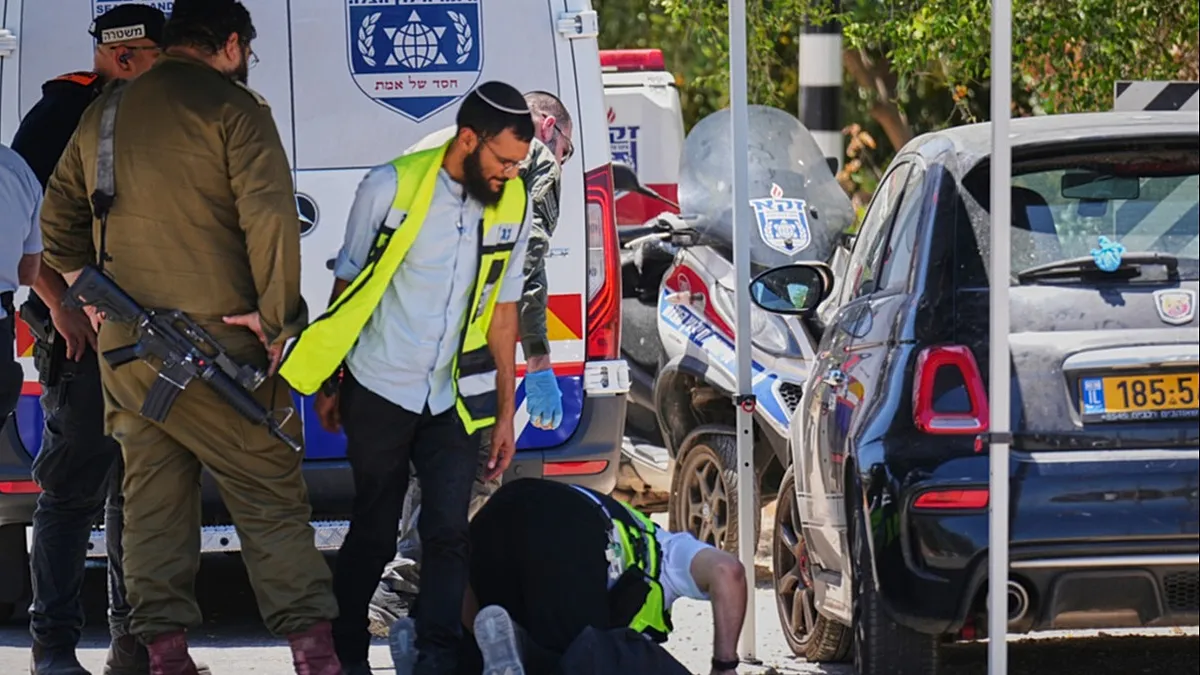
Man Opens Fire in Central Israel, Killing One and Injuring Five
Poinews.com – On Sunday, a man opened fire in central Israel, leaving one person dead and five others injured in a targeted attack. The incident, which unfolded in multiple locations across the region, has raised concerns about rising tensions and security measures. According to initial reports, the attacker was active in towns like Kokhav Yair and nearby settlements, demonstrating a coordinated approach before being neutralized by law enforcement. This event highlights the ongoing challenges in central Israel, where such attacks have become increasingly frequent in recent months.
Attack Details and Locations
The shooting began around 10:30 am local time at a gas station near Kokhav Yair, a town situated on the Israeli side of the West Bank border. Witnesses described the scene as chaotic, with the attacker moving swiftly between different locations, including Tsur Natan and Tsur Yitzhak, before reaching the Israeli settlement of Sal’it in the occupied territory. Multiple locations were hit, leading to fears of a potential larger-scale assault. However, police later clarified that the attack was not part of a coordinated effort but rather the actions of a lone gunman and an accomplice.
Following the initial incident, rescue services, including Magen David Adom, were dispatched to assess the situation. The first casualties were reported at the gas station, with the attacker reportedly firing at pedestrians and vehicles. As the attack spread, more victims were found in other towns, prompting an urgent response from security forces. The involvement of an accomplice added complexity to the case, as the second individual was apprehended later that day without sustaining injuries during the arrest.
Attacker’s Background and Motives
Authorities confirmed that the perpetrator was an ethnic Palestinian with Israeli citizenship, indicating a possible dual identity that complicates the narrative. Preliminary investigations suggest the attacker had a history of involvement in militant activities, though specific details remain under review. During the capture, the individual was alleged to have attempted to stab officers using a glass bottle, a method that may have been intended to evade detection or prolong the attack. This incident underscores the diverse motivations behind acts of violence in central Israel, where both internal and external factors are often intertwined.
Further analysis of the attack revealed that the perpetrator likely operated from a vehicle, as claimed by Channel 12, which added another layer to the security response. The vehicle was reportedly used to transport the attacker between locations, enabling a rapid and unpredictable sequence of events. This strategy is commonly seen in attacks targeting civilian areas, aiming to maximize impact before the perpetrator is taken down. The accomplice, who was arrested separately, is believed to have played a supporting role, possibly aiding in the planning or execution of the attack.
Political and Security Reactions
“We are combating terrorism on all fronts. In Judea and Samaria, along the Seam Line, the IDF, Shin Bet, and Israel Police prevent hundreds of attacks annually, yet not all are thwarted,” stated Prime Minister Benjamin Netanyahu. “This morning, a brutal terrorist reached Kochav Yair and, before being neutralized, killed an Israeli citizen and wounded others. I commend the emergency forces and the preparedness team for their swift response. I also praise the police officers who eliminated the threat and arrested his accomplice.”
The government’s condemnation of the attack as a terrorist act reflects the broader context of regional instability. Officials emphasized the need for continued vigilance, with the regional council head urging residents to stay indoors and implementing school lockdowns for at least three hours to ensure safety. The incident has sparked renewed discussions about the effectiveness of current security measures in central Israel.
As the investigation progresses, authorities are examining potential links between the attacker and militant groups. The presence of an accomplice raises questions about the scale of the operation and the level of organization involved. Meanwhile, the families of the victims and local communities are calling for increased security and a deeper understanding of the factors driving such acts. The attack serves as a reminder of the persistent threat in central Israel, where incidents like this have become a regular occurrence, testing the resilience of both civilians and security personnel.