Pompeii excavations reveal equid skeleton at House of the Chaste Lovers
Pompeii Excavations Reveal Equid Skeleton at House of the Chaste Lovers Pompeii excavations reveal equid skeleton at House - Recent excavations in the ancient

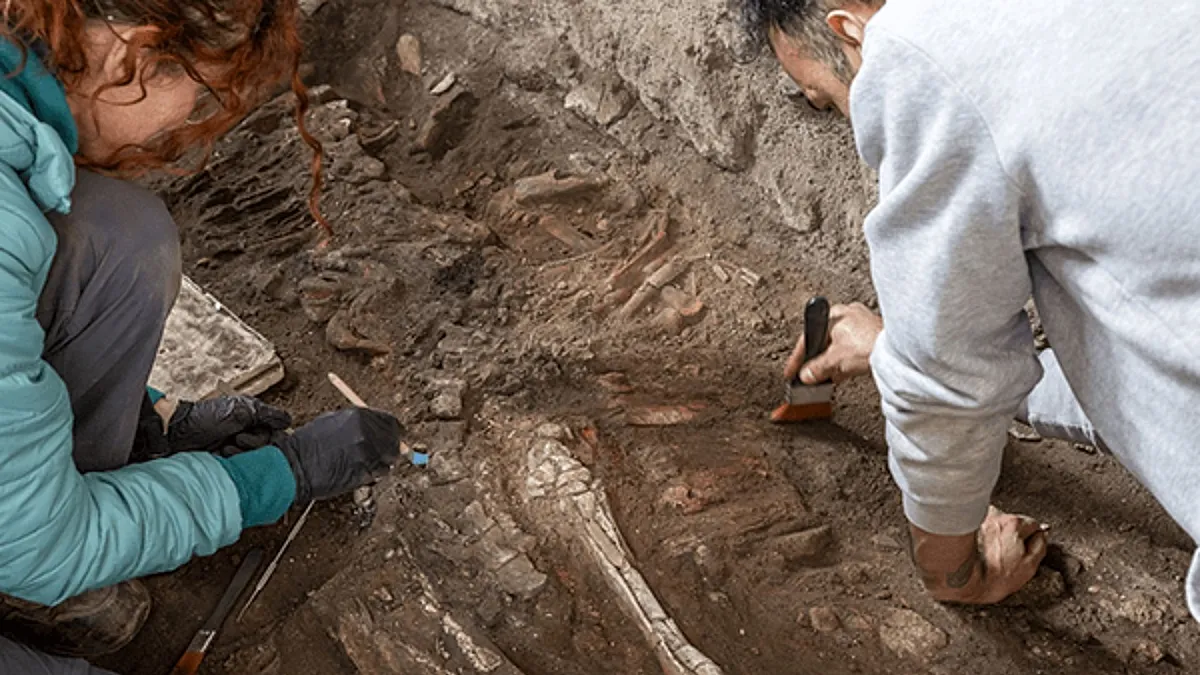
Pompeii Excavations Reveal Equid Skeleton at House of the Chaste Lovers
Poinews.com – Recent excavations in the ancient Roman city of Pompeii have uncovered a remarkably preserved equid skeleton within the House of the Chaste Lovers, a site that has captivated archaeologists for decades. This groundbreaking discovery, made during ongoing investigations, adds a new layer to our understanding of the city’s domestic life and the intricate relationships between humans and animals in the Roman world. The skeleton, believed to belong to a horse or donkey, was found in what is now identified as the bakery section of the complex, offering tangible evidence of the animals’ role in the daily operations of this well-preserved household.
Historical Significance of the House of the Chaste Lovers
Located in the heart of Pompeii, the House of the Chaste Lovers is one of the most iconic and extensively studied sites in the city. Its name derives from a celebrated fresco depicting a romantic scene between two lovers, a masterpiece of Roman art that has long symbolized the cultural richness of the ancient world. Beyond its artistic treasures, the house is renowned for its intact layout, which includes a range of functional spaces such as a bakery, storage areas, and domestic quarters. This architectural complexity makes it a vital resource for understanding the social and economic structures of Pompeii, as well as the broader Roman society.
While the fresco remains a focal point of the site, the recent equid skeleton discovery highlights the importance of examining the less visible aspects of daily life. The presence of animal remains within the bakery section suggests that equids were not only used for transport but also played a practical role in food production. This finding aligns with broader evidence from Pompeii, where horses and donkeys were integral to both urban and rural economies. The equid skeleton’s preservation—likely due to the sudden volcanic ash burial—provides a rare opportunity to study the health, age, and activity levels of these animals in ancient times.
The Equid Skeleton: A Window into Daily Life
Archaeologists working at the House of the Chaste Lovers have long been intrigued by the remnants of domesticated animals found at the site. This latest equid skeleton, however, stands out for its exceptional state of preservation. The remains were discovered in a section of the bakery, where they appear to have been used for labor or transportation. Researchers are now analyzing the skeleton to determine its exact species, age, and possible cause of death, which could shed light on the working conditions of equids in Roman households.
Initial observations suggest that the equid was likely a working animal, as the skeletal structure shows signs of wear consistent with repetitive tasks. This aligns with historical records indicating that equids were commonly employed in Roman bakeries for carrying ingredients or assisting in the baking process. The discovery also raises questions about the care and treatment of these animals, as well as their place in the household’s social hierarchy. As Pompeii excavations continue to yield new insights, the equid skeleton serves as a compelling reminder of the interconnected lives of humans and animals in this ancient city.
Experts involved in the Pompeii excavations emphasize that the equid skeleton is part of a larger narrative of the site’s archaeological significance. The combination of human and animal remains found in the House of the Chaste Lovers complex provides a unique perspective on the challenges and routines of life in Pompeii. For instance, the presence of multiple animal bones alongside human artifacts suggests a shared space where both species coexisted and interacted. This interdisciplinary approach, which includes archaeozoology and anthropology, is critical for piecing together the full story of the city’s inhabitants and their environment.
The ongoing analysis of the equid skeleton is expected to yield valuable data about the animal’s diet, health, and genetic makeup. This information, when combined with findings from other parts of the site, could help researchers reconstruct the economic systems that sustained Pompeii’s population. Furthermore, the skeleton’s discovery underscores the importance of Pompeii excavations in revealing not just the city’s artistic and architectural achievements, but also the everyday realities of life in a Roman city. As the team continues their work, the House of the Chaste Lovers remains a key site in the broader study of Pompeii’s equid skeletons and their cultural implications.