World nearing tipping point? Why Atlantic ‘cold blob’ is a worrying sign
World nearing tipping point? Why Atlantic 'cold blob' is a worrying sign World nearing tipping point Why Atlantic - The North Atlantic, just south of

World nearing tipping point? Why Atlantic ‘cold blob’ is a worrying sign
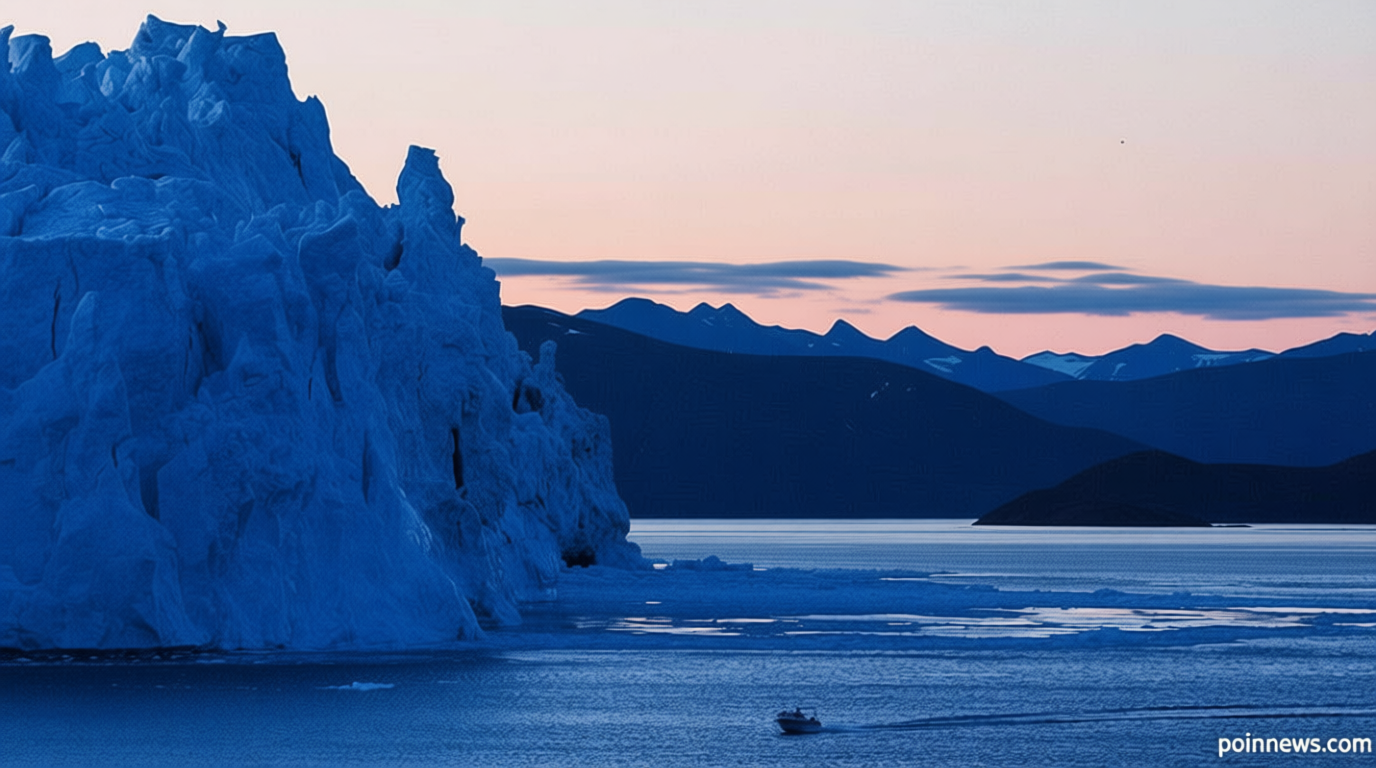
Poinews.com – The North Atlantic, just south of Greenland, hosts a peculiar cold region known as the “Cold Blob.” This area has seen temperatures drop over recent decades, making it the sole spot on Earth where cooling trends are evident. Prof. Dr. Stefan Rahmstorf, leading a team at the Potsdam Institute for Climate Impact Research (PIK), recently published findings in Geophysical Research Letters (a German-based journal) that highlight the phenomenon.
The study attributes the Cold Blob’s formation to shifts in oceanic heat distribution. By analyzing temperature data from the North Atlantic, researchers suggest that reduced heat transport within the ocean is a key factor. Their conclusion warns: “This is a cause for concern, since any further weakening of Atlantic heat transport in future climate change scenarios could significantly affect Europe’s climate and global weather patterns.”
AMOC: The ocean’s heat redistribution engine
The AMOC, or Atlantic Meridional Overturning Circulation, is a massive system of currents that carries warm water northward along the Atlantic’s surface and cold water southward through the deep ocean. It plays a critical role in balancing heat across the planet. The new research from PIK reinforces the idea that the Cold Blob reflects a weakening AMOC, which could disrupt this vital process.
Historical evidence suggests that ice sheet melting has previously impacted the AMOC. During the Younger Dryas, a 10,000-year-old cold period, the AMOC took a century to restart fully. Greenland’s temperatures required 40 years to rebound from glacial extremes. Today, scientists observe similar early warning signals, including “clear evidence of a weakening AMOC” and “early warning signals” that the system is approaching a critical threshold.
Implications of an AMOC collapse
Should the AMOC reach a tipping point, the consequences could be severe. Rapid sea-level rise along the U.S. east coast might occur as the current’s strength diminishes, allowing water to accumulate. Intense Atlantic storms could also become more frequent. Last February, the Nordic Council—comprising Denmark, Iceland, Norway, Sweden, and Finland, with Åland, the Faroe Islands, and Greenland as associate members—predicted that Iceland’s winters could plunge to minus 45 degrees Celsius, encasing the island in ice for the first time since the Viking era.
“This risk requires urgent attention from political decision-makers,” the authors of the latest study emphasize.