An EU of six, not 27, best way to ‘reinforce Europe’, Bruno Le Maire tells Euronews
An EU of Six, Not 27, Is the Best Path to Strengthening Europe An EU of six not 27 best - During the G7 summit in Évian, France, former French Economy

An EU of Six, Not 27, Is the Best Path to Strengthening Europe
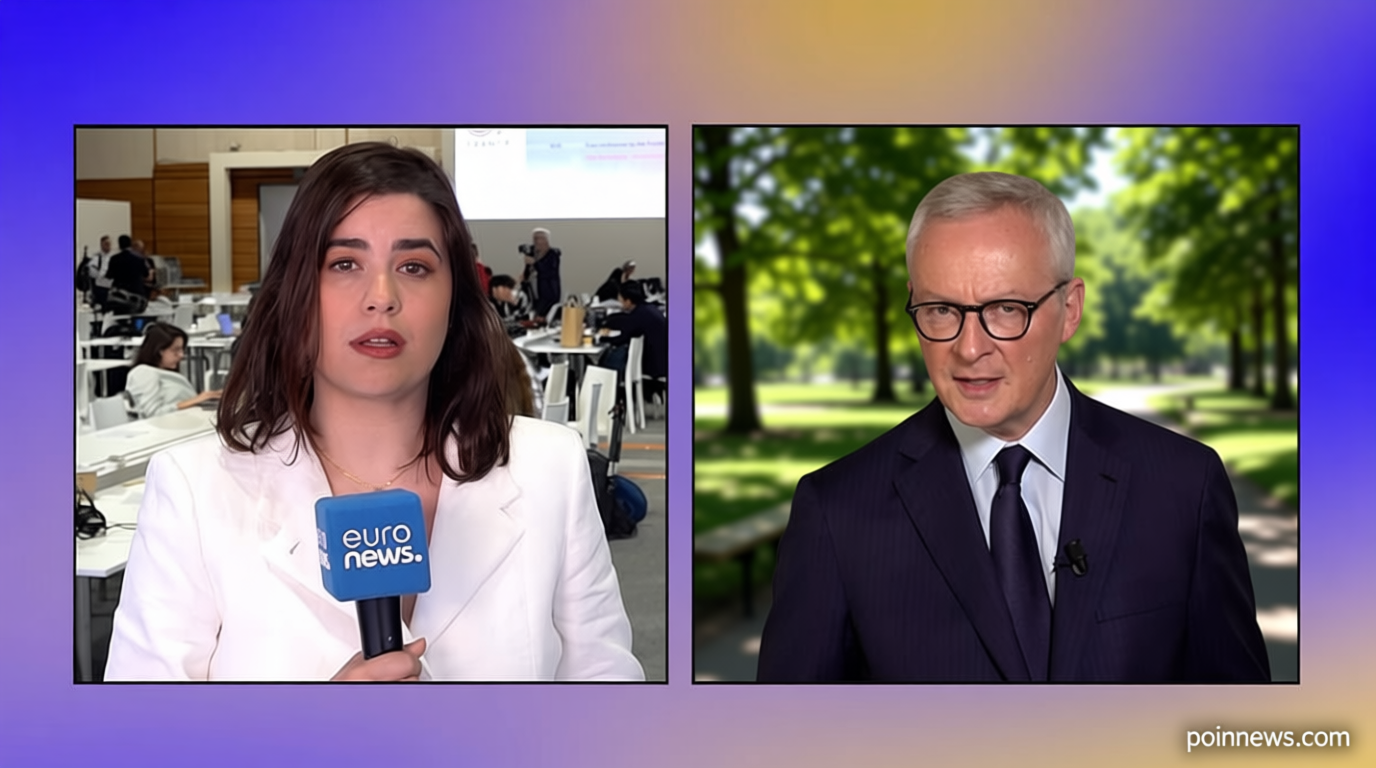
Poinews.com – During the G7 summit in Évian, France, former French Economy Minister Bruno Le Maire urged European leaders to consider a more streamlined union, arguing that a core group of six major nations could better “reinforce Europe” than the current 27-member structure. The proposal, which he emphasized as a key strategy for the bloc’s future, highlights the need for stronger, more cohesive decision-making to tackle pressing global challenges. By focusing on the six strongest European economies, Le Maire believes the EU can act with greater efficiency and impact, ensuring its voice remains influential on the world stage.
Efficiency Over Unanimity: A Call for Unified Action
Le Maire’s advocacy for a smaller, more unified EU stems from frustration with the slow pace of consensus-driven decisions in Brussels. He stated,
“The single lesson that all European leaders must draw from the past months—and I would say the last two years—is that if they want to be relevant and strong, they need to be united. And they don’t need to unite with 27 member states.”
This vision challenges the traditional model of European integration, where unanimous agreement is often required for major policy changes. Le Maire contends that such a process leads to inefficiencies, as nations with differing priorities can stall progress. A six-nation coalition, he argues, would enable faster decision-making and allow the EU to respond decisively to crises like climate change, economic instability, and geopolitical tensions.
The E6 Coalition: A Blueprint for European Unity
The E6 coalition, which includes France, Germany, Italy, Spain, Poland, and the Netherlands, is positioned as the cornerstone of Le Maire’s vision. These nations, representing the EU’s largest economies, are seen as the most capable of driving forward critical reforms. The group has already initiated projects such as the Capital Markets Union (CMU), aiming to create a more integrated financial market and reduce bureaucratic hurdles. By concentrating power within this core, Le Maire suggests the EU can overcome the political gridlock that has hampered its ability to act in recent years. The E6 model is not just about reducing the number of members but about fostering a more agile and purpose-driven union.
“We are providing the impetus, and other countries are welcome to join us,”
said German Finance Minister Lars Klingbeil, a key architect of the E6 coalition. This sentiment underscores the coalition’s openness to expansion, with the hope that smaller nations will eventually align with its priorities. The E6’s focus on pragmatic collaboration could set a precedent for future European policies, allowing for quicker implementation of initiatives such as renewable energy projects, digital regulation, and defense strategies. While critics argue this approach risks sidelining less influential members, Le Maire insists that a stronger core is essential for Europe’s long-term survival and competitiveness.
Resisting US Pressure: A Strategic Advantage
Le Maire’s proposal also addresses the EU’s vulnerability to external pressures, particularly from the United States. He criticized Washington for using economic leverage, such as tariffs and regulatory threats, to push the EU into alignment on issues like taxation of tech giants.
“If we want to resist that kind of threat, that kind of blackmail, the six strongest European member states must stand united.”
This unity, he argued, would allow Europe to negotiate more effectively and avoid being dictated by American interests. The E6 coalition, with its shared economic and political goals, could serve as a bulwark against such pressures, ensuring that European priorities remain intact. By strengthening internal cohesion, Le Maire believes the bloc can better defend its values and interests on the global stage.
The Road Ahead: Challenges and Opportunities
While the idea of an EU of six not 27 has gained traction among some leaders, it faces hurdles in gaining broader support. Critics worry that excluding smaller nations could weaken the EU’s democratic legitimacy, as decisions would no longer require consensus across all 27 states. Additionally, there are concerns about how to balance the needs of the core group with the interests of the broader membership. However, proponents argue that the benefits of efficiency and decisiveness outweigh these risks. Le Maire acknowledged the challenge of maintaining inclusivity but emphasized that the E6 coalition could serve as a framework for integrating other nations into a more dynamic and responsive structure.
For instance, the E6’s emphasis on shared goals could create a more transparent and accountable decision-making process, ensuring that all members are aligned on critical issues. This approach might also foster stronger transatlantic partnerships, as the six-nation group could work more closely with the US on strategic matters while retaining its own independent voice. By rethinking the EU’s structure, Le Maire and his allies aim to create a union that is both resilient and adaptable, capable of meeting the demands of a rapidly changing global landscape. The success of this model will depend on how effectively the six core nations can navigate internal and external challenges, but the vision of a more unified Europe continues to gain momentum.
The debate over an EU of six not 27 reflects a broader conversation about the future of European integration. As the bloc faces mounting pressures from economic crises, migration flows, and geopolitical rivalries, the need for a more agile and cohesive structure becomes increasingly urgent. Le Maire’s proposal is not a rejection of the EU but a call for reform, emphasizing the importance of unity and purpose. With the E6 coalition already demonstrating the potential of such a model, the idea of a smaller, more decisive union may reshape the political and economic landscape of Europe in the years to come. The challenge now is to ensure that this vision is not just a theoretical exercise but a practical pathway to a stronger, more effective European partnership.