Poor show: Ecuador win, Germany disappoint, Neuer blunders
Poor Show: Ecuador Win, Germany Disappoint, Neuer Blunders Poor show - The term "poor show" aptly described Germany’s performance in their recent match

Poor Show: Ecuador Win, Germany Disappoint, Neuer Blunders
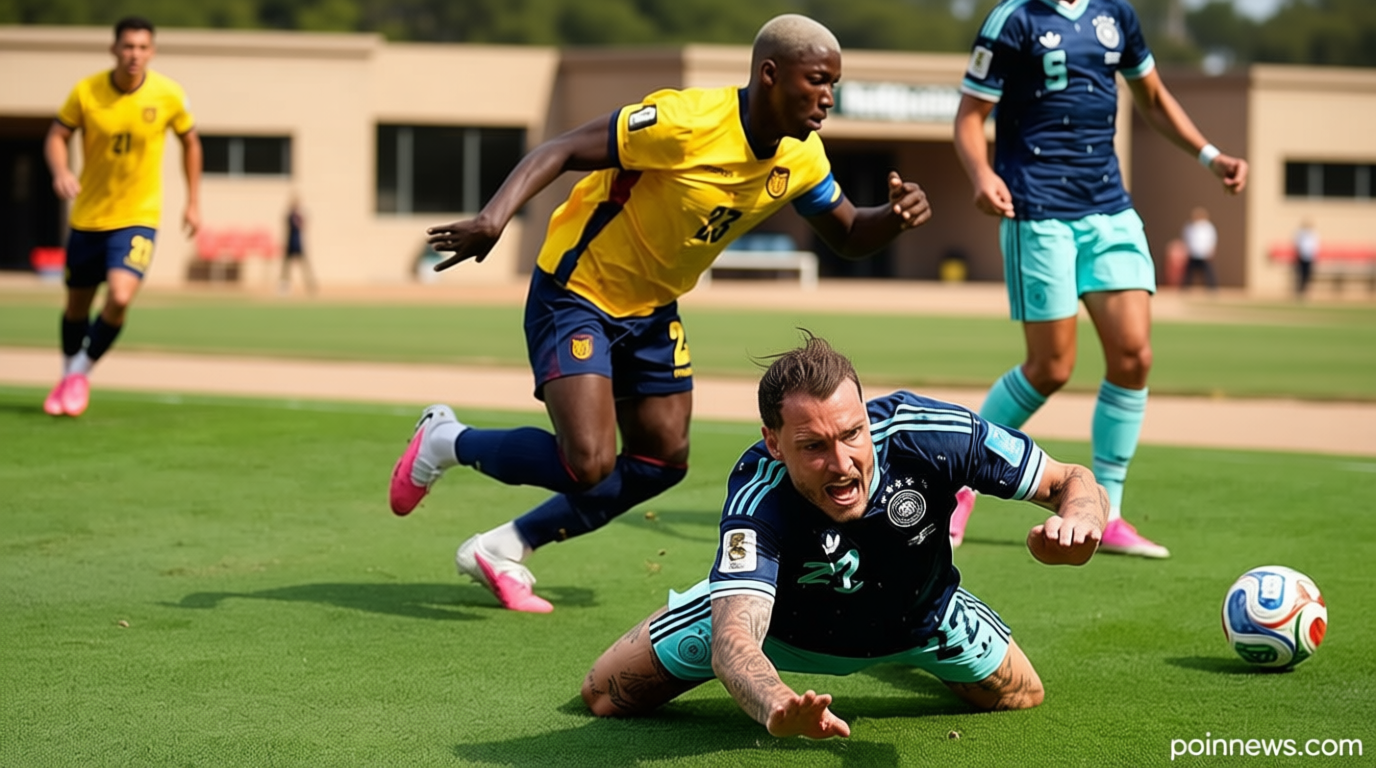
Poinews.com – The term “poor show” aptly described Germany’s performance in their recent match against Ecuador, where the hosts delivered a commanding display of skill and resilience, leaving the German team in disarray. From the outset, Ecuador showcased composure and precision, capitalizing on early opportunities to level the score. In the ninth minute, Nilson Angulo’s equalizer after a miscommunication in Germany’s defensive line highlighted the team’s shaky start. This decisive moment set the tone for a tightly contested first half, with both sides trading chances but Ecuador maintaining the upper hand. The 1-1 halftime result was a stark reminder of the team’s struggle to sustain momentum, a theme that would echo throughout the game.
The Goal Controversy and Tactical Missteps
Germany’s early lead, scored by Sané in the second minute, was short-lived due to a contentious goal that sparked debate among fans and analysts. A throw-in from Raum was meticulously worked to Pavlovic, who passed to Wirtz before Sané unleashed a powerful shot into the bottom-left corner. The goal was controversial, as Pavlović’s high leg raised to clear the ball caught Pedro Vite on the head. Despite the player’s visible discomfort, referee Tori Penso from the USA waved the goal through, raising questions about the fairness of the decision. This incident not only disrupted Germany’s rhythm but also underscored the team’s tendency to make costly errors, even in high-pressure moments.
The second half further exposed Germany’s vulnerabilities. A penalty was awarded for a foul by Sané, but VAR intervention later overturned the decision, revealing the striker had touched the ball before the shot. This inconsistency in decision-making, coupled with Ecuador’s tactical dominance, shifted the momentum decisively in the hosts’ favor. The South Americans exploited the German side’s defensive lapses, with their 5-4-1 formation proving effective in stifling the opposition’s attacks. Despite introducing Undav to bolster their midfield, the changes failed to halt Ecuador’s relentless pressure, which ultimately led to the decisive 78th-minute goal by Plata.
Neuer’s Struggles and the Team’s Lack of Cohesion
Germany’s goalkeeper, Manuel Neuer, faced sharp criticism for his performance, which was marred by hesitancy and misjudged reactions. His failure to organize the defense or assert control in the box contributed to Ecuador’s ability to capitalize on key moments. As the match progressed, Neuer’s mistakes became a focal point of the “poor show” narrative, with fans and pundits questioning his reliability as the team’s first-choice keeper. The lack of cohesion among the German players, from defenders to forwards, further compounded the challenges. A disjointed midfield and inconsistent wing-back support left the team exposed, resulting in a lackluster display that contrasted sharply with Ecuador’s unified effort.
Ecuador’s triumph was a testament to their adaptability and teamwork. The hosts executed their strategy with precision, particularly in the second half when they seized control of the game. Their ability to maintain composure under pressure and convert opportunities into goals demonstrated a level of maturity that Germany struggled to match. The German team, despite having a strong squad with world cup debuts for players like Angelo Stiller and Maximilian Beier, appeared disjointed and unable to execute their game plan effectively. This “poor show” in organization and execution left fans wondering whether Germany had reached the peak of their potential or were simply unable to maintain their focus.
“We had a great start. Unfortunately, straight after the goal, we started playing hara-kiri with our positioning,” said Nagelsmann, the national coach. “If we take the lead that early, then we have to see the job through,” he added, emphasizing the team’s failure to build on their initial advantage.
When questioned about the team’s lack of final commitment, Nagelsmann grew defensive: “Please stop with this nonsense, honestly. Why would the lads not want to go flat out?” Joshua Kimmich echoed this sentiment on ARD, stating: “We absolutely wanted to win the game, but based on the second half, it was a deserved defeat. Nothing has been lost yet, but we cannot allow ourselves any more defeats.”
These quotes encapsulated the frustration of Germany’s coaching staff and players, who struggled to maintain their composure after a promising start. The “poor show” in positioning and decision-making became a recurring theme, with defenders frequently leaving gaps and midfielders failing to support the attack effectively. This disarray not only cost them crucial chances but also allowed Ecuador to dictate the flow of the game with confidence.
The Tournament Implications and a Call for Reflection
The match marked a turning point in the tournament, as Ecuador’s resilient performance highlighted their potential to challenge the traditional powerhouses. Their ability to overcome Germany’s early dominance and secure a hard-fought victory demonstrated a level of tactical intelligence and unity that Germany lacked. The “poor show” by the German side, both in execution and adaptability, raised concerns about their readiness for the competition. Fans and analysts are now questioning whether the team has the depth and cohesion to consistently perform at this level, especially with key players like Sané and Pavlovic appearing to be prone to costly errors.
As the dust settles, the outcome serves as a wake-up call for Germany. The “poor show” in this match has not only impacted their tournament prospects but also sparked a deeper examination of their playing style and preparation. With the World Cup on the horizon, the German team must address their shortcomings in both individual performance and team coordination. Ecuador’s victory, on the other hand, has been celebrated as a statement of their growing strength in international football. The contrast between the two teams’ performances underscores the importance of consistency, discipline, and strategic execution in high-stakes matches.