D-Day 82nd anniversary honoured in France
D-Day 82nd Anniversary Marked in France D Day 82nd anniversary honoured in France - On June 6, 1944, during World War II, approximately 160,000 Allied

D-Day 82nd Anniversary Marked in France
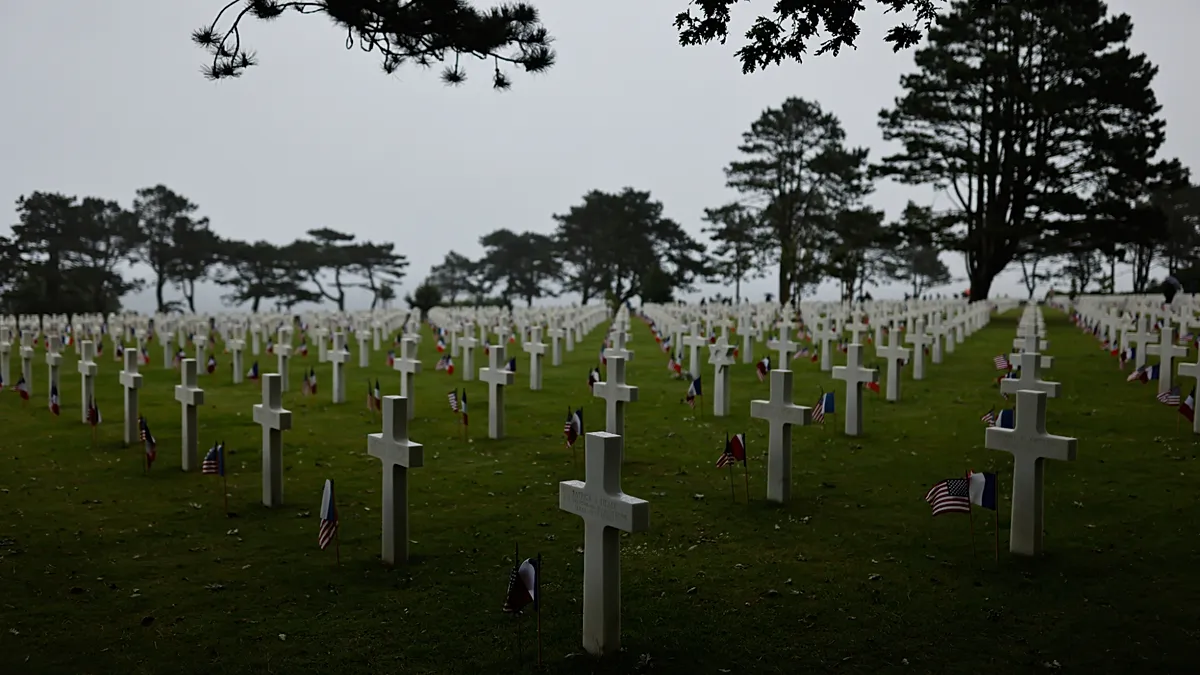
Poinews.com – On June 6, 1944, during World War II, approximately 160,000 Allied soldiers embarked on the Normandy landings, a pivotal moment in the liberation of Western Europe from German control. This historic event, code-named ‘Operation Overlord,’ began with troops storming five beaches in Normandy, France, as part of a coordinated effort to dismantle the Nazi regime. Over 4,400 Allied personnel lost their lives that day, with more than half of the casualties being American.
French Prime Minister Sébastien Lecornu joined forces with U.S. military officials at the British Normandy Memorial in Langrune-sur-Mer for a ceremony honoring the legacy of the invasion. Among the attendees was Elbridge Colby, the Pentagon’s deputy chief, alongside other dignitaries and veterans. US Defence Secretary Pete Hegseth also participated, offering tributes at the American memorial site.
Legacy of the Veterans
Only a few surviving World War II veterans remain to recount the events of that day. Six of these elderly servicemen traveled to France for the anniversary commemorations, reflecting on their roles in the Allied push. Hegseth, representing the U.S. military, highlighted the sacrifices made by those who participated.
“They carried the hopes and prayers of a free world,” Hegseth said. “They crossed an ocean to fight for their country on a continent they’d never seen, to save a people they did not know. Alongside the brave forces of Great Britain, Canada, France, Norway, Poland, and our other capable and steadfast allies, the United States military spearheaded a great crusade to shatter the Nazi war machine and liberate the continent.”
British Contributions and Honor
UK Defence Secretary John Healey contributed to the remembrance by laying a wreath at the British Normandy Memorial. This site bears the names of 22,540 British service members who perished during the operation. The memorial stands as a tribute to the combined efforts of nations in the fight for liberation.
D-Day was the largest seaborne military operation in history, with tens of thousands of troops landing simultaneously across Normandy’s shores. The invasion had been meticulously planned for over a year, but its execution was delayed by 24 hours due to fierce storms. This adjustment allowed for the optimal conditions of rare clear skies, low tides, and a full moon, which commanders believed would maximize the chances of success.
Understanding the “D-Day” Designation
In military jargon, the term “D-Day” simply denotes the designated starting point of a major operation. It does not specify a particular date but rather serves as a reference to the day when the mission’s critical phase began. This year’s commemorations underscore the enduring impact of that historic event, even as its veterans grow older.