Estonia and Ukraine sign drone pact to deepen defence industry ties
Estonia and Ukraine Sign Drone Pact to Strengthen Defence Industry Collaboration Estonia and Ukraine sign drone pact - During the NATO summit in Ankara

Estonia and Ukraine Sign Drone Pact to Strengthen Defence Industry Collaboration
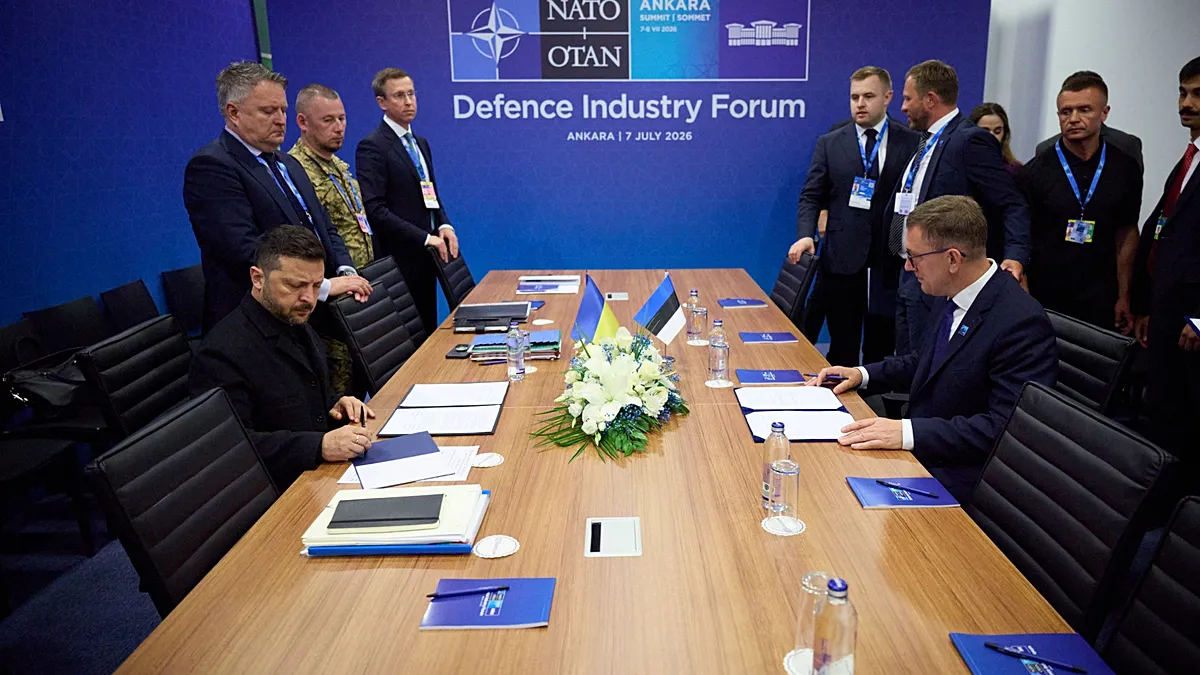
Poinews.com – During the NATO summit in Ankara, Estonian Prime Minister Kristen Michal and Ukrainian President Volodymyr Zelenskyy announced a landmark agreement to deepen cooperation in drone technology, military innovation, and defense manufacturing. This pact, centered around the focus keyword “Estonia and Ukraine sign drone,” marks a significant step in fostering mutual growth between the two nations and enhancing their collective security posture. The partnership aims to integrate Ukraine’s battlefield expertise with Estonia’s advanced technological infrastructure, creating a robust framework for shared development and operational readiness in the defense sector.
The Strategic Rationale Behind the Drone Pact
The agreement was forged against the backdrop of ongoing conflicts and the need for European allies to diversify their defense supply chains. Estonia, a small Baltic nation with a population of 1.3 million, has long been a key player in NATO’s Eastern flank, emphasizing its commitment to regional security. Ukraine, which has demonstrated remarkable resilience in its defense industry despite Russia’s invasion, is now seeking to expand its influence beyond the Eastern European region. By signing this drone pact, both countries are leveraging their respective strengths: Estonia’s advanced cybersecurity and IT capabilities, and Ukraine’s experience in drone systems and battlefield technologies. This collaboration not only strengthens their bilateral ties but also positions them as strategic partners in the broader European defense landscape.
The key provisions of the drone pact include the establishment of joint research initiatives and the exchange of expertise in cybersecurity, information technology, and military systems. It also enables Estonia to procure Ukrainian defense products directly or collaborate on systems tailored to local requirements. This is particularly important for Estonia, as it aims to reduce reliance on external suppliers and enhance its domestic defense manufacturing capacity. Ukraine, on the other hand, gains access to a new market for its military exports, allowing it to scale production and sustain its defense industry amid the challenges of war.
Key Provisions of the Drone Pact
One of the central elements of the drone pact is the facilitation of export approvals for Ukrainian technologies, which has been a hurdle in the past due to geopolitical tensions. Under the agreement, Estonian Defence Minister Hanno Pevkur emphasized that Kyiv will provide the necessary permissions to enable the procurement of defense products from its firms. This opens the door for Estonia to incorporate advanced Ukrainian drone systems into its military arsenal, improving its ability to defend against potential threats. Additionally, the pact supports joint ventures that could lead to co-developed technologies, such as specialized drone platforms or integrated surveillance systems, tailored for use in both countries’ defense operations.
The collaboration also extends to training programs and knowledge-sharing initiatives, ensuring that Estonian military personnel and industry experts can benefit from Ukraine’s battlefield experience. This exchange is expected to accelerate the development of next-generation drone technologies, which are increasingly vital in modern warfare. By combining Estonia’s expertise in cybersecurity with Ukraine’s practical insights from combat, the pact aims to create a synergy that enhances the security capabilities of both nations. This approach aligns with the broader trend of European countries prioritizing defense-industrial cooperation, as seen in other NATO member states that have recently strengthened ties with Ukraine.
“The drone pact is a testament to Ukraine’s role as a strategic partner in the European defense industry,” stated Estonian Prime Minister Kristen Michal. He highlighted that the agreement would not only bolster Estonia’s defense capabilities but also provide Ukraine with a platform to export its innovations to the region. “This partnership is crucial for both countries,” Michal added, “as it allows us to build resilience and create combat solutions that are both effective and locally sustainable.”
The importance of this drone pact cannot be overstated, especially as the conflict in Ukraine continues to shape the global defense market. Estonia’s strategic location between Russia and the rest of Europe makes it a critical hub for NATO’s eastern defense, and the integration of Ukrainian drone technology will further enhance this role. The agreement also reflects the growing recognition of Ukraine’s defense industry as a key player in the region, with its innovations in drone systems and military logistics gaining international attention. As European nations seek to diversify their supply chains and support Ukraine’s economic recovery, this partnership serves as a model for how defense-industry collaboration can drive mutual benefits and security.
Looking ahead, the drone pact is expected to pave the way for expanded cooperation in other defense technologies, such as missile systems and cyber warfare solutions. Estonia and Ukraine have expressed interest in exploring further partnerships, including joint manufacturing facilities and shared research centers. These efforts are likely to be supported by other NATO members, who have already invested in Ukraine’s defense sector and are keen to see continued progress. As the agreement takes effect, both countries anticipate a stronger defense-industrial relationship, with Estonia contributing to Ukraine’s technological advancements and Ukraine offering a vital source of combat-ready systems for Estonia’s military.