Travelling to Central Asia? Discover the natural wonders of Kazakhstan’s Zhetysu region
Wonders of Zhetysu Travelling to Central Asia Discover the natural - Travelling to Central Asia offers a gateway to uncharted landscapes, and among its most

Travelling to Central Asia: Discover the Natural Wonders of Zhetysu
Poinews.com – Travelling to Central Asia offers a gateway to uncharted landscapes, and among its most captivating regions is Kazakhstan’s Zhetysu. Known for its striking natural diversity, this area defies common perceptions of the country as a land of endless steppes. From sun-drenched deserts to tranquil alpine lakes and dense, ancient forests, Zhetysu presents a mosaic of ecosystems that beckons explorers. Its rich history as a Silk Road crossroads adds layers of cultural intrigue, making it a destination that rewards both nature lovers and history enthusiasts.
A Natural and Cultural Crossroads
Zhetysu, situated in southeastern Kazakhstan, lies at the intersection of Central Asia and East Asia, shaping its unique blend of natural and cultural attractions. This region is a UNESCO World Heritage Site, recognized for its role in ancient trade routes and the diverse environments it encompasses. Its landscapes range from the rugged Dzungarian Alatau mountains to the vast Lake Balkhash, offering a rare opportunity to witness Central Asia’s ecological and historical depth. The area’s traditional villages, vibrant markets, and architectural marvels further enrich the traveler’s experience.
Exploring the Dzungarian Alatau Mountains
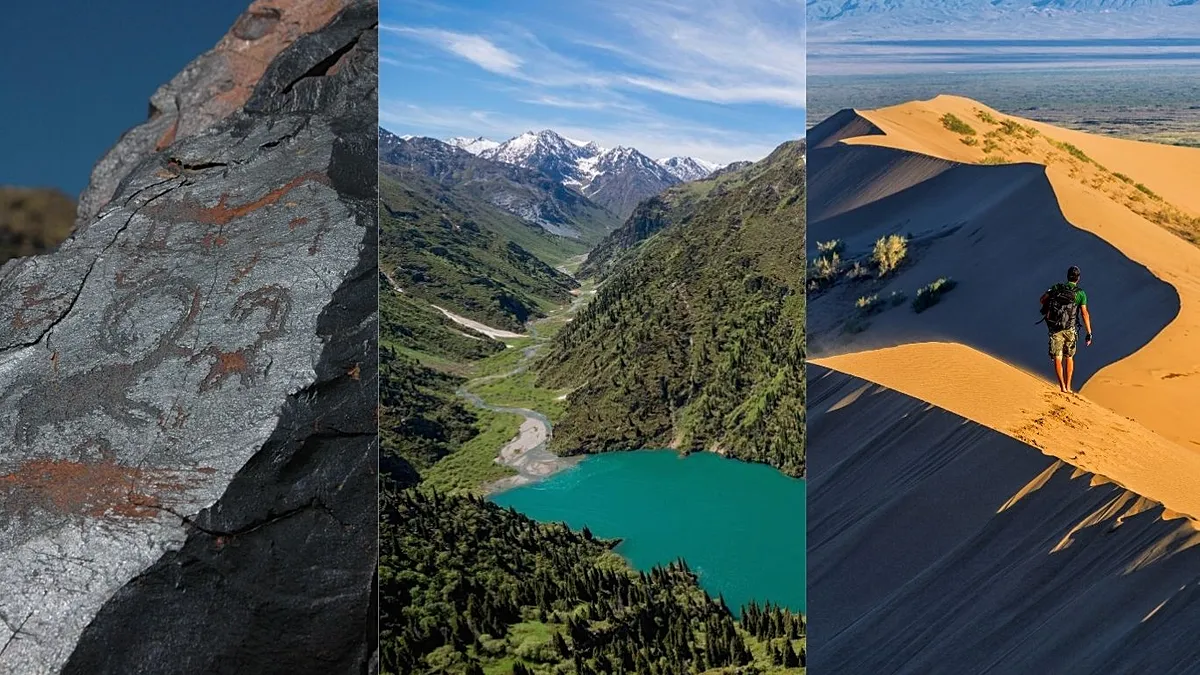
The Dzungarian Alatau mountain range, which borders China, is a standout feature of Zhetysu. These towering peaks are home to alpine lakes, glaciers, and lush forests, creating a habitat that supports rare wildlife and offers breathtaking vistas. For adventurers, the region’s trails and scenic viewpoints provide a perfect setting for hiking, birdwatching, and photography. Beyond its natural beauty, the Alatau also hosts the Sievers Apple Blossom Festival, a celebration of the wild Sievers apple, a genetic ancestor of modern varieties. This annual event brings local communities together, allowing visitors to immerse themselves in Kazakh traditions through music, dance, and culinary delights.
The festival’s vibrant atmosphere highlights the symbiotic relationship between Zhetysu’s landscapes and its cultural heritage. As travelers explore the region’s natural wonders, they also encounter the enduring legacy of centuries-old trade and settlement patterns.
Unveiling Zhetysu’s Geological Treasures
Zhetysu’s geological features are as mesmerizing as its cultural history. The Dzungarian Gate, a 50-kilometer mountain pass, played a pivotal role in 13th-century expeditions, including those of Genghis Khan. Its dramatic cliffs and sweeping views remain a testament to the region’s strategic importance. Nearby, Lake Zhasylkol, with its emerald waters and forested surroundings, is a prime example of the natural beauty that defines this area. Visitors can enjoy kayaking, picnicking, or simply soaking in the serene landscape, while the lake’s therapeutic mud baths have long been used for relaxation and wellness.
Altyn-Emel National Park: The Singing Dunes
Just a short distance from Almaty or Taldykorgan lies Altyn-Emel National Park, where the “Singing Dunes” phenomenon occurs. This natural marvel produces melodic sounds as sand grains shift and interact, a result of wind patterns and mineral composition. The dunes, surrounded by desert oases and ancient petroglyphs, are a must-see for those exploring Central Asia’s unique geological wonders. The park also boasts diverse flora and fauna, including rare species like the snow leopard and the argali sheep, making it a haven for eco-tourism and wildlife photography.
Discovering Lake Balkhash: A Dual-Character Aquatic Wonder
As one of the world’s largest lakes, Lake Balkhash is a natural highlight of Zhetysu. Its western half is fresh water, while the eastern half is saline, creating an unusual ecosystem that supports both freshwater fish and saltwater species. This distinction has made the lake a vital resource for local communities and a hub for recreational activities. From its sandy beaches and boat excursions to its role in Kazakh folklore, Lake Balkhash is a testament to the region’s natural resilience and adaptability. The lake’s surrounding areas also offer opportunities for birdwatching and exploring historical sites linked to ancient Silk Road caravans.
Historical Landmarks and Cultural Experiences
Zhetysu’s historical tapestry is woven with sites that reflect its role as a Silk Road nexus. The Zharkent wooden mosque, built in 1886 without nails, stands as a striking example of architectural fusion between Central Asian and Chinese influences. Once a bustling hub for Uyghur traders, it now serves as a museum, offering insights into the region’s past. Lake Alakol, another cultural gem, has historical significance as a recovery site for cosmonauts and Chernobyl evacuees. Its mineral-rich waters and therapeutic properties continue to attract visitors seeking wellness retreats, accessible via seasonal flights from Astana or road connections from nearby cities.
For those Travelling to Central Asia, Zhetysu is more than a destination—it is an immersive journey through time and terrain. Its natural wonders, from the Dzungarian Alatau’s glaciers to Lake Balkhash’s dual ecosystems, are matched by cultural landmarks that tell stories of ancient civilizations. Whether hiking through the Singing Dunes or exploring the wooden mosques of Zharkent, travelers will find a region that seamlessly blends history and nature, making it a hidden gem worth discovering in the heart of Central Asia.