Video. Most realistic ancient roman faces revealed at Budapest exhibition
Ancient Roman Faces Unveiled in Budapest's New Exhibition The Art and Science Behind the Reconstructions Most realistic ancient Roman faces revealed at a

Ancient Roman Faces Unveiled in Budapest’s New Exhibition
The Art and Science Behind the Reconstructions
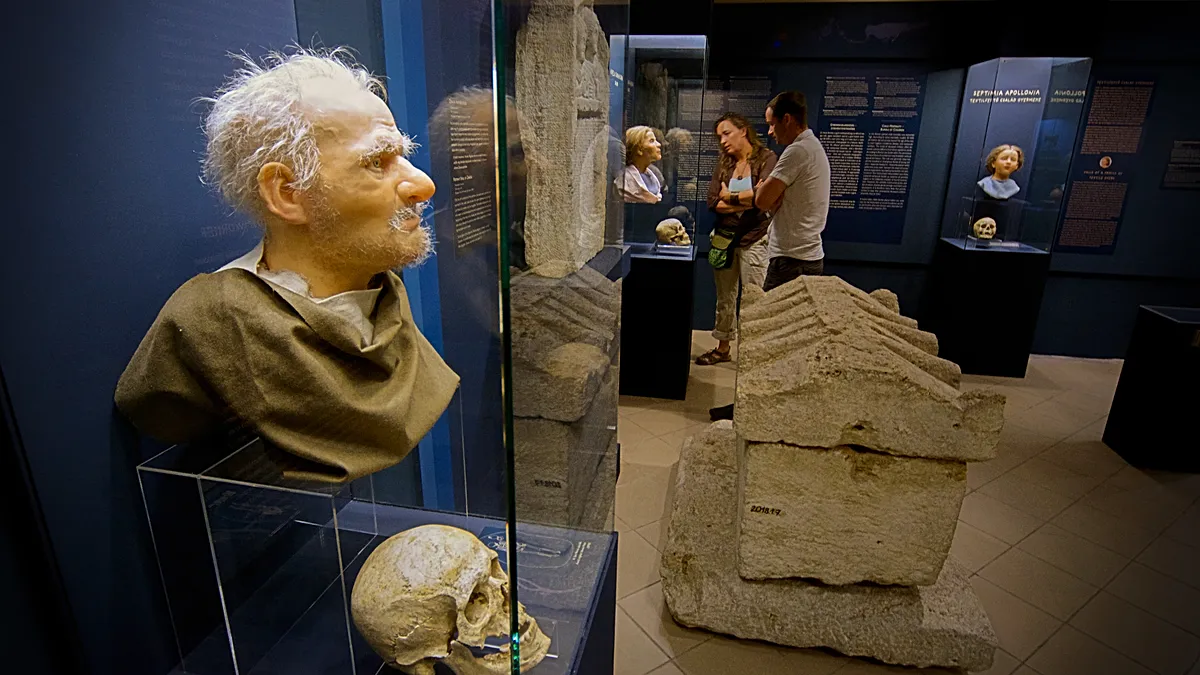
Poinews.com – Most realistic ancient Roman faces revealed at a groundbreaking exhibition in Budapest, where forensic art and historical research converge to bring the past to life. The Aquincum Museum has unveiled a collection of 16 meticulously crafted facial reconstructions, offering a rare glimpse into the physical appearance of Roman settlers who once inhabited the region. Using advanced 3D-printed skull models and detailed plasticine sculpting, the project bridges the gap between scientific analysis and artistic interpretation, allowing visitors to visualize the faces of individuals who lived over two millennia ago. This immersive experience combines cutting-edge technology with traditional craftsmanship, creating a unique blend that enhances historical storytelling and public engagement.
Each reconstruction is based on the remains of individuals discovered at the Aquincum archaeological site, a location that has long been a focal point for understanding Roman influence in Hungary. The process begins with DNA analysis and anthropological studies of the skeletal remains, which help determine factors such as age, sex, and geographic origin. For instance, some of the faces were inspired by bones traced back to Italy, Scotland, Syria, and the Sarmatian and Celtic tribes, highlighting the diverse cultural makeup of the Roman community in the area. These faces are not just artistic endeavors but serve as a powerful tool for connecting modern audiences with the lived experiences of ancient inhabitants.
“Excavated bones often end up catalogued in storage with no life or soul,” said Peter Vamos, one of the curators. “This exhibition aims to restore their humanity by giving them a voice and a face.”
A Window into Roman Life in Hungary
The exhibition, titled “Once We Were Like You,” goes beyond mere reconstruction by contextualizing the faces within the broader narrative of Roman settlement in Hungary. Visitors are invited to explore the daily lives, challenges, and identities of these individuals through accompanying artifacts and interactive displays. For example, the discovery of bone inflammation in some remains suggests that many residents endured harsh labor and dietary hardships, placing them in the lower middle class of Roman society. These findings challenge stereotypes and offer a more nuanced understanding of the social dynamics and struggles faced by ordinary people during the Roman era.
What sets this exhibition apart is its commitment to accuracy and transparency. While the names and professions of the reconstructed individuals are informed by historical records, they remain open to interpretation. This approach acknowledges the limitations of ancient documentation while embracing the creative possibilities of modern science. The use of hyper-realistic silicone recreations further elevates the realism of the project, ensuring that each face is not only visually striking but also scientifically grounded. Such attention to detail makes the exhibition a valuable resource for both scholars and the general public, fostering a deeper appreciation for the complexities of Roman life in the region.
The impact of the Most realistic ancient Roman faces on visitor engagement is evident in the exhibition’s design. By combining physical reconstructions with multimedia elements, the museum creates an environment that feels both educational and emotionally resonant. This method not only captures the imagination but also encourages critical thinking about how history is preserved and interpreted. As the exhibition runs until 31 October, it provides a timely opportunity for audiences to explore the enduring legacy of the Roman Empire through a humanizing lens, bridging the ancient past with contemporary perspectives.
Curators emphasize that the Most realistic ancient Roman faces are part of a larger effort to revive interest in Roman history across Hungary. The project’s interdisciplinary nature—uniting archaeologists, artists, and technologists—demonstrates the collaborative spirit required to bring history to life. By showcasing the diversity of the Roman population, the exhibition challenges the notion of a monolithic Roman identity, instead presenting a mosaic of cultures, backgrounds, and experiences. This approach aligns with current trends in historical education, which prioritize inclusivity and relatability to engage younger generations.
As the exhibition continues to attract attention, it underscores the importance of preserving and interpreting archaeological finds. The Most realistic ancient Roman faces serve as a testament to the ingenuity of both ancient and modern civilizations, proving that history is not just about dates and artifacts, but about the people who shaped it. With its blend of science, art, and storytelling, this display in Budapest is poised to leave a lasting impression, inviting visitors to see the past through a new and more human perspective.