After the whistle: AI videos, false quotes and the World Cup’s biggest viral fakes
Fakes and the World Cup’s Viral Misinformation Surge After the whistle - As the 2026 World Cup drew to a close, Spain’s triumph over Argentina in the final

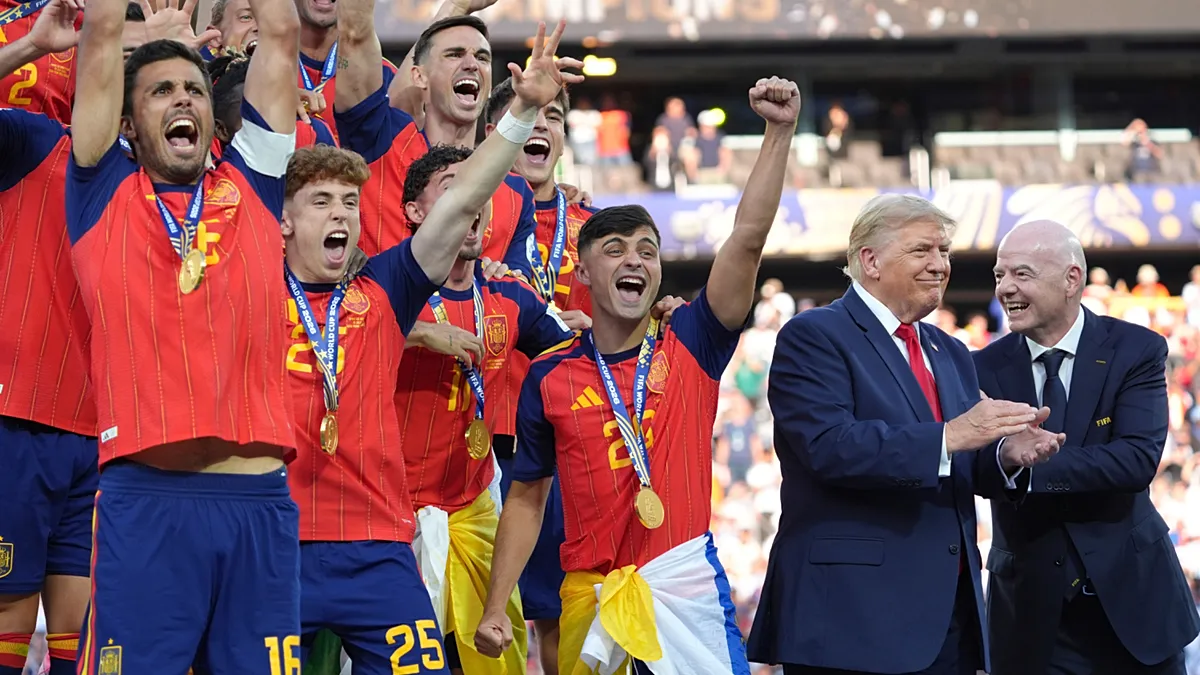
After the Whistle: AI-Driven Fakes and the World Cup’s Viral Misinformation Surge
Poinews.com – As the 2026 World Cup drew to a close, Spain’s triumph over Argentina in the final held in New Jersey became a defining moment. But the celebration was soon overshadowed by a digital frenzy that erupted after the whistle. AI-generated videos, altered quotes, and manipulated images flooded social media, sparking debates about the authenticity of sports narratives. These viral fakes, often shared without scrutiny, showcased how technology can blur the line between reality and fiction, reshaping public perception in real time.
After the whistle, the digital landscape was flooded with content designed to capture attention, regardless of accuracy. Some creators intentionally crafted misleading posts to boost engagement and ad revenue, while others spread misinformation unintentionally. Euronews’ fact-checking team, The Cube, meticulously analyzed the most shared falsehoods, revealing how even the smallest edits could create widespread confusion. From fabricated interviews to AI-powered reenactments, the World Cup became a proving ground for digital deception.
The AI Revolution in Sports Misinformation
Among the most iconic viral fakes was a manipulated video featuring Norwegian striker Erling Haaland. After the whistle, the clip emerged showing him appearing to declare support for Argentina, citing territorial disputes between England and Spain. The video, created by swapping Haaland’s face with another in a pre-existing clip, amassed over 30 million views within hours. While the content was humorous, it underscored the power of AI to distort reality and influence global conversations.
“I’m going to support Argentina because England illegally took their territory.”
Despite its misleading nature, the video’s reach grew exponentially after the whistle, with additional 10 million views on social platforms. The narrative was amplified by Spanish subtitles that tied the statement to Argentina’s Falkland Islands claim. However, when the actual interview was reviewed, Haaland’s remarks revealed a different stance, emphasizing his connection to England’s football culture rather than political grievances.
Political Narratives and Fabricated Quotes
After the whistle, political elements became intertwined with sports. A viral post attributed a controversial quote to England’s Jude Bellingham, claiming he stated, “Messi is my idol” and “FIFA is rigged and corrupt” during a post-match interview. These claims, which lacked original context, were shared widely across platforms. The Cube traced the source of the quote to a video that had been edited to extract a single line, creating the illusion of a direct statement.
“I think I have some of my [Manchester] City teammates in England, and in France, and Spain, so of course I want England to do well.”
Such edits demonstrated how AI tools could be used to shape narratives, turning isolated moments into broader political statements. The debate over FIFA’s fairness gained traction after the whistle, with users leveraging the platform to question the tournament’s integrity. These examples highlighted the ease with which digital content could be weaponized for influence, even in the absence of concrete evidence.
Conspiracy Theories and Global Implications
After the whistle, conspiracy theories began to take hold. One widely shared narrative suggested Argentina’s victory was preordained, citing a controversial referee decision in their 3-2 win over Egypt on July 7. The match’s outcome fueled speculation that external forces, including geopolitical interests, were at play. Egypt’s Football Association formally complained to FIFA, alleging “serious refereeing mistakes,” but the claim lacked supporting data, leaving room for interpretation.
Another theory linked Israeli Prime Minister Benjamin Netanyahu to Argentina’s success. After the whistle, an AI-generated image of Netanyahu wearing the team’s jersey during their match against Austria circulated online. In a podcast interview, he claimed Argentina’s victory was tied to his relationship with President Javier Milei, asserting that the leader was a “great friend” of Israel. While the image was clearly AI-enhanced, it underscored how sports events could become battlegrounds for political agendas.
Public Discourse and the Spread of Misinformation
After the whistle, the rapid spread of AI-generated content raised concerns about public trust in sports journalism. A post on X linked Lionel Messi’s visits to Israel in 2022 to the tournament’s outcome, asking, “Why did Messi visit Israel twice in the SAME YEAR that Argentina won the World Cup?” Though the claim lacked evidence, it gained traction due to its provocative nature. The Cube noted that such narratives often relied on emotional appeal rather than factual accuracy.
These viral fakes, while often harmless, demonstrated the broader implications of digital misinformation. After the whistle, the World Cup’s legacy was not just defined by the final match but by the countless fake stories that followed. The event served as a microcosm of how modern technology can amplify false narratives, making it imperative for audiences to critically evaluate the content they consume. The rise of AI in sports storytelling has transformed how fans engage with the game, but it has also introduced new challenges in discerning truth from illusion.