Zelenskyy wants to build up pressure on Russia to force Moscow to peace talks
Zelenskyy Intensifies Pressure on Russia for Peace Talks Strategic Approach to Deter Russian Advances Zelenskyy wants to build up pressure - President

Zelenskyy Intensifies Pressure on Russia for Peace Talks
Strategic Approach to Deter Russian Advances
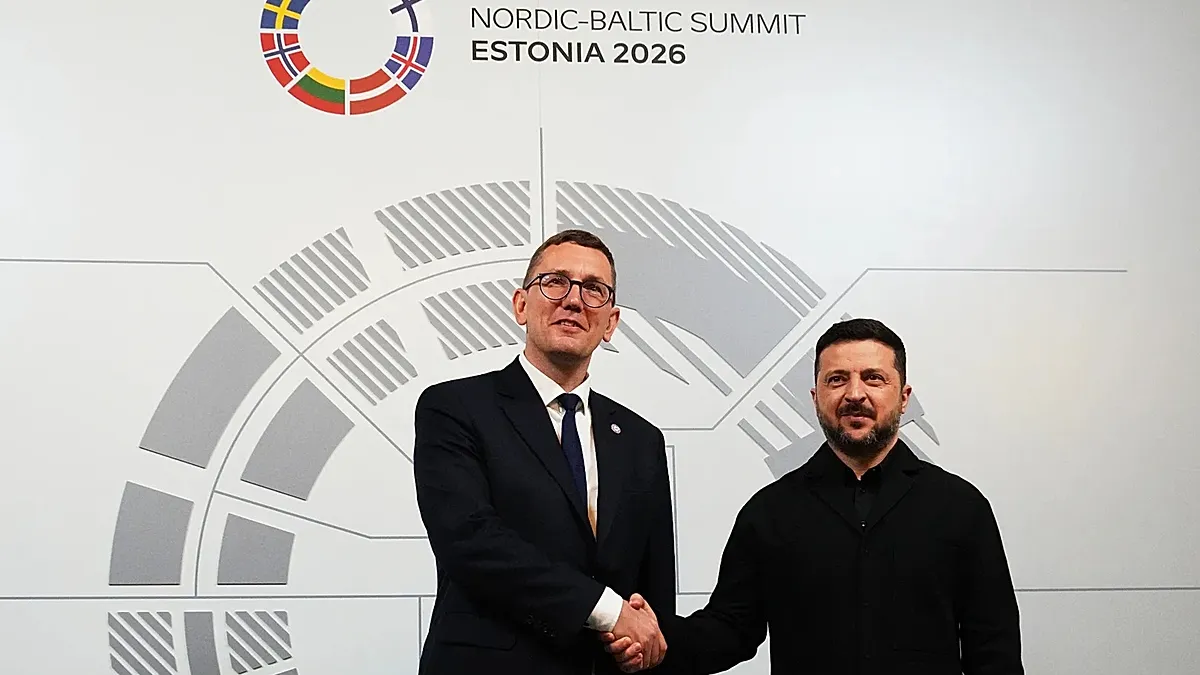
Poinews.com – President Volodymyr Zelenskyy of Ukraine is taking decisive steps to escalate pressure on Russia, aiming to push Moscow toward meaningful peace negotiations. As the war in Ukraine enters its third year, Zelenskyy has emphasized the importance of a strategic diplomatic campaign to make the Kremlin see the benefits of ending hostilities. During a recent visit to Estonia, he underscored that Kyiv’s efforts are focused on creating a situation where Russia cannot afford to continue the conflict without significant losses. “Zelenskyy wants to build up pressure” to ensure that Moscow understands the urgency of reaching an agreement, according to officials from the European Union.
Military Progress and Economic Leverage
Zelenskyy’s diplomatic push is supported by Ukraine’s growing military success on the battlefield, which has disrupted Russian supply lines and weakened its logistical capabilities. This progress has not only bolstered Kyiv’s position but also raised concerns in Moscow about the sustainability of its war effort. “The budget in Moscow is struggling,” Zelenskyy noted, highlighting the financial strain on Russia as a key factor in compelling it to the negotiating table. By intensifying strikes on Russian territory, Ukraine has aimed to demonstrate that its forces can strike back effectively, making peace talks more appealing to the Kremlin.
Recent reports indicate that over 30,000 Russian soldiers have been killed or injured in the past month alone, a figure that Zelenskyy has used to underscore the mounting pressure on Moscow. He also pointed to the destruction of critical infrastructure, such as oil refineries and logistics hubs, as evidence of Ukraine’s strategic advantage. “Zelenskyy wants to build up pressure” to show that the war is no longer a simple territorial contest but a prolonged conflict with far-reaching economic consequences for Russia.
International Diplomatic Engagement
Zelenskyy’s efforts are part of a broader international strategy to secure support for peace talks. He plans to attend the G7 summit in France and the EU summit in Brussels, where he will stress the need for sustained diplomatic pressure. “Europe must be among those making the decisions,” he stated, drawing attention to the importance of a unified European stance. The E3 talks in London and the NB8 summit have also been cited as milestones in this coordinated campaign. “We will focus on how Europe should approach negotiations,” Zelenskyy explained, aiming to align the bloc behind a common goal.
The Kremlin has responded with skepticism, questioning the EU’s commitment to peace. Dmitry Peskov, Russia’s spokesperson, claimed that the US-led mediation is “on hold” and that European leaders are hesitant to take decisive action. “They seem more focused on prolonging the conflict than seeking resolution,” Peskov said, echoing Moscow’s frustration with Western support for Ukraine. Despite this, Zelenskyy remains determined to use the European Union as a critical ally in his push for peace talks.
Drone Threats and Regional Security Cooperation
Amid the diplomatic efforts, concerns over Russian drone activity in the Baltic region have intensified. Recent drone strikes on Estonian power plants and Latvian fuel depots have raised alarm, with Romanian jets intercepting the attacks in Lithuania. Zelenskyy acknowledged the threat but pointed to these incidents as a demonstration of Ukraine’s ability to project power beyond its borders. “Zelenskyy wants to build up pressure” not only through military actions but also by showcasing the broader reach of the conflict.
Following the incidents, Ukraine has announced a partnership with Latvia to enhance regional defense capabilities. Discussions with Latvia’s new prime minister have led to agreements on shared technology and joint training programs. This collaboration reflects Zelenskyy’s broader strategy to strengthen alliances and create a united front against Russian aggression. “We did this in the Middle East and it worked,” he remarked, highlighting the effectiveness of such partnerships in countering threats.
Zelenskyy’s message is clear: by combining military effectiveness with strategic diplomacy, Ukraine can force Russia into a position where peace talks are inevitable. The focus is on making the war as costly as possible for Moscow, both in terms of human lives and economic resources. As the conflict continues, the international community will watch closely to see if Zelenskyy’s strategy can shift the balance toward a lasting agreement.