Study of Botticelli paintings reveals muse behind ‘Venus’ died of tumour
Reveals Muse Behind 'Venus' Died of Tumour Study of Botticelli paintings reveals muse - The study of Botticelli paintings reveals a compelling new theory

Study of Botticelli Paintings Reveals Muse Behind ‘Venus’ Died of Tumour
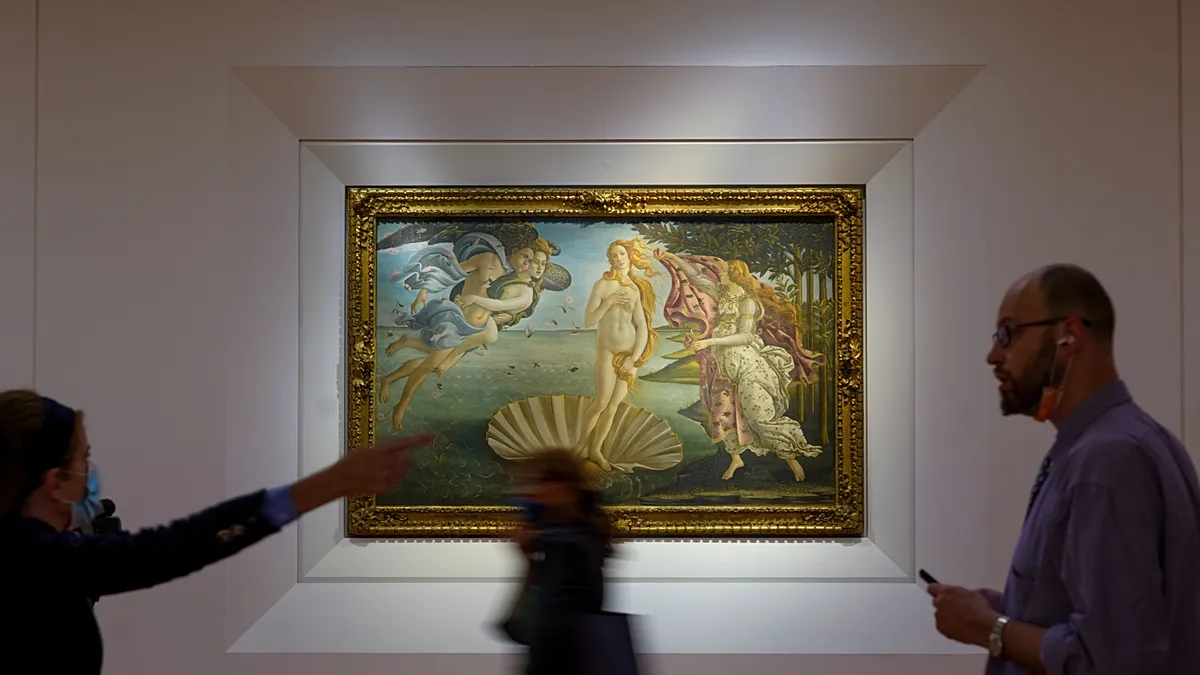
Poinews.com – The study of Botticelli paintings reveals a compelling new theory about the fate of his muse, Simonetta Vespucci. Recent analysis by an international team of researchers has suggested that the model for the iconic “Birth of Venus” and other Renaissance masterpieces may have died at just 23 from a tumor-related illness, rather than the tuberculosis that has long been assumed. This groundbreaking discovery redefines historical narratives surrounding the young woman, who was a prominent figure in 15th-century Florence and deeply connected to the artistic circles of the time.
New Findings in Art History
The study of Botticelli paintings reveals a meticulous process of cross-referencing historical records with visual evidence. Using advanced imaging techniques and facial-recognition software, the team examined over a dozen works attributed to Sandro Botticelli, including “The Birth of Venus” and “Primavera,” to trace subtle changes in the face of the model. These shifts, they argue, indicate a progressive medical condition rather than the gradual effects of tuberculosis. The research not only challenges existing assumptions about Simonetta’s health but also highlights the potential of art as a window into historical medical practices.
The study of Botticelli paintings reveals how Renaissance artists often relied on living models for their work. Simonetta Vespucci, a Florentine beauty, was closely associated with the Medici family and became the muse for several of Botticelli’s most celebrated pieces. Her connection to the artist was both personal and professional, as she was the wife of Antonio di Giovanni, a wealthy merchant who was a patron of Botticelli’s. This relationship, combined with her frequent appearances in his art, underscores the significance of her influence on the artist’s creative process.
Medical Analysis of the Evidence
The study of Botticelli paintings reveals the intersection of art and science in uncovering historical health conditions. Researchers focused on a specific type of tumor, the pituitary adenoma, which affects the brain’s hormone-producing gland. By comparing the facial features of Simonetta in Botticelli’s works over a period of years, they identified consistent anatomical changes that align with the progression of such a tumor. These alterations include a widening of the jawline, softening of the forehead, and a gradual shift in the contours of her face—traits that are often overlooked in traditional art analysis.
“The study of Botticelli paintings reveals that even in the absence of direct medical documentation, visual evidence can provide critical clues about the health of historical figures,” noted Dr. Laura Moretti, a co-author of the research. “By using technology to map these changes, we’re able to connect the dots between art and medical history in ways that were previously impossible.”
Supporting the hypothesis, historical accounts from the late 15th century describe Simonetta experiencing symptoms such as headaches, vision disturbances, and sudden weakness. These symptoms are more indicative of pituitary apoplexy—a condition where a tumor bleeds or ruptures, causing immediate neurological effects—than the chronic symptoms of tuberculosis. The study of Botticelli paintings reveals how such symptoms could have led to her untimely death, casting doubt on the earlier belief that she succumbed to the disease.
Redefining Historical Narratives
The study of Botticelli paintings reveals a shift in how we interpret the lives of Renaissance figures. While tuberculosis was once thought to be the cause of Simonetta’s death, this new research proposes a different path, one that highlights the role of neurological and hormonal conditions in shaping historical outcomes. The findings are particularly significant because they challenge the assumption that artists were always depicting idealized versions of their models, suggesting instead that their works captured real, evolving physical states.
Furthermore, the study of Botticelli paintings reveals how art can serve as a multidisciplinary tool. By integrating medical analysis with historical and artistic insights, researchers have provided a fresh perspective on the Renaissance period. This approach not only enhances our understanding of Simonetta’s life but also encourages scholars to re-examine other artworks for hidden clues about the health and experiences of their subjects. The implications of this research extend beyond Botticelli’s works, offering a template for future studies that bridge the gap between art and science.
The study of Botticelli paintings reveals that the collaboration between artists and their muses was not always smooth. Simonetta’s sudden demise in 1476, at the height of her beauty and influence, has sparked new questions about the challenges faced by Renaissance figures. Some historians speculate that her health condition may have affected her relationship with Botticelli, or that it played a role in her rapid rise and fall in the cultural spotlight. Regardless of these theories, the study of Botticelli paintings reveals a more nuanced picture of the past, one that combines aesthetic beauty with the realities of human physiology.
As the study of Botticelli paintings reveals, the intersection of art and medicine opens up exciting possibilities for historical research. The ability to analyze physical changes in portraits over time, coupled with modern diagnostic tools, allows for a more accurate reconstruction of the lives of figures who might otherwise be lost to history. Simonetta Vespucci, once a symbol of Renaissance ideals, now stands as a testament to how interdisciplinary approaches can reshape our understanding of the past. Her story, long buried beneath centuries of art, is now emerging with a new layer of complexity.