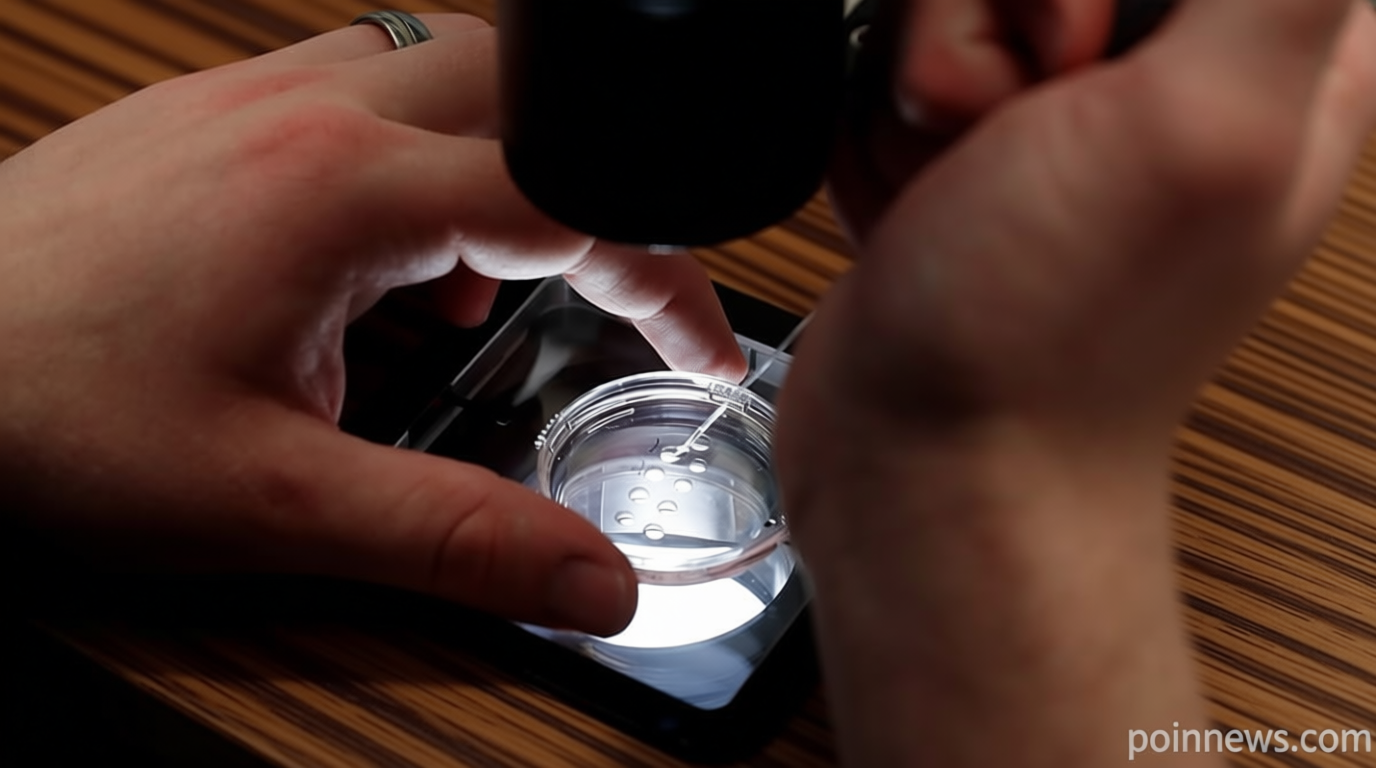
Blood test could identify hormone pattern unique to endometriosis, study finds
New Blood Test for Endometriosis Offers Hope for Early Diagnosis Blood test could identify hormone pattern - A groundbreaking study suggests that a blood test


New Blood Test for Endometriosis Offers Hope for Early Diagnosis
Poinews.com – A groundbreaking study suggests that a blood test could identify hormone patterns unique to endometriosis, offering a potentially life-changing breakthrough in diagnosing the condition. Researchers have discovered a specific hormonal signature that distinguishes endometriosis patients from those without the disease, with accuracy rates surpassing 95%. This development could revolutionize diagnostic methods, which currently rely on a combination of pelvic exams, ultrasounds, MRIs, and laparoscopy—a minimally invasive procedure that requires small incisions to inspect abdominal and pelvic organs. By introducing a non-invasive, quick, and reliable alternative, the test may address the long-standing challenges of delayed diagnosis, particularly in low- and middle-income countries where access to advanced medical imaging is limited.
Challenges in Early Detection
Endometriosis, a chronic condition characterized by the growth of uterine-like tissue outside the womb, often takes years to diagnose. According to the World Health Organization, individuals may endure up to a decade of symptoms before receiving a definitive diagnosis, leading to significant physical and emotional distress. In the UK, experts estimate that the average time between symptom onset and diagnosis is over nine years, underscoring the need for earlier intervention. The current diagnostic process is not only time-consuming but also relies heavily on subjective assessments, which can lead to misdiagnoses or missed cases. This delay in identifying endometriosis can exacerbate the condition, increasing the risk of complications such as infertility and chronic pain.
“This new insight provides a tangible pathway to earlier detection and more personalized treatment options,” said Douglas Gibson, a co-author at the University of Edinburgh, highlighting the study’s potential to reshape clinical practices.
Uncovering Hormonal Insights
While oestrogens have long been associated with endometriosis, the study focuses on a less explored area: androgens. These sex hormones, including testosterone, play critical roles in muscle mass, bone density, and reproductive health. The research team examined 11-oxygenated androgens—specifically 11-ketotestosterone—produced by the adrenal glands, which are known to regulate various physiological processes. By analyzing these markers in 159 women diagnosed with endometriosis and 57 without the condition, the study identified a distinct hormonal profile that correlates with the disease. This finding expands the understanding of endometriosis beyond traditional diagnostic criteria, offering a new dimension to its classification and management.
Methodology Behind the Hormone Detection Breakthrough
The study employed a rigorous methodology to uncover the unique hormonal signature of endometriosis. Researchers measured hormone levels in blood samples, comparing them across two groups: those with confirmed endometriosis and those without. The analysis focused on 11-oxygenated androgens, which are metabolites of testosterone and have been linked to inflammatory responses and tissue growth. By leveraging advanced biochemical techniques and machine learning algorithms, the team was able to pinpoint subtle variations in these hormones that are not detectable through conventional methods. The high accuracy rate of the test, exceeding 95%, suggests that it could serve as a reliable diagnostic tool, complementing existing procedures rather than replacing them entirely.
Implications for Treatment and Management
The discovery of a hormone-based diagnostic method holds profound implications for the treatment of endometriosis. Early detection is crucial for managing the condition effectively, as delays in diagnosis often result in more severe symptoms and higher treatment costs. A simple blood test could enable healthcare providers to identify endometriosis at an earlier stage, allowing for timely interventions that may slow disease progression and improve quality of life. Additionally, this approach could reduce the need for invasive procedures, making diagnosis more accessible in regions with limited medical resources. The ability to track hormone levels over time may also facilitate the development of targeted therapies that address the underlying biological mechanisms of the disease, rather than just its symptoms.
Next Steps for Clinical Implementation
While the study’s results are promising, further research is needed to validate the blood test in larger and more diverse populations. The next phase involves clinical trials to assess its effectiveness across different age groups, ethnicities, and stages of endometriosis. Researchers also aim to refine the test to ensure it is cost-effective and scalable for widespread use. In the meantime, the findings could guide the development of new diagnostic protocols, with potential integration into routine health screenings. If successful, this innovation may significantly reduce diagnostic delays, particularly for women who experience symptoms such as pelvic pain, heavy menstrual bleeding, and infertility, which are often attributed to other conditions.
The blood test could identify hormone pattern, offering a non-invasive solution to a complex problem. This shift from traditional diagnostic methods represents a major advancement in endometriosis research, combining the precision of biochemical analysis with the convenience of a simple blood draw. As the study continues to evolve, it may pave the way for a more accurate and efficient approach to diagnosing and treating the condition, ultimately improving outcomes for millions of individuals worldwide.