Baby boom after the summer fairytale: does football joy raise birth rates?
Baby Boom After the Summer Fairytale: Does Football Joy Raise Birth Rates? Baby boom after the summer fairytale - The 2014 World Cup victory in Rio de Janeiro

Baby Boom After the Summer Fairytale: Does Football Joy Raise Birth Rates?
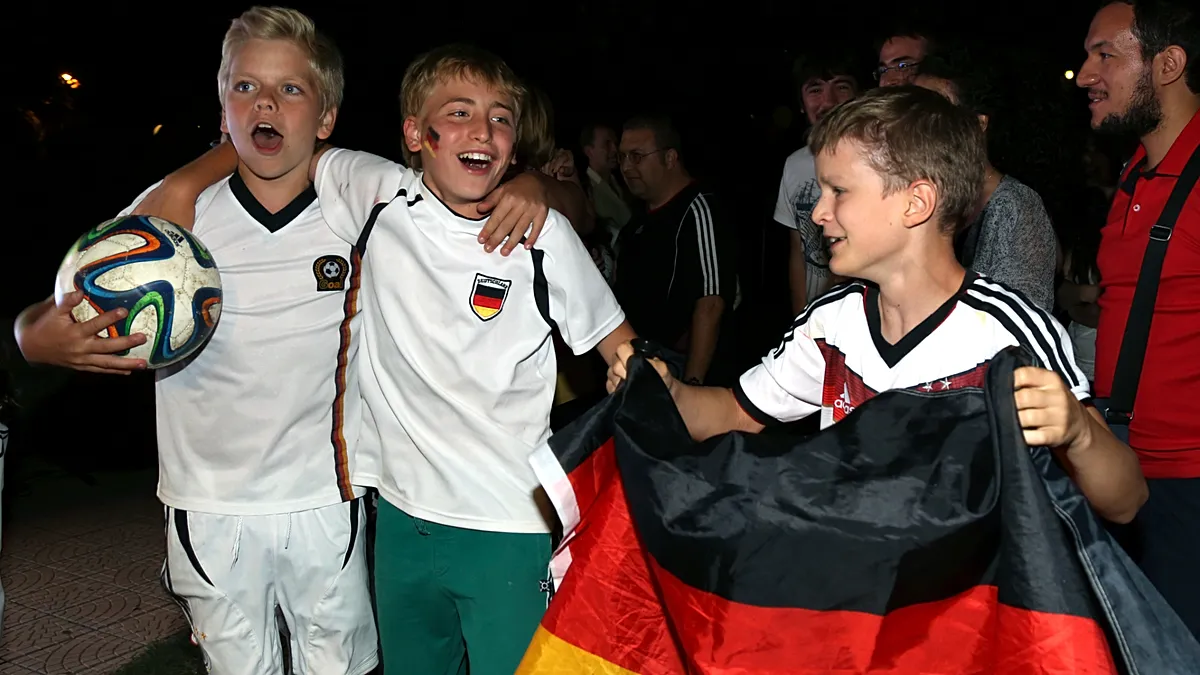
Poinews.com – The 2014 World Cup victory in Rio de Janeiro ignited a wave of national celebration, with millions of Germans cheering on balconies, in streets, and at fan zones. On 13 July 2014, Mario Götze’s last-minute goal against Argentina secured Germany’s triumph, drawing over 30 million viewers to watch the final on television. The event’s euphoric aftermath sparked a question: could this collective joy have translated into a surge in births?
A Prediction Before the Celebration
Even before the final, Saxon family policy expert Alexander Krauß (CDU) suggested that the nation’s heightened spirits might lead to an increase in births. This idea was later reported by WirtschaftsWoche, which cited a statement from Krauß in the Bild newspaper:
“When the ball is rolling, the mood is high not only in front of the television but also in bed. Goals for Germany mean babies for Saxony!”
The 2006 World Cup: A Precedent?
Similar speculation had occurred after the 2006 World Cup, when Germany hosted the tournament and the country was filled with excitement. The phenomenon of “football babies” had already begun circulating, with fan zones packed and public morale at an all-time high. Journalist Lena Cassel, speaking on NDR, described the period as an “emotional loosening-up,” hinting at a possible connection between sporting success and fertility rates.
Data from 2007: Mixed Signals
By early 2007, the Frankfurter Allgemeine Zeitung noted a “winter fairy tale after the summer fairy tale,” citing full antenatal classes and maternity wards operating at full capacity. Hamburg’s Asklepios clinic reported a 10% rise in births for March 2007, while Berlin’s state statistics office recorded an uptick from around 2,400 to 2,800 births. Vivantes hospitals saw a 11% increase, and Cologne experienced 116 more births in April than the same month the year prior. However, in 2015, the pattern was less clear.
2015: A Statistical Challenge
Health insurance data and sales figures from baby goods retailers initially seemed to support the hypothesis. Yet WirtschaftsWoche found little concrete evidence in 2015. Barmer GEK stated,
“We have no data that provides information on expected birth numbers in the coming months.”
Techniker Krankenkasse echoed this, saying they could “not derive anything robust from the data available.” Pregnancy test manufacturers also noted no spike, with Dolorgiet reporting July 2014 as below average and August as typical. BabyOne, a retailer, attributed increased pram sales to trends that had started in autumn 2014.
The Reality of Numbers
By spring 2015, the anecdotal narrative had shifted into a statistical debate. A survey by the German Press Agency found no unusual birth rates in registry offices or hospitals. None of the respondents acknowledged a widespread baby boom. In Berlin, the Charité hospital even recorded a drop in births, with only 14 delivered between 4 and 6 April—far below the usual 9 to 10 per day.
Revisiting the 2006 Hypothesis
Looking back, the 2006 World Cup’s impact on birth rates was also questioned. The Federal Statistical Office revealed that the first half of 2007 saw a slight decline in births, with 313,100 children born compared to 313,900 in the same period the year before—a 0.3% drop, as Der Tagesspiegel noted. Martin Conrad, the official responsible, remarked,
“There had by no means been a baby boom nine months after the 2006 World Cup.”