Eleven killed in France as parachute training aircraft crashes near Nancy
Eleven Killed in France as Parachute Training Aircraft Crashes Near Nancy Eleven killed in France as parachute - On June 28, 2026, a tragic incident unfolded

Eleven Killed in France as Parachute Training Aircraft Crashes Near Nancy
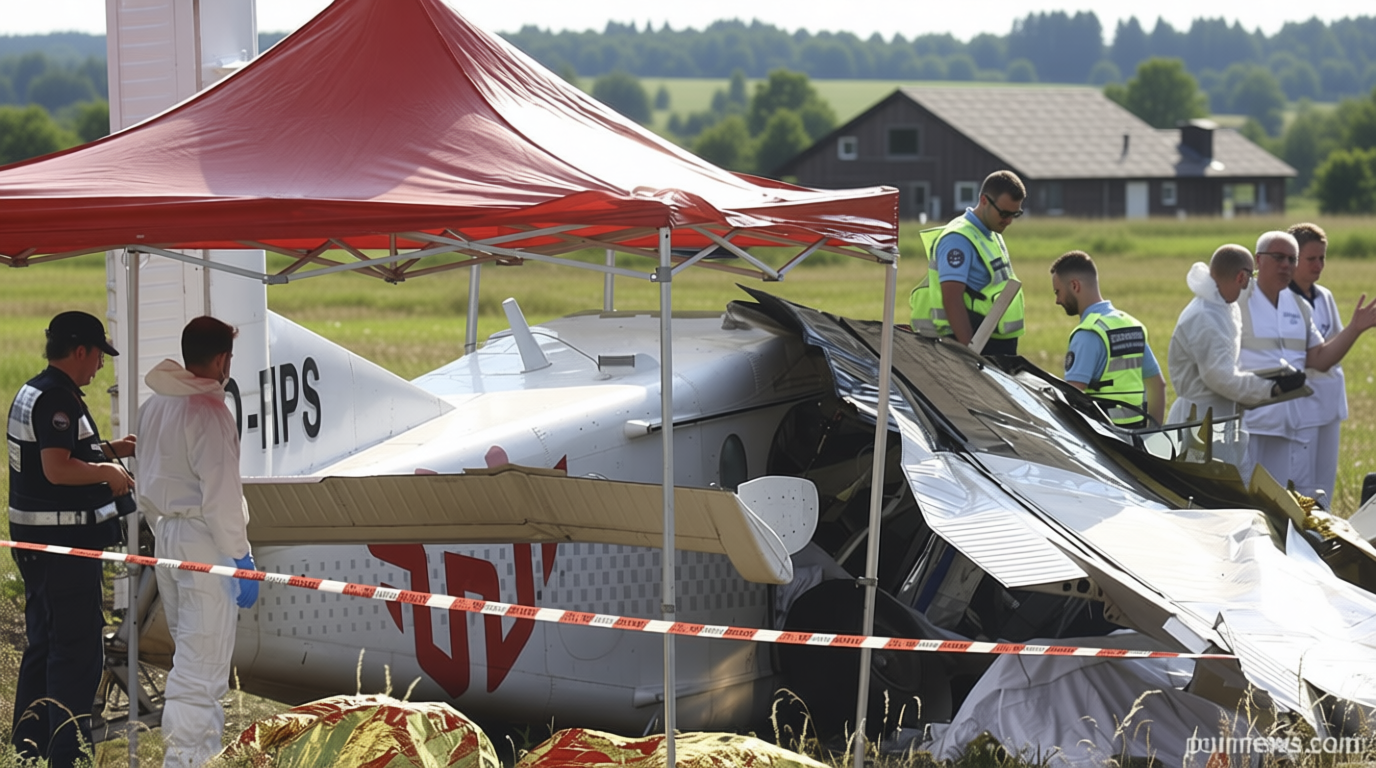
Poinews.com – On June 28, 2026, a tragic incident unfolded near Nancy, France, when a parachute training aircraft crashed in the town of Tomblaine, killing eleven people. The Pilatus PC-6, a light utility plane commonly used for aerial training, suffered a catastrophic failure shortly after takeoff, plunging into a residential area and leaving a profound impact on the local community. The crash, which occurred around 11:00 AM, was captured on video by nearby residents, who described the moment as shocking and surreal. This event has since become a focal point in discussions about aviation safety and the risks associated with parachute training operations.
The Crash Site and Immediate Impact
The aircraft descended nearly vertically before landing in a nearby neighborhood, just 300 meters from the Tomblaine aerodrome. The crash site, located close to a cycle path and a large supermarket, was initially chaotic as emergency services rushed to the scene. Despite the proximity of the crash to populated areas, no one on the ground was injured, though the emotional toll on witnesses and families was immense. Local authorities have since cordoned off the area and are working to ensure the safety of the surrounding residents while the investigation unfolds.
Casualties and Context of the Incident
The eleven fatalities included five instructors, five student parachutists, and the pilot, making it a devastating loss for both the training program and the local community. Yves Séguy, the prefect of Meurthe-et-Moselle, confirmed that the aircraft was in the middle of a parachute jump training session when it encountered a technical malfunction. “The plane fell almost vertically, on the very edge of a housing estate, right next to the aerodrome,” he said, emphasizing the speed and precision of the descent. The incident has raised questions about the safety protocols in place for training flights, particularly those operating in proximity to residential zones.
“Some of the victims’ families were at the airport when the crash happened. They saw the plane fall, which adds to the shock,” stated French Interior Minister Laurent Nuñez. His comments underscore the personal tragedy of the event, as loved ones were present during the accident, intensifying the community’s grief and the need for transparency in the investigation.
Response and Investigation Efforts
Following the crash, a team of 15 specialized officers from the Air Transport Gendarmerie has been deployed to Tomblaine to conduct a thorough investigation. Their tasks include retrieving communications with the control tower, analyzing radar data, and collecting witness testimonies to reconstruct the sequence of events. The absence of onboard black boxes, however, has posed a significant challenge, as investigators must rely on external sources such as video footage and maintenance records to determine the cause of the crash. The Paris public prosecutor’s collective accidents unit has taken the lead in coordinating the probe, with efforts ongoing to gather all available evidence.
Expert Analysis and Aviation Safety Concerns
Aviation consultant and president of Aviation Sans Frontières, Gérard Feldzer, highlighted the difficulties faced by investigators due to the lack of flight recorders. “The aircraft wasn’t fitted with black boxes, and there were no communications with the control tower before it fell,” he noted. This absence has forced teams to piece together the final moments of the flight using fragmented data and visual accounts. Experts are now scrutinizing the Pilatus PC-6’s maintenance history and operational procedures, seeking to identify potential factors that could have led to the crash. The BEA, France’s aviation safety authority, has classified the incident as the most severe general aviation accident in terms of loss of life, underscoring its significance within the country’s aviation history.
In the wake of the disaster, the local community has come together to support the families of the victims. Psychological aid has been provided to witnesses, and two victim support organizations, Paris Aide aux Victimes and France Victimes 54, are assisting in the emotional recovery process. The incident has also sparked a renewed focus on the risks associated with parachute training, particularly in areas where residential and aviation zones overlap. As the investigation continues, authorities are working to ensure that such tragedies are minimized through improved safety measures and better coordination between training operations and civilian populations.