EU leaders rally behind International Criminal Court after fresh US sanctions
EU leaders rally behind International Criminal Court after Washington imposed fresh sanctions on two senior judges probing Israel's conduct in Gaza

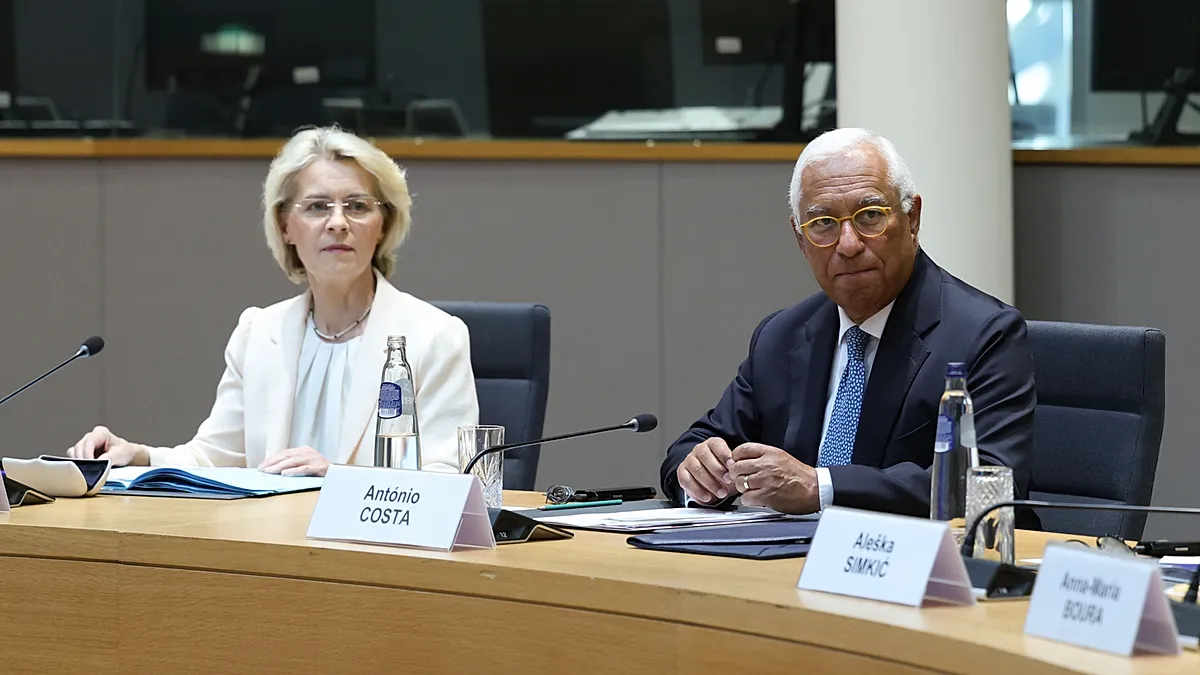
Table of Contents
US Sanctions Target ICC Judges Probing Gaza
Poinews.com – EU leaders rally behind International Criminal Court after Washington imposed fresh sanctions on two senior judges probing Israel’s conduct in Gaza. Presidents of the European Commission and Council, Ursula von der Leyen and António Costa, issued a joint statement affirming that the Hague-based tribunal must operate free from external interference. “The ICC helps deliver justice to the victims of some of the world’s most horrific crimes,” the two EU leaders wrote. “To carry out this essential work, its judges and officials must be able to act independently and without external pressure.”
On Tuesday, US Secretary of State Marco Rubio announced that Washington would sanction the ICC’s president, Japan’s Tomoko Akane, and senior lawyer Abdoulaye Seye of Senegal, who had been tasked with investigating war crimes allegedly committed by Israel in its war in Gaza. Rubio described the court as a “corrupt and fatally politicised supranational court that has maliciously abused its authority and exceeded its mandate,” adding that the US would “not tolerate its assault on state sovereignty.” He further alleged that both officials had sought to “prosecute officials whose government has not consented to ICC jurisdiction.”
Neither Israel nor the United States is a member state of the ICC, but Palestine has held membership since 2015, granting the court jurisdiction over crimes allegedly committed on its territory. The Netherlands reacted sharply on Wednesday, with Foreign Minister Tom Berendsen stating that his government “disapproves” of the sanctions. A German government spokesperson likewise affirmed Berlin’s support, noting that the court “has held accountable those guilty of the gravest crimes” and is “fulfilling its mandate exactly as intended.”
European Pushback and Institutional Fallout
The ICC itself characterised the sanctions as a “flagrant attack” on judicial independence. The Tuesday measures represent the latest in a string of recent moves by the Trump administration aimed at discrediting the Hague institution. Washington has already sanctioned as many as 11 senior court officials, including former chief prosecutor Karim Khan. Rubio has previously spoken of the US wish to “dismantle” the court “brick by brick” and has urged member states to withdraw from the Rome Statute. Venezuela and Chad recently announced their own departures, while Hungary’s previous government under Viktor Orbán had signalled its intention to leave before the decision was reversed following Prime Minister Péter Magyar’s landslide electoral victory in April.
As EU leaders rally behind International institutions under mounting external pressure, all 27 member states remain ICC members. Yet the court’s arrest warrant for Benjamin Netanyahu continues to provoke mixed and often ambiguous reactions across Europe. France, Germany, and Italy have each declined to commit publicly to enforcing the warrant should Netanyahu set foot on their soil. Several senior Members of the European Parliament called on the bloc to intensify its condemnation of the new sanctions on Wednesday.
“The lack of European alternatives for crucial services meant that the restrictions he faced would be similar to ‘true civil death’ for a younger European.” — French judge Nicolas Guillou, speaking to Euronews earlier this year
Iratze García, president of the Socialists and Democrats group in the European Parliament, urged the bloc to activate the so-called Blocking Statute, a legal mechanism that would render it unlawful for EU-based companies and banks to comply with extraterritorial US sanctions. Guillou’s remarks underscore how the restrictions have already seeped into the daily professional lives of ICC judges, limiting their access to banking, travel, and other essential services.
Frequently Asked Questions
Why can the ICC investigate crimes in Gaza? Palestine became an ICC member state in 2015, which gives the court jurisdiction over alleged crimes committed on Palestinian territory, including Gaza. Neither Israel nor the US is a member, but the court’s mandate extends to member-state territory.
What is the EU Blocking Statute? It is an EU regulation that allows member states to disregard certain foreign court judgments and sanctions, effectively shielding