European Commission renews pressure to open new accession cluster with Serbia
European Commission Renews Pressure to Open Serbia's EU Accession Cluster European Commission renews pressure to open - The European Commission has once again

European Commission Renews Pressure to Open Serbia’s EU Accession Cluster
Poinews.com – The European Commission has once again intensified its push to open a new EU accession cluster for Serbia, citing the country’s progress on key reform commitments. This renewed effort follows a detailed evaluation of Serbia’s efforts to meet the European Union’s standards in areas such as judicial independence, media freedom, and alignment with EU foreign policy. The Commission’s latest assessment, shared with Euronews on 3 July, signals that the groundwork for advancing Serbia’s integration into the bloc is now more solid than ever. With the upcoming EU ambassadors’ meeting as a critical deadline, the decision to open Cluster 3 will determine the next phase of Serbia’s path toward EU membership.
Progress in Reforms and Strategic Alignment
Cluster 3, which had been delayed since 2021 due to concerns over rule of law and judicial reforms, has seen renewed momentum. The Commission highlights Serbia’s reversal of controversial judicial amendments as a pivotal step, alongside improvements in media freedom and electoral systems. These developments are viewed as evidence of the country’s commitment to democratic consolidation and EU values. Furthermore, Serbia’s recent cooperation in implementing EU sanctions against Russia, though not fully aligned, is noted as a demonstration of its strategic priorities. The Commission’s position emphasizes that the overall balance of reforms is now sufficient to warrant the next stage of accession talks.
Key reforms, including the establishment of a more independent regulatory authority for electronic media and amendments to election-related legislation, are presented as critical indicators of Serbia’s progress. These measures are intended to address longstanding concerns about the country’s adherence to EU principles. The Commission also underscores Serbia’s efforts in strengthening the Prosecutor’s Office for Organised Crime, which is seen as a major step toward judicial transparency. While these achievements are significant, the Commission stresses that the process is far from complete, and ongoing scrutiny will be necessary to ensure sustained compliance.
Challenges and the Kosovo Factor
Despite the positive developments, challenges remain. Serbia’s relationship with Kosovo, particularly its unresolved status dispute, continues to be a point of contention among EU members. The Commission’s document acknowledges that while Serbia has made strides in other areas, its commitment to the EU’s core values—especially in the Balkans—must also include resolving the Kosovo issue. This is seen as a prerequisite for full membership, as it reinforces regional stability and Serbia’s ability to uphold EU-led peace initiatives.
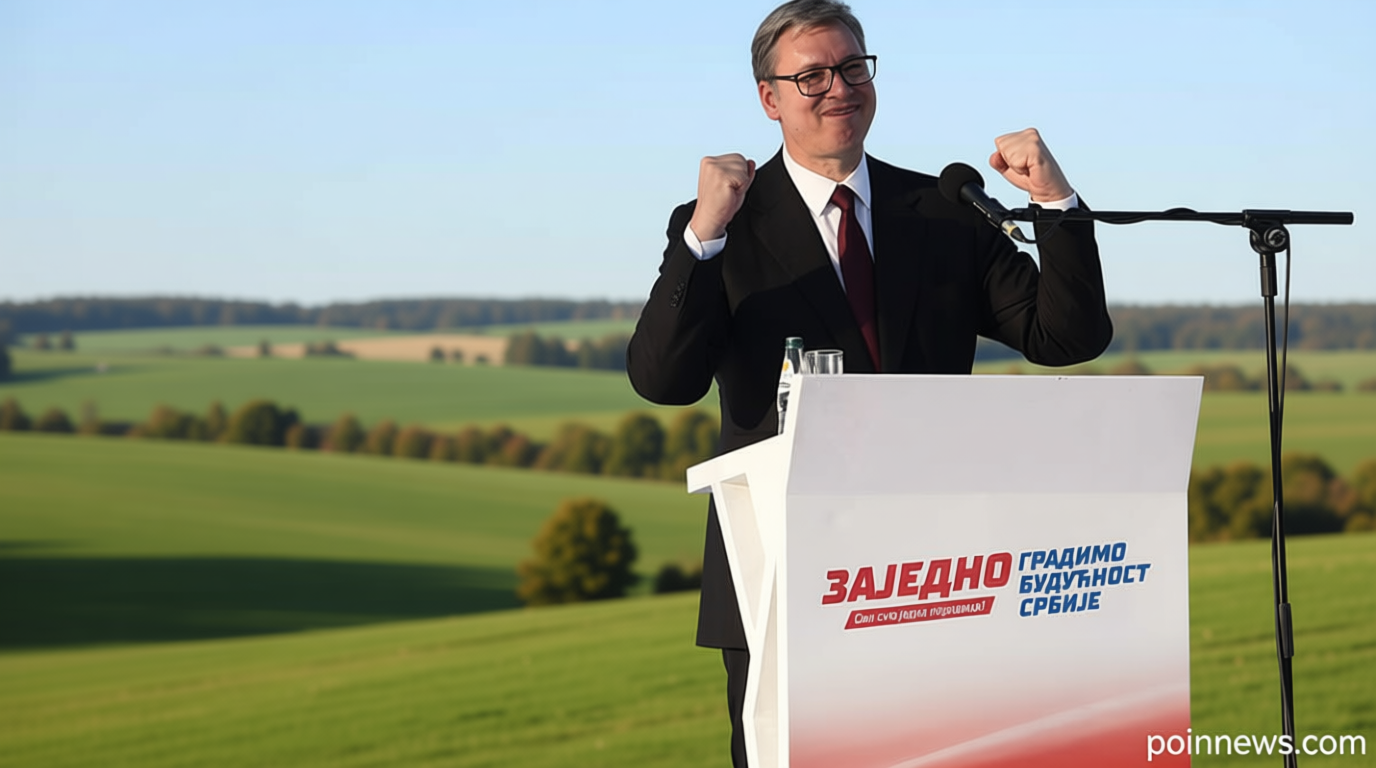
The Commission’s push for Cluster 3 is also influenced by Serbia’s broader political landscape. While the government under President Aleksandar Vučić has prioritized EU integration, concerns about democratic backsliding persist. The document notes that certain EU member states remain cautious, highlighting the need for continued progress in areas such as judicial independence and anti-corruption measures. These concerns are balanced against Serbia’s historical significance as a bridge between the EU and the Balkans, a role that has been crucial in past EU expansion efforts.
Implications for Serbia’s EU Journey
Opening Cluster 3 would mark a major milestone in Serbia’s EU accession process, accelerating negotiations and bringing the country closer to formal membership. The Commission’s emphasis on this step reflects the importance of Serbia as a strategic partner in the Balkans. By advancing the accession process, the EU aims to strengthen its influence in the region and encourage other countries to pursue integration. For Serbia, this move could bring substantial economic and political benefits, including access to EU funding and deeper institutional reforms.
However, the decision to open the cluster will require consensus among all EU members. The document notes that while some nations are supportive, others remain skeptical. This divergence underscores the complexity of EU enlargement, where geopolitical considerations often play a role. The Commission’s assessment suggests that Serbia’s reforms, though incomplete, have reached a level of maturity that makes the case for further integration stronger. The upcoming ambassadors’ meeting is thus a crucial moment to gauge the collective appetite for Serbia’s accession and to address any lingering concerns.
“The European Commission believes that Serbia has fulfilled the necessary conditions to open Cluster 3, with significant progress in judicial and institutional reforms,” the note states.