From Garpiya drones to a Starlink rival: Europe strikes at Russia’s military might
The European Union has launched its twenty-first sanctions package targeting Moscow's military-industrial complex. This comprehensive measure focuses on

From Garpiya Drones to a Starlink Rival: EU Sanctions Hit Russia
Poinews.com – The European Union has launched its twenty-first sanctions package targeting Moscow’s military-industrial complex. This comprehensive measure focuses on disrupting critical supply chains while addressing emerging threats, from advanced drone systems to satellite communications. The initiative represents a coordinated effort to weaken Russia’s capacity to sustain its military operations.
“Russia will only negotiate to end its illegal war and stop killing civilians if it is pressured to do so. Sanctions add to this pressure.”
Targeting the Garpiya Drone Ecosystem
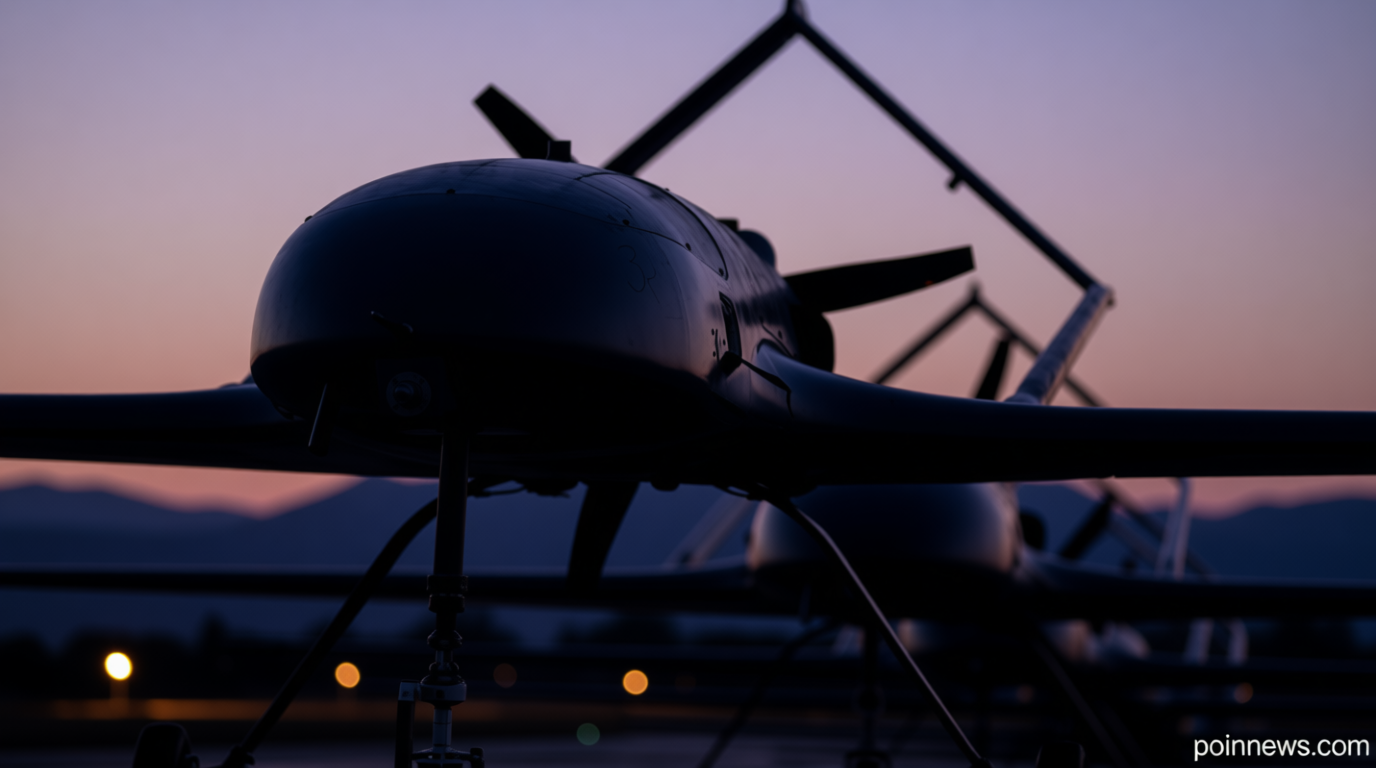
While earlier rounds concentrated on dual-use technologies from India and China, this latest package zeroes in on two priority areas. Officials have prioritized dismantling the production network surrounding the Garpiya long-range drone system, which has caused significant damage to Ukrainian infrastructure and civilian populations. The EU specifically mapped the complete manufacturing and distribution chain, enabling a coordinated strike against more than thirty designations simultaneously.
Following Washington’s three-day ceasefire in May, Moscow deployed over two hundred extended-range aerial vehicles against Ukraine. These attacks damaged power facilities, residential buildings, and educational institutions including a kindergarten. A high-ranking EU representative emphasized that rather than addressing all drone categories indiscriminately, the bloc concentrated specifically on the Garpiya platform for maximum impact.
Countering Russia’s Satellite Communications Ambitions
Another crucial element addresses Moscow’s attempt to establish an independent satellite network. The Rassvet constellation, developed by aerospace firm Bureau 1440, represents Russia’s effort to create a functional alternative to Elon Musk’s Starlink service. Initial deployment saw sixteen satellites reach orbit during March 2026, with plans to expand to two hundred fifty operational units by 2027.
Russian media outlets have characterized the project as a domestic Starlink replacement designed to deliver broadband connectivity across the country. Planners envision reaching nine hundred satellites by 2035. This component of the sanctions package aims to prevent Rassvet from achieving full operational capacity, which could simultaneously degrade current combat effectiveness while limiting future military threats to European security.
“One thing that I find particularly important is related to the manufacture of a system that Russia is developing as an alternative to Starlink, so the Russian Starlink project is with in this package.”
Strategic Implications for European Security
Jacob Funk Kirkegaard, a senior fellow at the Bruegel think tank, offered measured optimism regarding the sanctions’ potential effectiveness. He acknowledged that while Russia operates various long-range drone models, focusing on a single category remains worthwhile despite not guaranteeing immediate transformation.
“Russia has multiple types of long-range drones,” he explained. “That doesn’t mean this is a misguided effort. It’s well worth the effort. But we just shouldn’t pretend that targeting one out of many long range drones that Russia has or produces is going to shift the needle on the strategic threat posed to Ukraine today, or for that matter, the rest of Europe in the longer run.”
Kirkegaard emphasized the historical significance of Russia’s Starlink dependency. When Moscow lost access to the American satellite network in February 2026, battlefield operations experienced considerable disruption. The EU’s approach reflects a broader strategy to build independent defense capabilities while systematically constraining Russia’s ability to project power both regionally and globally over the coming decade.
“As the EU or Europe more broadly prepares for a world in which we have to deter Russia on our own for the long run, denying Russia their military capabilities in the next three, four, 10 years from now is very important for our own security.”