From sewers to swimming sites: how Europe’s cities reclaim their rivers
From Sewers to Swimming Sites: How Europe's Cities Reclaim Their Rivers From sewers to swimming sites - As Europe grapples with rising temperatures and

From Sewers to Swimming Sites: How Europe’s Cities Reclaim Their Rivers
Poinews.com – As Europe grapples with rising temperatures and increasingly severe summer heat, cities are revamping their waterways to make them safe for recreational use. What was once a utilitarian network of sewers is now being transformed into vibrant public spaces, with initiatives spanning from Paris to Berlin. This shift reflects a growing belief that accessible, clean rivers are vital urban assets, not just aesthetic perks.
The Science of Clean Water
The European Environment Agency’s latest findings highlight a significant trend: over 85% of bathing sites across the continent now meet high quality standards, with nearly 96% satisfying baseline requirements. This progress follows revisions to the EU’s Bathing Water Directive, which has steadily reduced poor-quality sites from 2.4% to 1.5% while boosting excellent-rated locations to almost 85%. Yet, challenges persist, especially in urban areas aiming to turn inland rivers into swimmable destinations.
“European cities are increasingly investing in rivers and canals, as they offer multiple benefits at once,” explains Vassileios Latinos, a sustainability expert at ICLEI Europe. He adds that these waterways are being reimagined as tools for climate resilience, public health, and daily urban living.
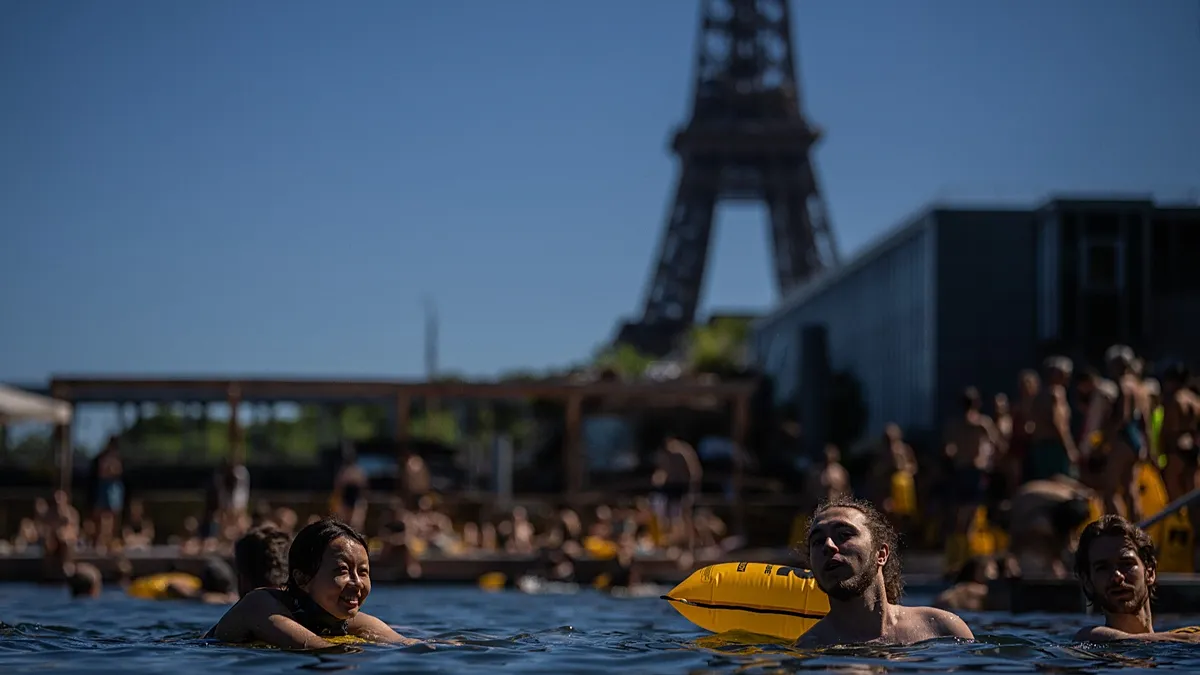
For cities like Paris, Copenhagen, and Berlin, the focus is on integrating water into the urban fabric. In Paris, the Seine’s reopening to swimmers last year was more than a temporary Olympic promotion—it signaled a broader commitment to restoring waterways. The redesign of riverside promenades into pedestrian-friendly zones, for instance, became bustling hubs during recent heatwaves, demonstrating their value as cooling spaces.
Climate-Driven Innovation
Latinos emphasizes that the push for swimmable rivers is driven by climate realities. “Clean waterways within cities can combat heatwaves by offering natural cooling and reducing the urban heat island effect,” he notes. This approach also promotes biodiversity, enhances public spaces, and stimulates local economies, all through a single investment.
However, the transformation hinges on addressing water quality. Eline Boelee, a water and health specialist at Deltares, highlights aging infrastructure as a key issue. Many European cities still depend on combined sewer systems that mix rainwater and wastewater. During heavy rains, these systems overflow, contaminating rivers with pathogens, resistant bacteria, and pollutants like PFAS.
“The real complexity lies in improving water quality,” says Boelee. “Old systems are designed for average conditions, but extreme weather events strain their capacity, leading to surface water pollution.”
Despite the hurdles, cities are forging ahead. In Berlin, local authorities are working with environmental groups to create green corridors and expand public access to waterways. The goal is to reconnect communities with their natural surroundings while ensuring the water is safe for use. For Latinos, this effort is more than practical—it’s a statement of urban priorities. “It shows cities are committed to enhancing their environments,” he argues.
While the science of water treatment advances, the greatest barriers remain people and funding. “Cities need both political will and financial resources to implement these changes,” Latinos acknowledges. The path to swimmable rivers is complex, but the vision is clear: a future where urban waterways are not just functional but integral to sustainable living.