Hungarian MPs set to change constitution to remove Orbán-allied President Tamás Sulyok
Hungarian MPs Target Constitution Change to Remove Orbán-Linked President Sulyok Hungarian MPs set to change constitution - With the focus keyword "Hungarian

Hungarian MPs Target Constitution Change to Remove Orbán-Linked President Sulyok
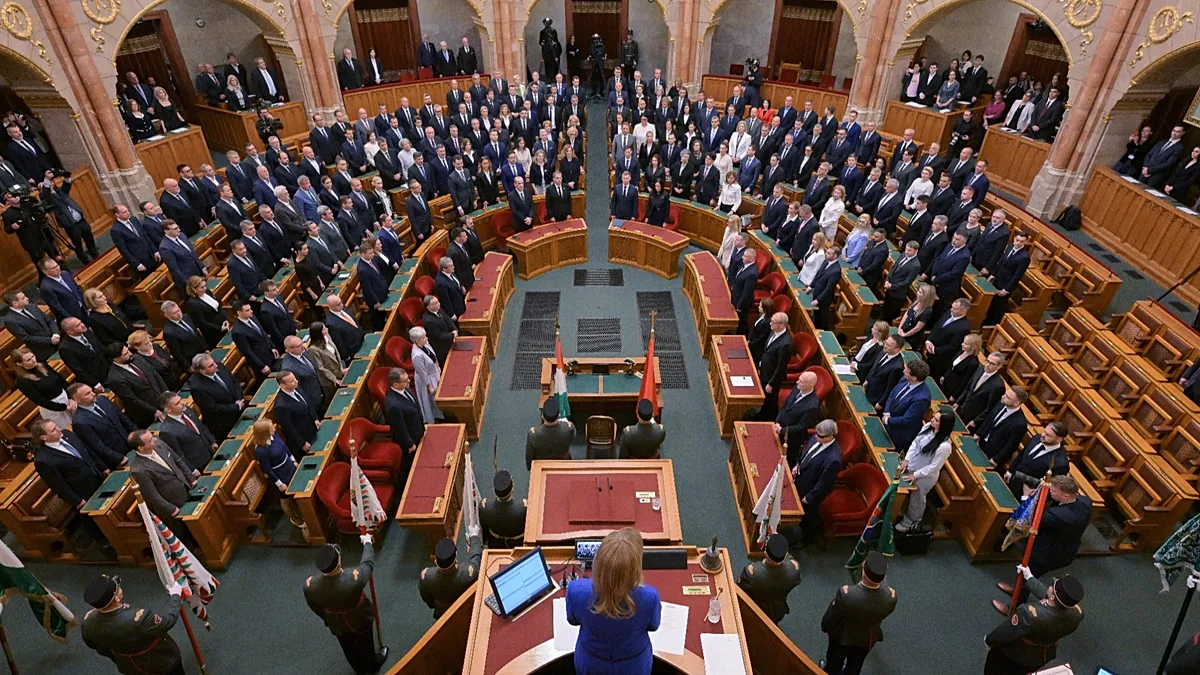
Poinews.com – With the focus keyword “Hungarian MPs set to change” anchoring the opening, the move by lawmakers to amend the constitution represents a pivotal step in reshaping Hungary’s political landscape. Hungarian MPs set to change the framework of governance as they prepare to vote on Monday, aiming to remove President Tamás Sulyok—a staunch supporter of former Prime Minister Viktor Orbán—from power. This constitutional overhaul, championed by Prime Minister Péter Magyar, seeks to dismantle the centralized authority that has defined Orbán’s leadership since 2010. Magyar’s party, which secured a commanding electoral victory in April, has pledged to reduce the influence of Orbán’s allies by targeting key institutional roles, including the presidency.
Context of Orbán’s Rule and Opposition Moves
The proposed amendment stems from years of public discontent with Orbán’s tenure, which critics argue eroded democratic institutions and consolidated power within a small group of loyalists. Sulyok, who assumed the presidency in 2024 after the resignation of Katalin Novak, was initially seen as a reformist figure but has since become a symbol of continued authoritarian control. Magyar’s campaign to change the constitution reflects a broader effort to break from Orbán’s legacy, which included significant reforms to the judiciary and media landscape. The opposition claims these changes have allowed the ruling party to manipulate legal systems for political gain, a narrative that has gained traction following recent corruption scandals.
“The current system has enabled a concentration of power that undermines the principles of democracy,” stated Andras Baka, a former head of the supreme court. “Hungary has become a state where the executive branch dictates the rule of law, and this amendment is a necessary corrective.”
While Fidesz, Orbán’s ruling party, has fiercely opposed the amendment, labeling it as “autocratic,” the opposition has framed it as a long-overdue reform. Rights groups have also expressed mixed reactions, with Amnesty International emphasizing the need for due process in Sulyok’s removal, while Human Rights Watch highlighted the similarity to the Fidesz era’s tactics. The debate underscores a critical divide between the government’s vision of strong leadership and the opposition’s commitment to institutional checks and balances.
Constitutional Reforms and Their Impact
The amendment proposes a two-thirds parliamentary majority for constitutional changes, a threshold that Magyar’s party has already met. This ensures the reforms will pass without requiring opposition support, a strategic advantage in a polarized political environment. Key provisions include a 12-year term limit for lawmakers, a measure designed to prevent the entrenchment of long-standing political figures. Additionally, the amendment reinstates the constitutional court’s authority to review budgetary acts, reversing a 2013 reform that had weakened its oversight role.
“By imposing term limits and restoring judicial independence, the amendment addresses the systemic issues that have plagued Hungary’s governance,” explained legal analyst Mária Varga. “It also creates a mechanism to hold leaders accountable, which is essential for democratic resilience.”
The proposal also mandates the creation of a National Asset Recovery and Protection Office, empowering it to investigate and reclaim assets linked to corruption. This office will work alongside the constitutional court to ensure transparency in public finances. Another significant change is the mandatory retirement age of 70 for constitutional court judges, a move that could reshape the judiciary’s composition and ensure a new generation of legal professionals takes charge. These reforms are expected to have far-reaching consequences for Hungary’s political and legal structures.
Public Support and Electoral Trends
Public sentiment has been a driving force behind the constitutional changes, with a May poll by the 21 Research Centre revealing 67% of voters back Sulyok’s removal. This support highlights a growing frustration with the previous administration’s perceived lack of accountability. Sulyok, who was elected in 2024 by parliament, had limited public recognition before taking office, contrasting with the widespread popularity of Orbán. His tenure has been marked by efforts to consolidate power, including the expansion of executive authority and the appointment of loyalists to key judicial posts.
“Sulyok’s removal is not just a political maneuver but a reflection of the public’s desire for change,” noted political commentator László Kertész. “The Hungarian MPs set to change the constitution are responding to a mandate that has been clear for years.”
Magyar has emphasized that the amendment aligns with the will of the people, who elected his party to challenge Orbán’s dominance. The opposition leader has also pointed to Sulyok’s failure to address corruption allegations or counter Orbán’s divisive rhetoric. If the amendment passes, Sulyok will be required to resign or face impeachment, marking a decisive moment in Hungary’s political evolution.
Global Reactions and Political Implications
The international community has reacted with cautious optimism to the Hungarian MPs set to change the constitution. European Union officials have praised the move as a step toward restoring democratic norms, while US President Donald Trump reiterated his support for Orbán’s reforms. However, critics warn that the amendment could still be used to centralize power under a new regime. The term limits for lawmakers, for instance, might not fully curb the influence of Orbán’s allies, as many current members of parliament were elected under his leadership.
“While the amendment is a positive development, it’s important to ensure it doesn’t become a tool for further centralization,” said EU legal expert Zsuzsa Nagy. “Hungarian MPs set to change the constitution must now demonstrate their commitment to democratic values through action.”
The success of the amendment will depend on its implementation and the political landscape that follows. With Fidesz’s strong presence in the parliament, the ruling party may attempt to resist the changes through legal challenges or by influencing the selection of new judges. The National Asset Recovery and Protection Office could play a crucial role in addressing past corruption, but its effectiveness will be tested by the upcoming elections. This moment marks a critical turning point in Hungary’s history, as the country transitions from a system dominated by Orbán to one where institutional reforms take center stage.
Historical Precedents and Future Outlook
Historically, constitutional changes in Hungary have been used to strengthen the executive branch, a trend that began under Orbán’s leadership in 2010. The current amendment, however, represents a shift toward decentralizing power and reinforcing parliamentary authority. By introducing term limits and restoring the constitutional court’s role, the reforms aim to create a more balanced system where leaders are held accountable for their actions. This aligns with Magyar’s vision of a more transparent and representative government.
“The Hungarian MPs set to change the constitution are not just replacing a president—they are redefining the role of the executive in the country’s governance,” observed political historian Gergely Szabó. “This could set a precedent for future reforms or be the first step in a long struggle for institutional independence.”
Despite the progress, challenges remain. Fidesz’s stronghold in the parliament means the opposition must navigate a complex legal and political environment to ensure the amendment’s success. The creation of the National Asset Recovery and Protection Office could also face resistance from former allies of Orbán, who may seek to protect their interests. As the vote approaches, the focus will shift to the practical implications of the changes and whether they can truly break from the previous administration’s legacy. The outcome will have lasting effects on Hungary’s democracy and its relationship with the European Union.