Luxury paper made in Italy from waste : a way to reduce pressure on forests
Luxury Paper from Waste: A Sustainable Innovation in Italy Luxury paper made in Italy is revolutionizing the way we think about sustainability and

Luxury Paper from Waste: A Sustainable Innovation in Italy
Poinews.com – Luxury paper made in Italy is revolutionizing the way we think about sustainability and craftsmanship. At the heart of this movement is Favini, a family-run paper mill in Venice, which has been producing high-quality paper for over a century. While the company’s heritage is rooted in traditional methods, its recent focus on eco-friendly production has positioned it as a leader in the global green industry. By utilizing alternative fibres and repurposed waste materials, Favini has created a unique product line that not only reduces pressure on forests but also redefines luxury in the paper sector. The company’s commitment to environmental responsibility has grown significantly over the decades, making it a prime example of how innovation can align with tradition in the Italian manufacturing landscape.
From Algae to Premium Products
The journey toward sustainability began in the late 1980s, when Favini sought to address the challenges of the Venice lagoon. Algae, a common byproduct of water management efforts, became the foundation for a groundbreaking product. In 1992, the company patented its method of converting algae into paper, launching a line of environmentally conscious materials. This pioneering effort laid the groundwork for the broader application of waste-to-resource strategies. Today, the legacy of that innovation continues as Favini explores other organic materials, proving that luxury paper made in Italy can be both elegant and sustainable.
“The vision of my grandfather inspired us to embrace this path,” says Andrea Favini, the company’s Export Sales & Marketing Director. “We understood that environmental concerns were not just a trend but a necessity. Luxury paper made in Italy has a unique opportunity to lead by example, combining artisanal expertise with modern eco-conscious values. Our challenge was to show that sustainability could be a selling point, not a compromise.”
Expanding the Vision
Favini’s research team has tested over 500 types of biomass to identify sustainable alternatives for paper production. Of these, only a small percentage have been viable for large-scale use, but each success has contributed to a more diversified approach. Currently, materials like tomato skins and corn residues are being incorporated into the company’s processes, showcasing how industrial byproducts can be transformed into premium products. These materials are not only abundant but also biodegradable, ensuring that the final luxury paper made in Italy has a minimal ecological footprint.
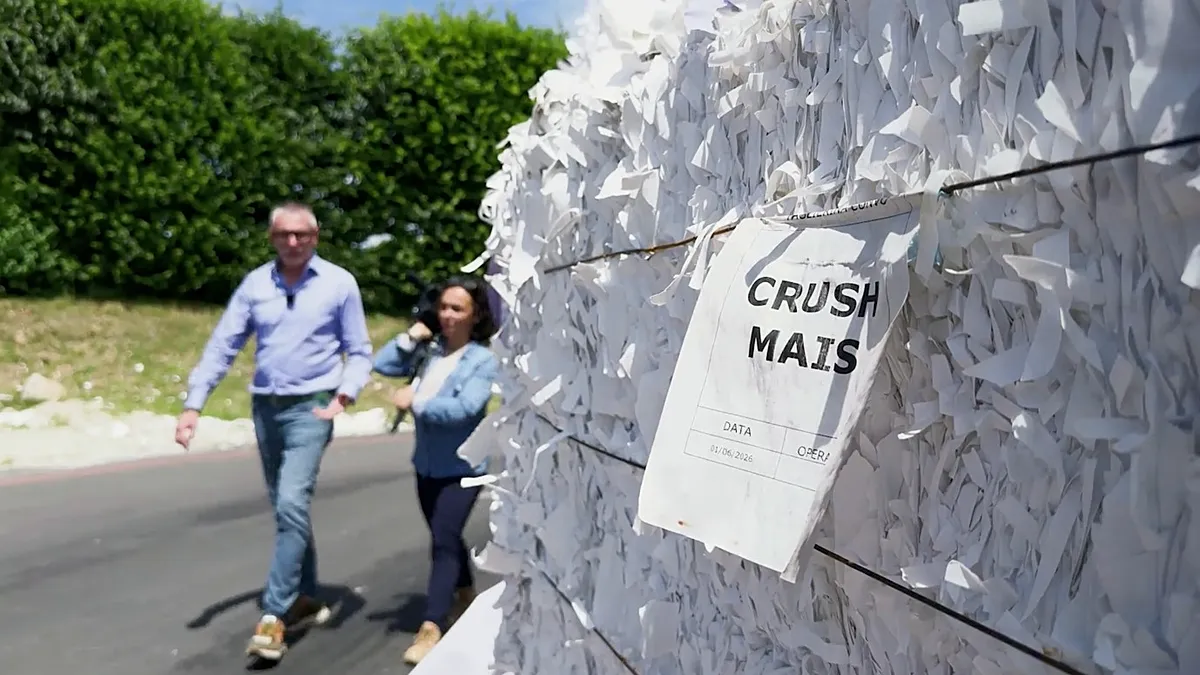
The integration of these waste materials has allowed Favini to produce a range of luxury papers, tote bags, and packaging solutions. Marketing Manager Michele Posocco explains the significance of this shift: “Our Crush collection, made from 14 distinct waste types, exemplifies how waste can be upcycled into high-value products. Each material has its own story, and we strive to highlight the craftsmanship behind every item.” This attention to detail and material diversity has helped the company gain a foothold in Europe’s competitive market, where consumers increasingly prioritize ethical and sustainable choices.
Collaborations and Growth
Collaborations have been instrumental in expanding Favini’s reach and impact. A dozen Italian and international firms now supply their waste to the mill, including Dersut, a Veneto-based coffee roaster. The coffee industry’s byproduct—silverskin—has been particularly valuable, as it was recently validated for use in papermaking. “We’ve always collected silverskin for its role in soil enhancement, but the University of Padua’s research in 2022 confirmed its potential in luxury paper production,” notes Lara Caballini di Sassoferrato, the company’s CEO. This partnership has not only boosted Favini’s offerings but also elevated Dersut’s status as a sustainable company.
“Our collaboration with the University of Padua was a turning point,” says Lara Caballini di Sassoferrato. “It showed that waste materials, like silverskin, can be more than just discarded remnants—they can be the key to a greener future. This synergy between companies is essential for creating a circular economy that benefits both the environment and the market.”
Market Demand and Future Prospects
The growing demand for luxury paper made in Italy is evident in the company’s expanding operations. With 10% of Favini’s annual turnover now dedicated to sustainable products, the market is responding positively to its eco-conscious approach. Customers across Europe are increasingly choosing these materials for their premium quality and environmental benefits, making Favini a model for other producers. As the company continues to refine its processes, it aims to increase the percentage of waste-based materials used in its production, further reducing reliance on virgin wood pulp.
Looking ahead, Favini is committed to pushing the boundaries of innovation. Its long-time collaborator, DUEGI Packaging, has seen a 300% surge in purchases from the mill, underscoring the strong market demand for sustainable luxury paper made in Italy. “Clients are not only drawn to the artisanal quality but also to the industrial scale at which Favini can meet their needs,” says Gabriele Rostellato, Production Manager at DUEGI. This partnership highlights the potential for luxury paper made in Italy to scale sustainably while maintaining its distinctive character. As more companies join the movement, the future of paper production in Italy appears both promising and green.