NATO must become more European to reduce reliance on US security, von der Leyen and Rutte say
NATO needs to become more European to reduce US security reliance NATO must become more European to reduce - At the NATO summit held in Ankara, Turkey, on

NATO needs to become more European to reduce US security reliance
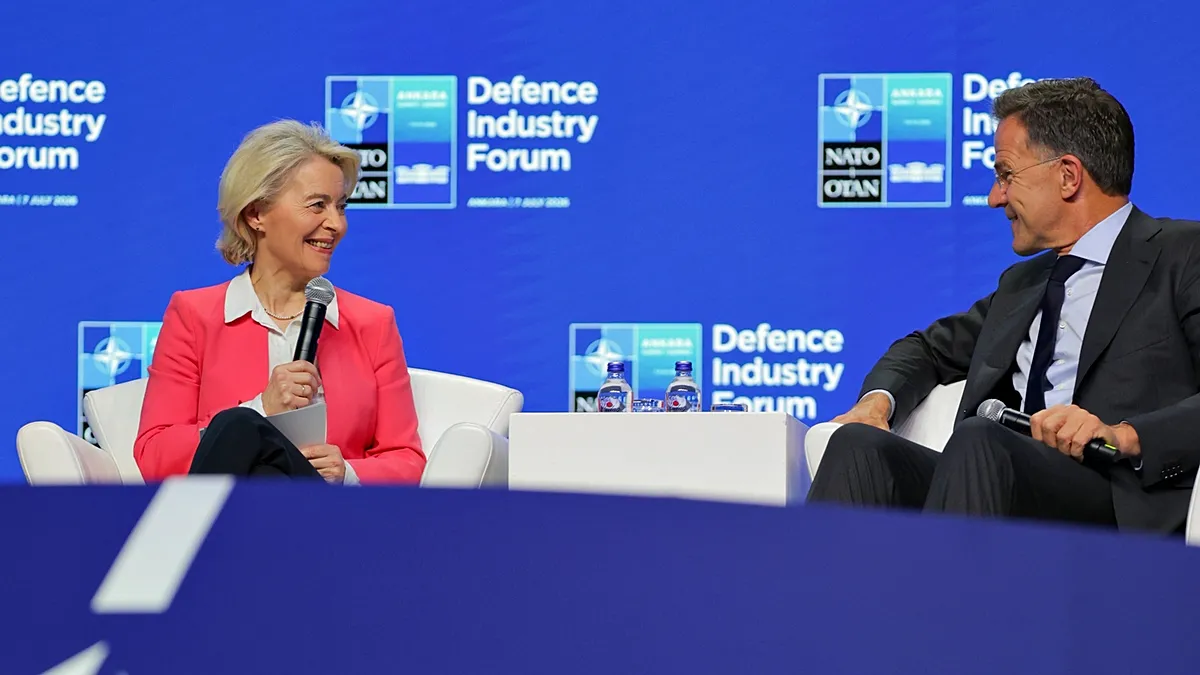
Poinews.com – At the NATO summit held in Ankara, Turkey, on July 7, 2026, European Commission President Ursula von der Leyen and Dutch Prime Minister Mark Rutte called for a transformative shift in the alliance’s structure. Their argument centers on the need for NATO to embrace a stronger European identity, reducing its long-term dependence on US military leadership and resources. This push for a more European NATO reflects growing concerns about the balance of power within the transatlantic alliance and the evolving priorities of European nations.
The Case for European Leadership in NATO
Von der Leyen and Rutte emphasized that while NATO remains a vital alliance, its current framework places disproportionate authority in American hands. “We both recognize the significance of close cooperation between the European Union and NATO,” von der Leyen stated during an industrial forum. “Yet, for this to happen, interoperability is essential.” Their vision involves a clearer division of labor: NATO would focus on command structures and military operations, while the EU takes the lead in driving defense innovation, investment, and industrial capacity. This approach aims to ensure that European nations have greater autonomy in shaping the alliance’s strategic direction.
Strategic Rationale and Geopolitical Context
The call for a more European NATO comes amid escalating tensions between the US and European allies. These tensions were fueled by Washington’s decision to launch airstrikes against Iran and its gradual withdrawal of military assets from European countries. Rutte highlighted that these actions have prompted European leaders to prioritize self-sufficiency in defense. “A stronger Europe within a stronger NATO is what we need now,” he said, underscoring the importance of balancing transatlantic ties with increased European autonomy. The summit marked a pivotal moment in redefining the alliance’s priorities to align with European interests.
Europe’s push for a more European NATO is not just about reducing reliance on the US but also about countering emerging threats. Rutte pointed to Russia’s aggressive military posturing, noting that its alliances with North Korea, Iran, and China present a persistent challenge. “Russia has now placed its entire economy on a war footing,” he explained. “From the car industry to energy sectors, everything is geared toward supporting its military efforts.” This reality has intensified the urgency for Europe to bolster its own defense capabilities, ensuring it can act independently when necessary.
The summit’s discussions also focused on the practical steps required to achieve a more European NATO. Von der Leyen outlined financial initiatives, including a €150 billion SAFE loan program and €135 billion allocated in the upcoming EU budget to enhance domestic defense infrastructure. These investments are intended to create jobs, foster research, and drive technological innovation across Europe. Rutte added that increasing defense industrial capacity on both sides of the Atlantic is crucial for sustaining long-term security. “We must also ramp up production in Europe, Canada, and the US,” he noted, emphasizing the need for a unified front against global threats.
Despite these efforts, progress remains uneven. While countries like Poland, the Baltic states, and Nordic nations have significantly raised their defense budgets to meet the 5% GDP target, others such as Spain, Belgium, Luxembourg, and the Czech Republic have lagged. Rutte criticized this disparity, urging greater unity among European states. “A huge increase in defense investment is needed across all member countries,” he stated, warning that inconsistent spending could undermine NATO’s effectiveness. This disparity highlights the challenges in achieving a truly European NATO, even as leaders advocate for its transformation.
The Europeanisation of NATO is seen as a strategic move to ensure the alliance reflects the collective will of its members. By prioritizing European leadership and capabilities, the initiative aims to create a more resilient and self-reliant security architecture. As von der Leyen and Rutte’s vision gains traction, the question remains: can a more European NATO become a reality, or will transatlantic partnerships continue to dominate the alliance’s direction? The answers will shape the future of European security in the years to come.