Police fire water cannon at demonstrators as Belfast anti-immigration protests continue
Police Fire Water Cannons as Belfast Anti-Immigration Protests Intensify Police fire water cannon at demonstrators - In a dramatic escalation of tensions

Police Fire Water Cannons as Belfast Anti-Immigration Protests Intensify
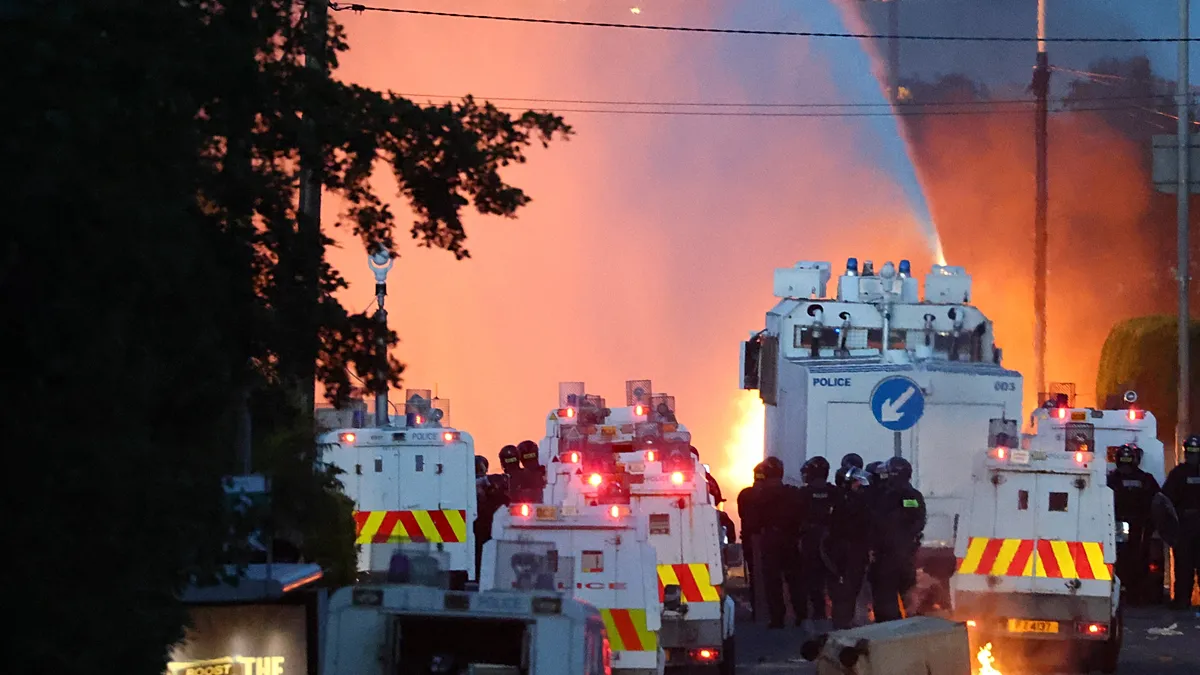
Poinews.com – In a dramatic escalation of tensions, Northern Ireland police deployed water cannons to quell anti-immigration demonstrators in Belfast, marking a significant moment in the ongoing wave of protests that have gripped the region. The focus keyword, *police fire water cannon at demonstrators*, encapsulates the immediate action taken by law enforcement to manage the unrest, which has been fueled by growing concerns over immigration and its perceived impact on local communities. The use of high-pressure water devices, typically reserved for large-scale demonstrations, underscored the severity of the situation as clashes between protesters and officers continued into the third day of the demonstrations.
Background of the Belfast Protests
The protests in Belfast are part of a broader movement that has gained momentum in recent months, driven by fears of increased immigration and its economic and social effects. While the immediate trigger for Tuesday’s violence was a knife attack that left a 33-year-old man critically injured, the underlying frustrations of the community have been building for weeks. Anti-immigration groups have accused local authorities of failing to address rising numbers of immigrants, particularly from Eastern European countries, and have called for stricter border controls and policies to protect jobs and public services. This incident, however, has brought the protests into sharp focus, with critics arguing that the use of force by police has exacerbated tensions rather than eased them.
Details of the Knife Attack and Its Aftermath
The violent knife assault, captured on video and shared widely across social media platforms, ignited a wave of anger among protesters. The footage showed a man, later identified as Hadi Alodid, a 30-year-old Sudanese immigrant, attacking Stephen Ogilvie, a local resident, with a sharp blade. Ogilvie suffered severe eye injuries and lacerations to his face and back, prompting a hospitalization that has since drawn attention to the human cost of the protests. The incident has also sparked debates about the role of immigrants in the region, with some arguing that the attack was a result of racial tensions, while others view it as an isolated event used to fuel broader xenophobic sentiments.
“There is no excuse for the violence and arson we witnessed in Belfast last night,” British Prime Minister Keir Starmer wrote on X. “We must allow police to carry out their duties without interference.” The statement reflects the government’s stance on maintaining public order, even as critics question the proportionality of the response. Starmer’s remarks were echoed by local officials, who emphasized the need for swift action to prevent further chaos and protect property from being damaged.
Following the attack, police in Belfast intensified their efforts to control the protests, employing water cannons to disperse crowds and prevent escalation. The tactic, which involves spraying high-pressure water to create a barrier between protesters and officers, has been both praised and criticized. Supporters argue it is necessary to maintain safety and order, while opponents claim it risks harming innocent bystanders. The use of water cannons also highlighted the growing divide between protesters and law enforcement, with some demonstrators calling for more aggressive measures, such as tear gas or rubber bullets, to suppress the crowds.
Broader Implications for the Region
The protests have spread beyond Belfast, with similar demonstrations reported in Glasgow and other parts of the UK. In Glasgow, clashes between anti-immigration protesters and police resulted in two officers sustaining injuries, demonstrating the nationwide nature of the unrest. The incidents have raised questions about the effectiveness of current immigration policies and the potential for public discontent to spill over into other cities. Analysts suggest that the protests are a response to a combination of economic pressures, cultural anxieties, and political polarization, with many participants expressing frustration over the perceived lack of support for local workers in sectors such as healthcare and hospitality.
As the demonstrations continue, the focus keyword *police fire water cannon at demonstrators* has become a recurring point of discussion in both media and public discourse. The image of officers using water cannons has been widely circulated, with some portraying it as a symbol of state control, while others see it as a necessary measure to safeguard public safety. The situation in Belfast has also drawn comparisons to previous protests in the UK, such as those in 2023, when similar tactics were used to manage demonstrations in London and Manchester. However, the current unrest appears to be more deeply rooted in long-standing concerns about immigration, with some activists linking the violence to broader political movements advocating for tighter border policies.
With the protests showing no signs of abating, the role of the police in managing the crisis has come under scrutiny. While the deployment of water cannons has been effective in dispersing crowds, it has also sparked debates about the balance between security and civil liberties. The use of such force has raised questions about the potential for over-policing in minority communities, with some arguing that the protests are a legitimate expression of public sentiment rather than a threat to order. As the situation evolves, it remains to be seen whether the government’s response will help calm tensions or further deepen the divide between residents and immigrants in Northern Ireland.