Polish and Ukrainian officials meet in Warsaw as tensions mount over ‘UPA’ military unit naming row
n Officials Meet in Warsaw Amid UPA Naming Tensions Polish and Ukrainian officials meet in Warsaw this weekend, as historical disputes over the naming of

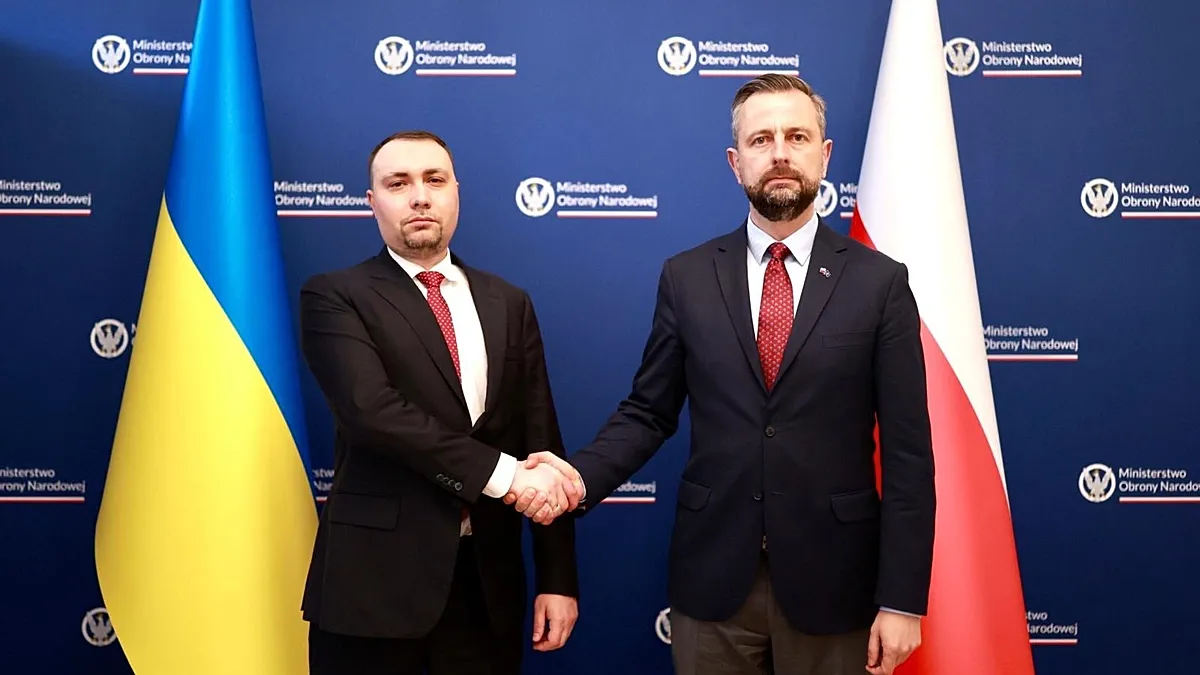
Polish and Ukrainian Officials Meet in Warsaw Amid UPA Naming Tensions
Poinews.com – Polish and Ukrainian officials meet in Warsaw this weekend, as historical disputes over the naming of Ukraine’s military unit as the ‘UPA’ intensify. Deputy Prime Minister and Defence Minister Władysław Kosiniak-Kamysz held talks with Kyrylo Budanov, head of Ukraine’s presidential office, in the Polish capital. The meeting followed President Volodymyr Zelenskyy’s decision to rename a unit as the ‘Heroes of the UPA,’ a move that has sparked controversy in Warsaw over its implications for shared history. Kosiniak-Kamysz reiterated Poland’s position in a social media post, emphasizing:
“Polish and Ukrainian officials meet to address historical sensitivities, ensuring accuracy in how the past is remembered.”
He stressed that the Volhynia tragedy, which saw the UPA’s involvement in the mass killing of Poles during World War II, remains a central point of contention.
Historical Context and Bilateral Tensions
The UPA, or Ukrainian Insurgent Army, has long been a symbol of resistance in Ukraine’s fight for independence. However, Poland views the group as responsible for the Volhynia massacre, a campaign that resulted in the deaths of between 100,000 and 120,000 Polish civilians between 1943 and 1945. The naming of Ukraine’s military unit after the UPA has reignited debates about how the conflict is framed, with Polish officials arguing it overlooks the suffering of Poles. In contrast, Ukrainian leaders highlight the UPA’s role in battling both Nazi and Soviet forces, framing the designation as an act of historical pride and recognition.
Polish and Ukrainian officials meet regularly to navigate such issues, but the recent naming decision has placed renewed pressure on their relationship. President Karol Nawrocki, who has been critical of the UPA’s legacy, announced plans to revoke the Order of the White Eagle from Zelenskyy, Poland’s highest civilian honor. This action reflects his belief that the UPA’s actions during the war were a provocation against Polish civilians. Meanwhile, Zelenskyy defended the move, stating it was meant to honor Ukraine’s military heritage and reassert its independence from Soviet rule. “Polish and Ukrainian officials meet to reinforce unity, even as historical narratives diverge,” he said in a press briefing.
Ukraine’s Foreign Minister Andrii Sybiha has called for continued dialogue, urging both sides to avoid further escalation. “Polish and Ukrainian officials meet to bridge gaps, not deepen divisions,” Sybiha emphasized during a joint press conference. He pointed to recent efforts, such as the restoration of Volhynia’s historical sites and the reopening of archives, as positive steps toward reconciliation. Sybiha also noted that the unit’s name was proposed by Ukrainian soldiers, who see it as a tribute to their wartime legacy. “The UPA is more than a military organization—it is a symbol of national struggle,” he argued.
Strategic Implications for EU Relations
Polish and Ukrainian officials meet in Warsaw not only to resolve historical disputes but also to strengthen their strategic partnership within the European Union. The meeting comes as Ukraine seeks to secure closer ties with Poland, a key ally in its defense against Russia’s invasion. Poland’s Prime Minister Donald Tusk acknowledged the tension but called for diplomatic resolution. “Polish and Ukrainian officials meet to ensure our cooperation remains robust,” Tusk stated, highlighting the importance of mutual trust in political and military matters.
Despite the disagreement over the UPA’s legacy, the alliance between Poland and Ukraine has remained strong in recent years. The renaming of the unit, however, has raised concerns about how history is taught and remembered in both countries. Polish historians, including those at the Institute of National Remembrance, continue to advocate for the UPA’s role in the Volhynia massacre to be acknowledged. In contrast, Ukrainian academics argue that the UPA’s actions must be viewed in the broader context of wartime survival and resistance. “Polish and Ukrainian officials meet to discuss the past, but the future of our partnership depends on mutual understanding,” said Budanov, underscoring the delicate balance between historical truth and political unity.
The debate over the UPA’s legacy has become a focal point in Polish-Ukrainian relations, with both sides seeking to assert their narratives. While the naming of the military unit is a symbolic gesture for Ukraine, it has triggered a backlash in Poland, where the Volhynia tragedy is often cited as a defining moment of national trauma. As Polish and Ukrainian officials meet, the challenge remains to find common ground without compromising either nation’s historical perspective. This balancing act will be crucial in maintaining the alliance as Ukraine continues its efforts to gain international recognition for its wartime struggle and defend its sovereignty against Russian aggression.