Russia, Venezuela and Trump’s oil push: the EU’s awkward G20 energy summit
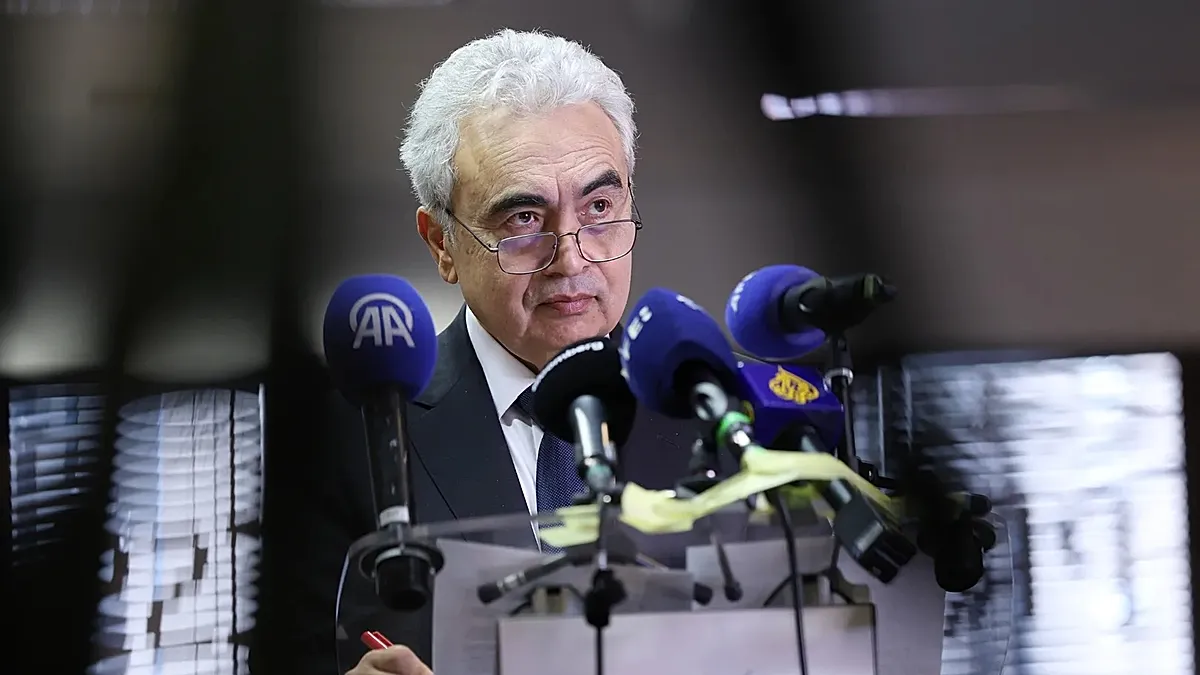
European Union Energy Commissioner Dan Jørgensen is heading to Houston this week for a G20 meeting that will put sharply conflicting visions of energy

Table of Contents
EU faces a difficult energy debate at Houston G20 meeting
Poinews.com – European Union Energy Commissioner Dan Jørgensen is heading to Houston this week for a G20 meeting that will put sharply conflicting visions of energy security on display. The ministerial gathering, held from 14 to 16 September under the United States’ G20 presidency, brings together an EU delegation focused on cutting fossil-fuel dependence with a US administration advocating greater oil, gas and electricity production.
The political setting is particularly sensitive. Russian and Venezuelan representatives are expected to attend alongside officials from major economies, leaving Brussels to make its case for clean energy and strategic autonomy while sharing a forum with countries central to wider geopolitical disputes over oil, gas and war.
Competing definitions of energy security
Washington has framed the Houston meeting around “energy abundance.” Its approach prioritises higher supplies of oil and gas, more power generation and the removal of environmental rules seen as slowing investment. The administration has also announced plans to unwind US carbon-emissions restrictions affecting coal- and gas-fired power plants.
For the EU, the route to lasting energy security looks very different. Brussels is seeking to reduce exposure to imported fossil fuels through electrification, renewable generation, stronger grids, improved energy efficiency and other domestic sources of supply. The argument is that reliance on globally traded oil and gas can leave consumers and economies vulnerable to volatile prices and external pressure.
Jørgensen has consistently presented energy independence as both an economic objective and a security issue. A more electrified economy, supplied increasingly by European renewable capacity, is central to that strategy. But that message may face resistance at a gathering designed to promote a production-led model.
US Interior Secretary Doug Burgum, who is attending in Houston, has criticised previous G20 energy ministerials as forums focused on “climate extremism” and on limiting energy output. He has instead stressed the link between supply, affordability and resilience.
“If you want to talk about affordability, this is actually a conference where we’re talking about increasing supply and increasing security,” Burgum told reporters.
The disagreement is not merely technical. It reflects different assessments of what makes energy systems dependable in the long term. The US position places particular weight on abundant domestic fossil-fuel production, while the EU sees a faster shift away from those fuels as protection against import dependence and market shocks.
Russia’s presence adds to the diplomatic strain
Russia’s expected participation will make the meeting more uncomfortable for the European side. Moscow remains a G20 member, even as its war against Ukraine continues and the EU works to eliminate its remaining exposure to Russian fossil fuels.
The White House recently confirmed that a Russian official would take part, although it did not identify the delegate. Energy Minister Sergey Tsivilyov is seen as the likely representative. It is not clear whether EU officials received advance notice of the late participation decision, and the European Commission had not responded to questions on the issue.
A Commission official, speaking anonymously because of the sensitivity of the matter, said Jørgensen would still deliver Brussels’ position.
“For sure it’s a very uncomfortable situation, but he (Commissioner Jørgensen) will pass the EU’s message,” the official said.
The official also noted that Russia’s membership of the G20 meant the current presidency was responsible for determining participation at the meetings.
For Brussels, the challenge is especially acute because ending reliance on Russian energy has become part of its broader response to the war in Ukraine. The Houston meeting therefore places an EU commissioner in direct discussion with a Russian energy representative while the bloc continues to treat fossil-fuel dependence as a strategic liability.
Venezuela broadens the stakes
Venezuela will also take part as a guest, adding another major oil-producing country to the conversation. Its presence coincides with Washington’s efforts to deepen its energy relationship with Caracas and support a recovery in Venezuelan oil output following the ousting of former President Nicolas Maduro.
That combination of participants means the agenda is likely to extend beyond familiar debates over energy prices and supply. The meeting will bring together an administration committed to expanding fossil-fuel output, an EU seeking to speed the transition away from it, Russia’s energy sector amid an ongoing war, and Venezuela as its oil industry regains geopolitical significance.
The official G20 material presents the gathering as a chance for leading economies to agree on practical measures such as deregulation and permitting reform, arguing that such steps can unlock greater energy abundance and reinforce global resilience. Those ideas may attract support from governments that see production constraints as the primary energy risk.
Yet the EU’s position rests on a different concern: that additional dependence on fossil fuels, even from friendly suppliers, can perpetuate exposure to unpredictable international markets. That leaves Jørgensen with the task of defending climate policy and clean-energy investment in a room where the political momentum is likely to favour oil, gas and regulatory rollback.
A test of Europe’s energy strategy
The Houston talks will offer a clear test of how successfully the EU can maintain its energy-transition agenda in an increasingly divided international environment. Brussels does not reject the need for secure supplies or affordable power. Its argument is that resilient energy systems should be built by reducing fossil-fuel imports, modernising electricity networks and expanding low-carbon domestic generation.
Washington’s presidency may instead seek to assemble support for a broader pro-production coalition. If that effort gains traction, the EU could find itself portrayed as an outlier in the G20 debate. For European policymakers, the response will be to argue that climate action, energy independence and security are not competing goals, but parts of the same long-term strategy.
Related Reading
Frequently Asked Questions
What is Russia Venezuela and Trump s oil push?
Russia Venezuela and Trump s oil push is the main topic of this guide. The article explains the context, practical details, and next steps readers should understand.
Why does Russia Venezuela and Trump s oil push matter?
Russia Venezuela and Trump s oil push matters because readers are looking for a useful answer, not just a short summary. Good content should match search intent and help them decide what to do next.