Thousands swarm the streets of Tirana in major ‘Pink Flamingo’ anti-government protests
Thousands Swarm Tirana in 'Pink Flamingo' Anti-Government Protests Thousands swarm the streets of Tirana as anti-government demonstrations intensify, marking

Thousands Swarm Tirana in ‘Pink Flamingo’ Anti-Government Protests
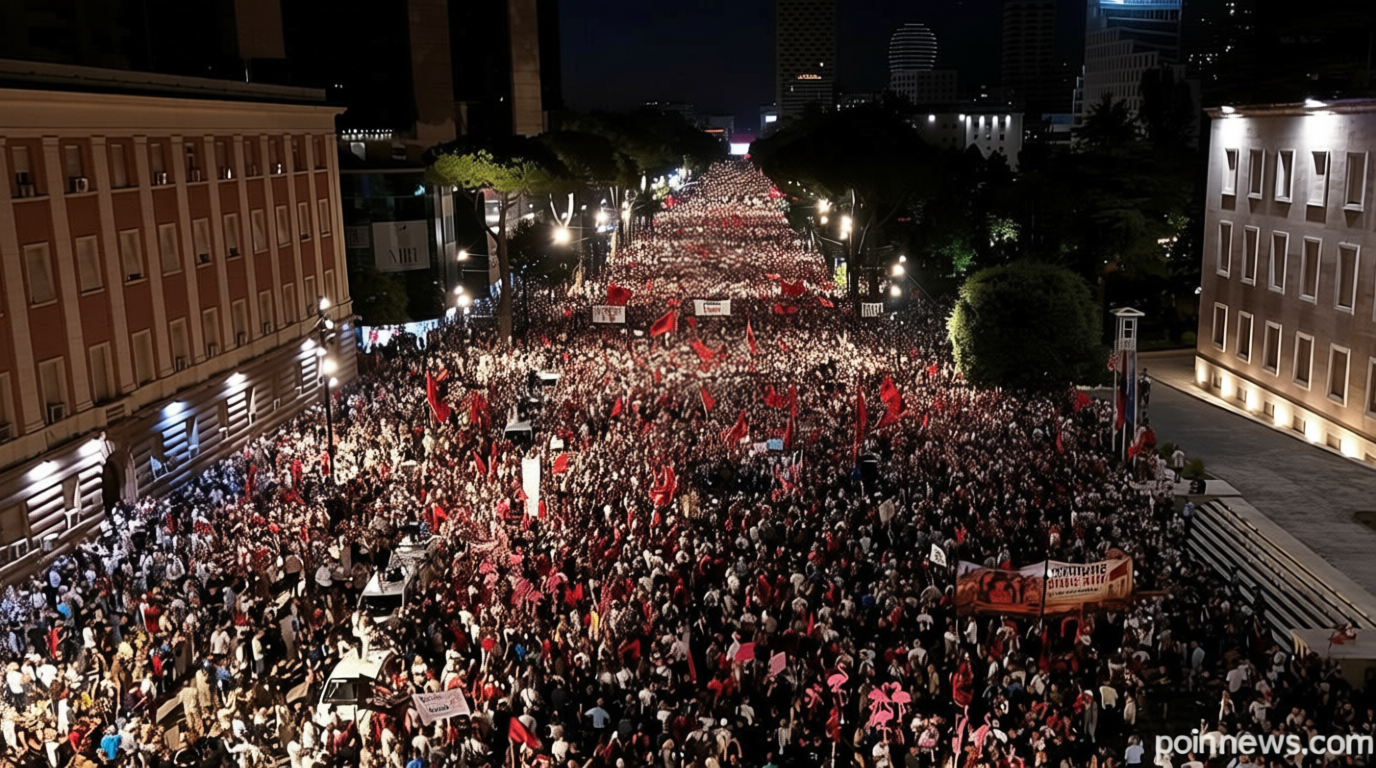
Poinews.com – Thousands swarm the streets of Tirana as anti-government demonstrations intensify, marking their 35th consecutive day of protest against a controversial tourist resort linked to the Trump family. The movement, which began in late May, has evolved from initial environmental concerns into a broader critique of political corruption. Protesters, demanding Prime Minister Edi Rama’s resignation, are united under the symbolic name ‘Pink Flamingo,’ a reference to the luxury hotel complex planned for the Adriatic Sea’s Zvërnec area. The protests have drawn widespread public support, with citizens from across Albania rallying against what they see as a government-led project that threatens both their natural heritage and national interests.
The ‘Pink Flamingo’ Symbol and Public Anger
The protests have taken on a powerful visual identity, with participants carrying giant pink flamingos to underscore the movement’s name. These symbols have become central to the demonstrations, representing not just the ecological impact of the resort but also the frustration with political opacity. One striking display involved a large concrete cake, a deliberate nod to Prime Minister Rama’s 62nd birthday and the plan to cover protected ecosystems with concrete. The gesture sparked renewed outrage, as it highlighted the perceived arrogance of the government in pushing forward with the project despite growing resistance.
“The ‘pink flamingo revolution’ has transformed into a nationwide expression of anger,” stated Alketa Ademi of the French news agency AFP. “The lack of transparency, the forced implementation – enough! The prime minister has to go.”
The slogan resonates deeply with citizens who view the resort as a symbol of elite greed and bureaucratic neglect. As the demonstrations continue, the movement has gained momentum, with participants adopting a mix of peaceful marches and more confrontational tactics. The symbolic use of pink flamingos has also attracted international media attention, amplifying the debate over Albania’s development priorities and political leadership.
Escalating Tensions and Government Response
As the protests expanded, tensions reached a boiling point with clashes between demonstrators and security forces. On Saturday, a faction of protesters marched toward the police station, where 19 individuals were detained following Thursday’s confrontations near the parliament. The group smashed windows and hurled eggs and stones at officers, while security forces retaliated with tear gas and water cannons. Demonstrators chanted “Release the kids” and waved banners reading “Albania is not for sale” and “Repeal the law on protected areas,” targeting legislation that has accelerated the resort’s development. The government has remained firm, with officials emphasizing the economic benefits of the project despite the growing unrest.
The $4.6 billion luxury hotel complex, set to be built on the former communist military base Sazan, has become a flashpoint for public discontent. Environmental groups and local activists argue that the project will destroy unique ecosystems and disrupt the natural beauty of the region. The use of barbed wire and excavators on nearby beaches in late May triggered a surge in protests, with citizens demanding a halt to the construction. The government, however, maintains that the development will boost Albania’s tourism industry and create jobs, though critics claim the benefits will be unevenly distributed.
With the protests now spanning over a month, the movement has united a diverse range of voices, from environmentalists to ordinary citizens. The symbolic nature of the demonstrations has allowed the cause to resonate beyond environmental concerns, reflecting broader frustrations with political corruption and lack of public consultation. As the protests continue, the focus remains on holding Prime Minister Rama accountable for his role in approving the project, which has become a rallying point for anti-government sentiment. The events in Tirana have also drawn comparisons to historical moments of political upheaval, reinforcing the movement’s significance in Albania’s recent history.