Italy could be the next country to build a solar railway after Switzerland’s successful trial
brace Solar Railway Innovation Italy could be the next country - As renewable energy adoption accelerates across Europe, innovative infrastructure projects

Italy Could Be the Next to Embrace Solar Railway Innovation
Poinews.com – As renewable energy adoption accelerates across Europe, innovative infrastructure projects are increasingly leveraging solar technology. With Switzerland’s pioneering solar railway trial gaining traction, Italy is emerging as a strong contender to follow suit. The project, which has demonstrated the feasibility of integrating photovoltaic panels into railway systems, marks a significant step toward sustainable energy solutions. Analysts suggest that Italy could be the next country to adopt this groundbreaking approach, offering a unique blend of geographical and infrastructural advantages.
Scaling Solar Potential Along Railway Networks
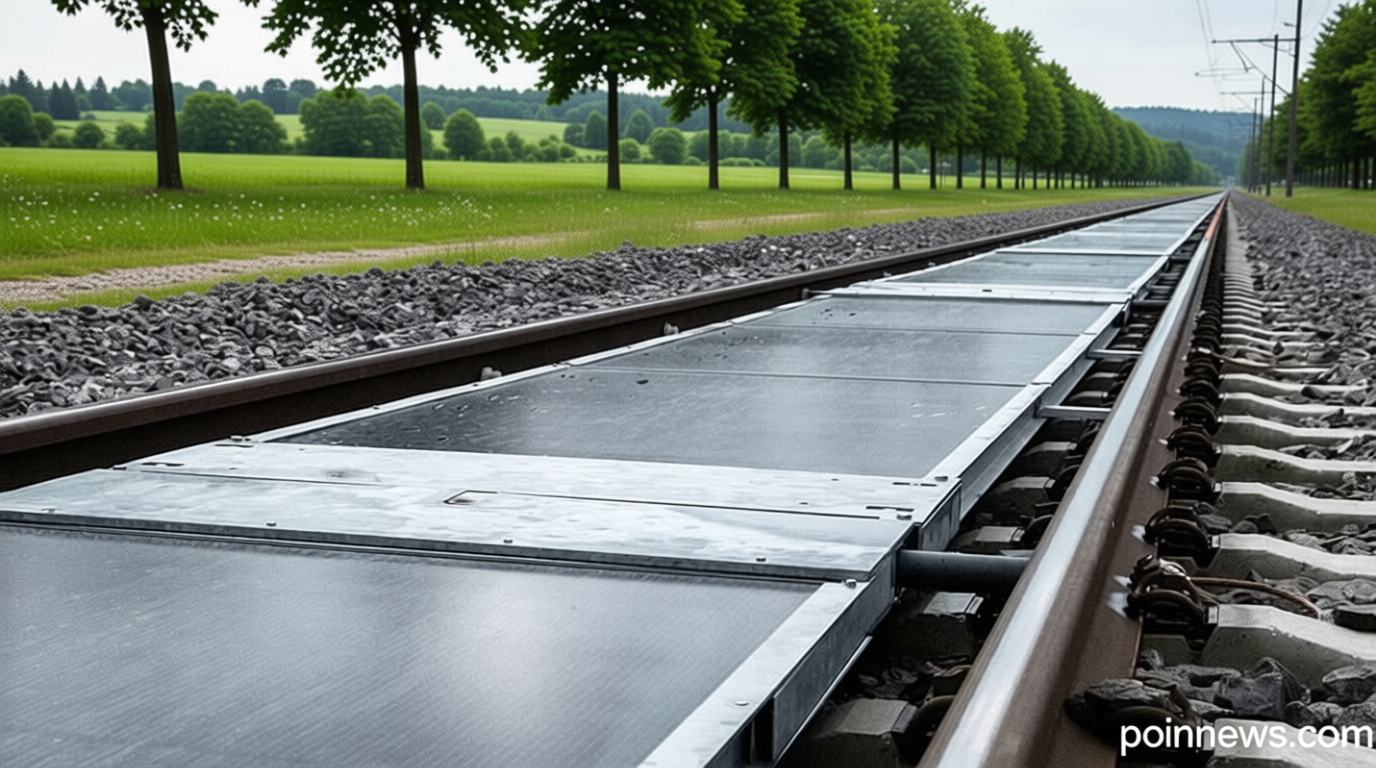
The Swiss initiative, spearheaded by a startup known as Sun-Ways, has transformed conventional railway tracks into functional solar farms. By installing photovoltaic panels between active train lines in Buttes, a village in the Val-de-Travers region, the project achieved a surprising success. Originally slated as a three-year trial, the system’s performance within a single year surpassed expectations, providing a scalable blueprint for broader implementation. This achievement highlights how Italy could be the next country to explore similar opportunities, given its extensive rail network and growing commitment to green energy.
Key to the project’s viability is its ability to harness solar power without disrupting rail operations. Sun-Ways’ design incorporates custom solar panels capable of generating 18 kWp of electricity, with the potential to meet the average energy needs of a UK household annually. The success of this model, which operates on a 100-meter segment, has sparked interest in expanding it to larger scales. For instance, covering Switzerland’s entire 5,317-kilometer railway network could yield approximately one terawatt-hour (TWh) of electricity annually, contributing to around 2% of the nation’s energy demand. This underscores how Italy could be the next country to pursue such projects, leveraging similar efficiencies.
Overcoming Challenges in Railway Solar Integration
Implementing solar technology on railway tracks requires addressing unique challenges. Early concerns included micro-cracks, fire risks, and reflections that could impair driver visibility. Sun-Ways tackled these issues by engineering panels more resilient than standard rooftop installations, integrating anti-reflection filters and real-time monitoring sensors. Additionally, the design accounts for train brushes at the end of locomotives, which help maintain panel cleanliness and ensure consistent performance. These innovations demonstrate how Italy could be the next country to adopt the technology, overcoming obstacles that once seemed insurmountable.
Following the Swiss trial, Sun-Ways has partnered with an Italian company linked to the country’s national rail infrastructure, Rete Ferroviaria Italiana. This collaboration signals a clear path toward a pilot project in Italy, which is anticipated within the next year. Similar initiatives are also being explored in South Korea, the Netherlands, China, India, and Singapore, indicating a global shift toward sustainable transportation. The widespread interest suggests that Italy could be the next country to lead this transformation, offering a replicable model for others to follow.
Environmental and Economic Implications
The solar railway initiative holds substantial environmental and economic benefits. By utilizing existing rail infrastructure, countries like Italy could be the next to generate clean energy while reducing reliance on fossil fuels. The project’s potential to meet a notable portion of energy demand—such as the 2% figure projected for Switzerland—highlights its impact on carbon reduction and energy independence. Moreover, the cost-effectiveness of this approach, compared to traditional solar farms, could accelerate its adoption in regions with extensive railway systems.
Italy’s rail network, spanning over 18,000 kilometers, presents an ideal canvas for such innovation. If the pilot project proves successful, it could catalyze a national effort to integrate solar panels into railway tracks, further boosting renewable energy capacity. This would align with Italy’s broader goals of achieving climate targets and promoting sustainable transportation. As the world looks for creative solutions to energy challenges, the country’s potential to become a leader in this field—how Italy could be the next to implement solar railways—offers a compelling case study for global adoption.
Future Prospects and Global Adoption
The success of the Swiss trial has ignited discussions about the future of railway-based solar energy. Experts estimate that if implemented nationwide, this technology could generate enough electricity to power millions of homes. Italy’s strategic position as a key player in the European Union’s energy transition makes it a prime candidate to embrace this innovation. By adopting the solar railway model, the country could be the next to set a precedent for integrating renewable energy into transportation systems, fostering a new era of sustainable infrastructure.
With advancements in solar panel durability and efficiency, the potential for widespread implementation grows. Italy could be the next country to take the lead, transforming its rail network into a vital component of its energy strategy. This shift not only addresses environmental concerns but also positions Italy as a forward-thinking nation in the global race toward decarbonization. As other countries study the Swiss model, the possibility of a solar railway revolution—where Italy could be the next to drive this change—becomes increasingly tangible.