Tributes pour in for former French PM Edouard Balladur following his death aged 97
France's political establishment gathered its condolences on Monday after the confirmation that Edouard Balladur, the former prime minister who steered the

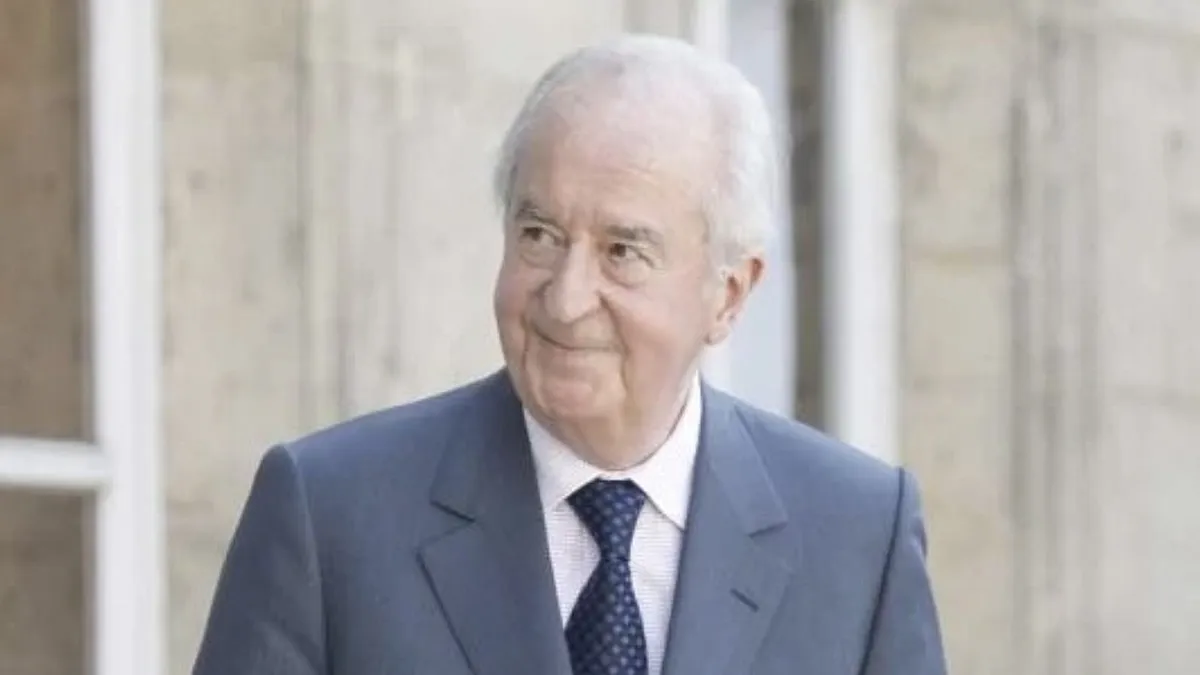
Table of Contents
Edouard Balladur, architect of France’s second cohabitation era, dies at 97
Poinews.com – France’s political establishment gathered its condolences on Monday after the confirmation that Edouard Balladur, the former prime minister who steered the country through one of its most turbulent economic periods, has passed away at the age of 97. His family announced the death to the AFP news agency, confirming that he died in Paris. A private mass service is being arranged in his honour, though no further logistical details have been released as of this writing.
Balladur’s tenure as head of government, spanning March 1993 through May 1995, placed him at the centre of what French political historians label the “second cohabitation” — an arrangement in which the president and prime minister belonged to rival parties and were forced to share executive authority. Appointed by President François Mitterrand, a Socialist, Balladur brought a centre-right, market-oriented agenda to the Élysée-adjacent corridors of power at a moment when France faced soaring unemployment, a fragile franc, and deep social unrest. His government pushed through pension reforms, deregulation measures, and a hardline stance on public-sector spending that drew both praise and fierce opposition from trade unions and the left.
Leaders pay tribute across the political spectrum
The speed and breadth of official reaction underscored Balladur’s enduring stature, even among those who had spent decades opposing his policies. President Emmanuel Macron took to social media shortly after news of the death broke, framing Balladur not as a partisan figure but as an institution of the Republic itself.
“I honor his memory and extend my thoughts to his family and loved ones,” Macron wrote, describing the late politician as a “demanding, level-headed, and devoted public servant” who had “dedicated his life to the Fifth Republic.”
Sebastien Lecornu, the sitting prime minister, offered his own assessment, emphasising Balladur’s reformist instincts and his influence on younger generations of centre-right politicians.
“He will remain a role model for many men and women in his political circle,” Lecornu stated, calling Balladur a “statesman with a reformist spirit.”
Marine Le Pen, whose party has long occupied the space to the right of Balladur’s former camp, chose to set aside decades of electoral rivalry in a post on X. Her message struck a notably conciliatory tone, acknowledging shared democratic norms even where policy positions had diverged sharply.
“Setting aside the political disagreements we had with the man who served as Prime Minister from 1993 to 1995, today we should pay tribute to a statesman who left his mark on French public life, who consistently upheld his convictions and his vision of service to the Republic, and who always demonstrated respect for democratic debate,” she wrote.
A career forged between two continents
Balladur’s origins were unusual for a French statesman. Born in 1929 in Turkey into a family of Armenian descent, he was only five years old when his household relocated to Marseille in 1934. The move placed him squarely within the French educational pipeline, and he eventually settled in Paris to pursue studies at two of the country’s most elite institutions: Sciences Po and the École Nationale d’Administration. Graduates of those schools have filled a disproportionate share of France’s senior civil-service and ministerial posts since the postwar era, and Balladur’s passage through them positioned him for a career in high-level governance.
His early political trajectory ran alongside that of Georges Pompidou, who would himself become prime minister and then president. Balladur served as a close adviser to Pompidou during the latter’s time in office, absorbing the mechanics of executive decision-making at the highest level. That mentorship shaped his approach to governance: pragmatic, institutionally loyal, and oriented toward consensus-building within the centre-right coalition that dominated French politics from the mid-1970s through the mid-1990s.
The 1995 presidential gamble
Leaving office in May 1995, Balladur immediately launched a presidential bid, seeking to convert his reformist credentials into a national mandate. The campaign placed him in direct competition with Lionel Jospin of the Socialist Party and Jacques Chirac of the RPR. Balladur finished behind both men in the first round and exited the race, clearing the path for a Chirac-versus-Jospin runoff. Chirac went on to claim victory in the second round, inaugurating a presidency that would last until 2007.
The episode remains a touchstone in French political memory: a demonstration that even a former prime minister with a strong reform record could not translate administrative authority into electoral dominance in a fragmented centre-right field. Balladur’s subsequent decades were marked by a quieter public role, though he continued to comment on European integration, economic policy, and the functioning of the Fifth Republic’s institutions.
The private mass service now being planned for Balladur will mark the formal close of a life that spanned two world wars’ aftermath, the Algerian independence crisis, the rise of the European single market, and the consolidation of France’s postwar republican order. His family has asked for privacy during the mourning period, and no state funeral or public ceremony has been announced.
Related Reading
Frequently Asked Questions
What is Tributes pour in for former French?
Tributes pour in for former French is the main topic of this guide. The article explains the context, practical details, and next steps readers should understand.
Why does Tributes pour in for former French matter?
Tributes pour in for former French matters because readers are looking for a useful answer, not just a short summary. Good content should match search intent and help them decide what to do next.