Why the Franco-German FCAS fighter jet project failed
nco-German Collaboration on FCAS Fighter Jet Why the Franco German FCAS fighter - The Franco-German FCAS fighter jet project has come to an end, signaling a

End of Franco-German Collaboration on FCAS Fighter Jet
Poinews.com – The Franco-German FCAS fighter jet project has come to an end, signaling a major shift in European defense cooperation. Months of intense discussions and persistent challenges culminated in the withdrawal of German support, as the nation deemed it unfeasible to impose further demands on the companies involved. This decision marks the conclusion of an ambitious effort to develop a next-generation fighter jet, with France and Germany at the helm. The Future Combat Air System (FCAS) was once seen as a cornerstone of European military aviation, but its collapse underscores the complexities of balancing national ambitions with industrial collaboration.
Ambitious Vision for European Air Power
Launched in 2017 during a historic summit between French President Emmanuel Macron and German Chancellor Angela Merkel, the FCAS project aimed to redefine Europe’s air superiority. It was conceived as a joint venture to create a cutting-edge fighter jet capable of integrating with unmanned aerial vehicles and connected via a digital combat cloud. This system would enable real-time data sharing between manned and unmanned aircraft, revolutionizing battlefield operations. The FCAS was expected to feature advanced stealth technology, electronic warfare capabilities, and long-range strike systems, positioning Europe as a global leader in aerospace innovation. However, the project’s aspirations were soon tested by internal and external pressures.
The initiative’s name, Future Combat Air System, reflected its goal to unify European defense capabilities under a single framework. France envisioned a versatile platform for both conventional and nuclear operations, while Germany emphasized interoperability with NATO systems and cost efficiency. The project also involved Spain as a minority shareholder in the consortium, highlighting the broader European commitment. Yet, as the years passed, diverging priorities and logistical hurdles began to erode the partnership’s foundation. By early 2026, the French-German FCAS had become a symbol of the challenges in aligning political will with industrial execution.
Dispute Between Airbus and Dassault
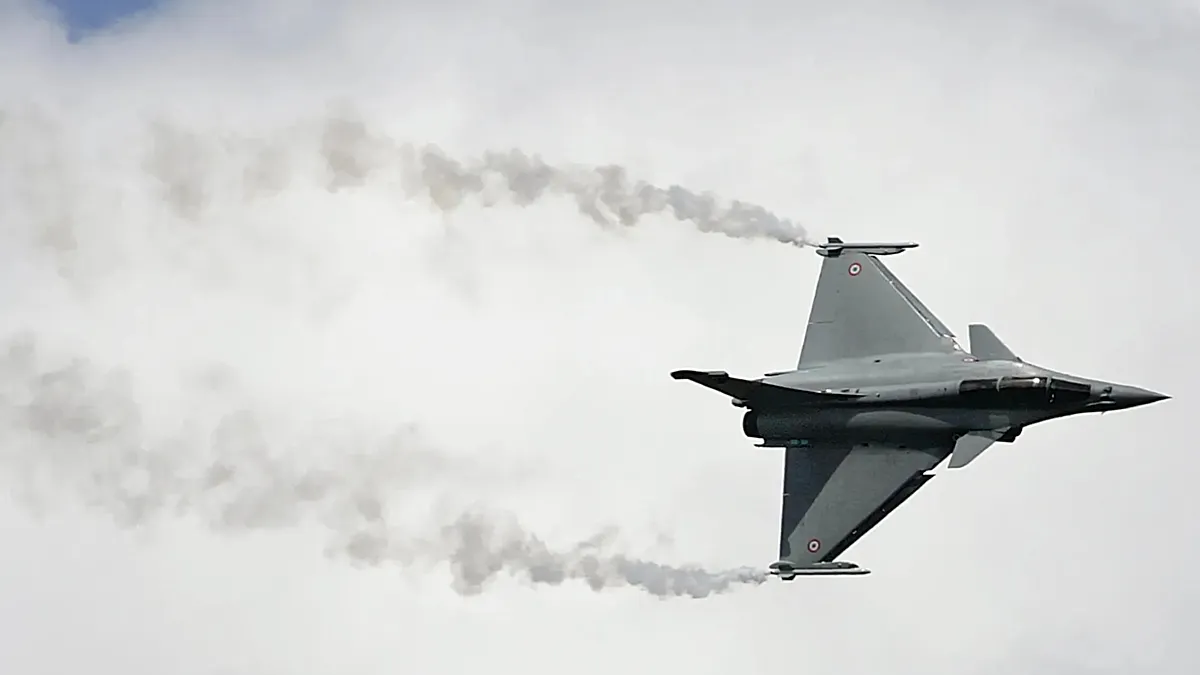
The collapse of the FCAS project was driven by escalating tensions between Airbus and Dassault Aviation, the two primary contractors. Dassault, known for its Mirage and Rafale fighter jets, was responsible for the aircraft’s development, while Airbus handled the drone component. However, disagreements over control, technology sharing, and intellectual property rights intensified. Dassault’s CEO, Éric Trappier, resisted handing over critical data and patents to Airbus, fearing a loss of competitive edge. Airbus, on the other hand, argued that a more balanced partnership was essential for the project’s scale and success.
Revenue distribution and governance also became points of contention. Dassault insisted on leading the design from “A to Z,” while Airbus pushed for joint leadership to ensure a more integrated approach. Despite repeated political interventions, including high-level meetings between French and German officials, the two companies could not reach a compromise. The Franco-German FCAS project’s failure to resolve these disputes has left a lasting mark on the European defense industry, raising questions about the future of multinational aerospace partnerships.
Diverging Military Priorities
France’s vision for the FCAS emphasized a fighter jet equipped with nuclear capabilities and designed for carrier operations, reflecting its strategic focus on autonomy and deterrence. Germany, however, prioritized cost control and compatibility with NATO standards, viewing these features as less critical. The discord came to a head in early 2026 when Airbus CEO Guillaume Faury proposed creating two distinct variants of the aircraft to address these differing needs. This suggestion, rather than easing tensions, deepened the divide, with Dassault accusing Airbus of undermining the project’s cohesion.
The debate over military priorities highlighted a broader philosophical clash. France sought a platform for strategic dominance, while Germany aimed for a more flexible, modular design. This divergence was compounded by logistical issues, such as the integration of systems and the timeline for production. As the Franco-German FCAS neared its final stages, these disagreements proved insurmountable, leading to its dissolution. The situation also raised concerns about the sustainability of large-scale European defense programs without a unified technical and financial strategy.
Despite the project’s failure, some components of the FCAS, like the digital combat cloud, will continue. This technology, designed to link drones, sensors, and AI, remains a key element of future military systems. Airbus is now exploring new alliances, with Saab AB and a British-Japanese-Italian jet program among the potential partners. The Franco-German FCAS’s legacy, though marred by its demise, has sparked discussions about the need for clearer governance and shared goals in European defense initiatives.
Legacy of the Failed Initiative
The Franco-German FCAS project’s cancellation is a significant blow to European military ambitions, but it also serves as a valuable lesson. The estimated cost of €80bn to €100bn underscores the financial risks of such