Jeff Bezos at VivaTech: We need to colonise the Moon to save Earth
Jeff Bezos at VivaTech: Humanity's Lunar Imperative Jeff Bezos at VivaTech - At the recent VivaTech conference in Paris, Jeff Bezos once again brought his

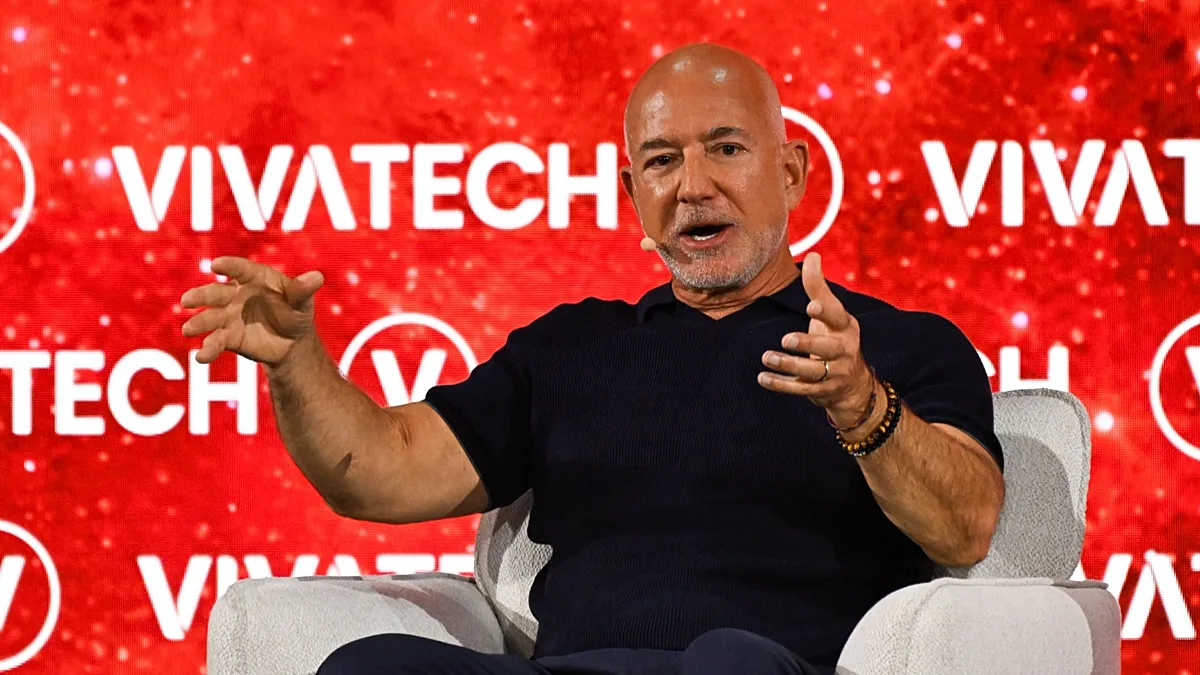
Jeff Bezos at VivaTech: Humanity’s Lunar Imperative
Poinews.com – At the recent VivaTech conference in Paris, Jeff Bezos once again brought his visionary perspective to the forefront, highlighting the urgent need for humanity to establish a presence on the Moon. Speaking as a keynote speaker at the event, Bezos emphasized that lunar colonization is not merely an ambitious goal, but a survival strategy for our planet. He argued that as Earth faces mounting environmental crises, shifting industrial activities to the Moon offers a sustainable solution. This vision was shared alongside Dave Limp, the CEO of Blue Origin, and was discussed in a panel moderated by former NASA astronaut Mike Massimino. The conversation underscored the growing belief that space exploration is integral to Earth’s future, with Bezos framing the Moon as the first step toward a thriving interplanetary civilization.
The Case for Lunar Settlement
Bezos presented a compelling argument for lunar settlements, asserting that the Moon can serve as a refuge and a hub for innovation. He stated, “Our planet can be returned to a state it held before the age of machines,” a phrase that resonates deeply with the challenges of industrial pollution, climate change, and resource depletion. By moving heavy industry off-world, he believes Earth can be restored to its natural balance, preserving ecosystems and biodiversity. The Moon, according to Bezos, is an ideal starting point due to its gravitational pull, which is significantly weaker than Earth’s, and its proximity—just a three-and-a-half-day journey from our planet. This makes it a strategic base for expanding human presence beyond Earth, with the ultimate goal of establishing permanent habitats on Mars and beyond.
“When you skip steps, it actually doesn’t make you faster. It’s a kind of a gift. It’s so near Earth.”
Bezos further explained that the Moon’s resources, such as water ice and regolith, are essential for sustaining long-term human missions. These materials can be used to create liquid oxygen for propulsion systems and to produce building blocks for extraterrestrial structures. By developing infrastructure on the Moon, humanity can lay the groundwork for future exploration, reducing the logistical hurdles of traveling to Mars. He also stressed the importance of establishing a lunar economy, where industries can thrive without the constraints of Earth’s environment. This approach, he argued, would not only alleviate pressure on Earth but also accelerate technological advancements in space.
Reassessing the Apollo Legacy
Bezos took the opportunity to reflect on the Apollo program, which he described as a pioneering but temporary milestone in human space exploration. He noted that the Apollo missions, driven by geopolitical competition with the Soviet Union, were a product of their time, relying on a 4.5% allocation of the U.S. federal budget. While these missions achieved historic feats, they were not designed for long-term habitation. In contrast,