Greece: Civil Aviation Authority reports fewer flight delays recorded in June
ts HCAA Greece - In a recent update, Greece’s Civil Aviation Authority (HCAA) reported a notable decline in flight delays during June 2026, marking a positive

Greece: Fewer Flight Delays in June, Reports HCAA
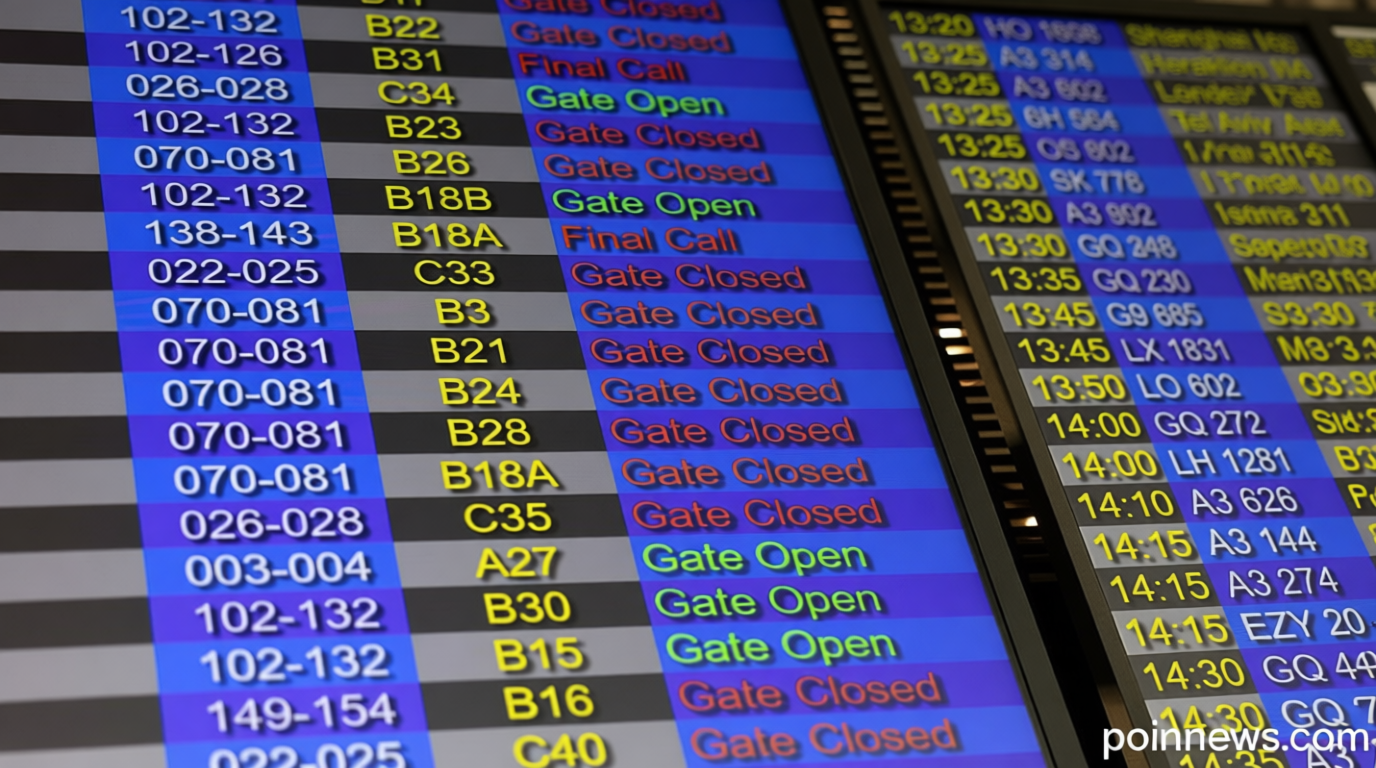
Poinews.com – Greece – In a recent update, Greece’s Civil Aviation Authority (HCAA) reported a notable decline in flight delays during June 2026, marking a positive shift in the country’s aviation landscape. While Eurocontrol data initially indicated a 63% rise in delays compared to the previous year, the HCAA clarified that the final week of June saw Greece contributing to only 13% of all European air transport network delays. This development comes as demand for air travel continues to grow, underscoring the agency’s efforts to maintain smooth operations across Greek airspace and airports.
Operational Efforts and Traffic Trends
Despite the overall increase in delays across Europe, the HCAA highlighted that Greek airports managed to reduce their contribution to the regional network’s disruptions. The agency noted that flight activity on July 4, 2026, surpassed the peak levels of 2025, which were recorded on August 10. This surge in demand has prompted the HCAA to intensify its focus on optimizing airspace management and coordinating with European aviation authorities to mitigate bottlenecks.
“The data primarily reflect delays related to air traffic flow management (ATFM) across the broader European network. These delays are real and have increased, as is also the case for other European providers, primarily due to seasonal demand and geopolitical developments that have altered flight patterns in the wider region.”
As Greece’s aviation sector navigates rising traffic, the HCAA emphasized that its strategies have helped stabilize the situation. By implementing dynamic scheduling and enhancing communication with Eurocontrol, the authority aims to balance the growing number of flights with the capacity of Greece’s airspace infrastructure. These measures are critical in ensuring that delays remain manageable for both airlines and passengers.
Delays at Key Greek Airports
The HCAA provided detailed insights into the performance of Greece’s major airports. At the Athens–Macedonia Area Control Centre (KEPATHM), the average delay per flight in June 2026 was 2.26 minutes, down from 1.62 minutes in the same period the previous year. When excluding weather-related disruptions, the average delay dropped further to 0.97 minutes, compared to 0.85 minutes in June 2025. This improvement signals a more efficient management of air traffic in the region.
At Athens International Airport, the average delay per flight attributed to air traffic was 4.43 minutes in June 2026, a significant decrease from 6.50 minutes in June 2025. Total delays across the airport also fell by 31.77% during this period. The HCAA attributed this progress to enhanced coordination between air traffic control and airlines, as well as the implementation of new technologies to streamline operations. These results highlight Greece’s commitment to reducing delays, even as it accommodates increased travel demand.
“While the broader European network faces challenges, Greece’s operational impact remains more limited than the impression created by focusing solely on individual metrics. This demonstrates the effectiveness of our targeted interventions.”
The reduction in delays has been welcomed by industry stakeholders, who see it as a sign of Greece’s ability to adapt to growing air traffic. However, the HCAA also acknowledged that seasonal variations and external factors such as weather or geopolitical events can still affect flight schedules. The authority plans to continue monitoring these trends and refining its strategies to ensure sustained improvements in Greece’s aviation performance.