7.8 magnitude earthquake rocks the Philippines, triggering tsunami warnings across region
pines, Spurring Tsunami Alerts in the Region 7 8 magnitude earthquake rocks the Philippines - A 7.8-magnitude earthquake rocks the Philippines, shaking the

7 8 Magnitude Earthquake Rocks the Philippines, Spurring Tsunami Alerts in the Region
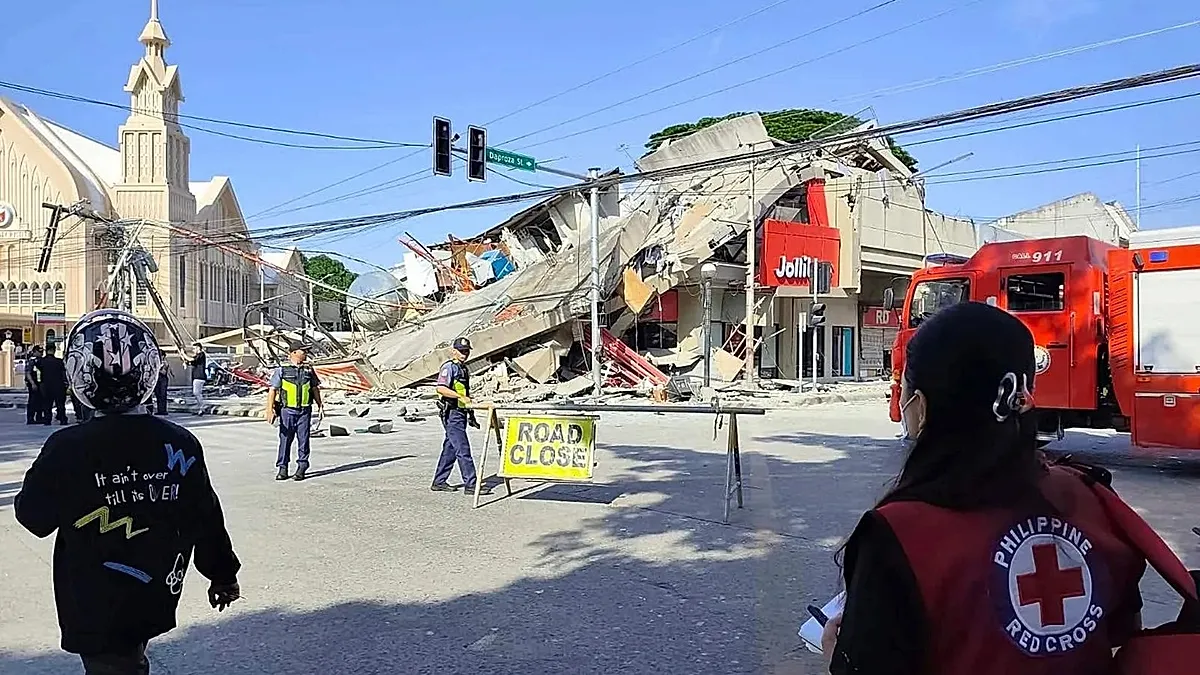
Poinews.com – A 7.8-magnitude earthquake rocks the Philippines, shaking the southern region and causing widespread panic. The tremor, which struck near the Cotabato Trench, was recorded at a depth of 10 kilometers, according to the U.S. Geological Survey (USGS). Initial reports from General Santos City, a major tuna-processing hub, indicated at least 15 fatalities and significant damage to infrastructure, with hundreds of buildings collapsing in the area. The quake occurred approximately 24 kilometers west of Sarangani province in Mindanao, a region already prone to seismic activity due to its location along the Pacific “Ring of Fire.”
Immediate Impact and Casualty Reports
“As of now, there is one reported death and four injured. This is only an initial report,” said Master Sergeant Robert Dagon of General Santos City police. “Many buildings were affected, but I cannot enumerate them now because we are busy with ongoing rescues,” he added. The devastation was particularly severe in the coastal areas of Sultan Kudarat and Sarangani provinces, where 1-meter waves were observed, raising concerns about potential tsunamis. The USGS estimated the earthquake’s epicenter to be 13 kilometers southwest of General Santos, near the Cotabato Trench, which is known for frequent tremors.
Local officials and emergency services worked tirelessly to assess the damage and rescue survivors. The Philippine Institute of Volcanology and Seismology (PHIVOLCS) confirmed that the earthquake’s intensity was felt across several provinces, with shaking lasting for several minutes. Residents in low-lying areas were urged to evacuate, while schools and businesses were temporarily closed to ensure safety. The event highlights the vulnerability of the Philippines to large-scale seismic events, especially in regions with high population density.
Tsunami Warnings Across the Pacific
The 7.8-magnitude earthquake rocks the Philippines triggered tsunami warnings in multiple Pacific nations, including Indonesia, Palau, Papua New Guinea, Taiwan, and the Philippines itself. The Pacific Tsunami Warning Center (PTWC) issued alerts, warning that waves of up to 3 meters could reach parts of the Philippines within the next three hours. In response, Philippine President Ferdinand Marcos directed the suspension of school classes in Mindanao and ordered coastal residents to move to higher ground. “Your life is more important than anything left behind,” he emphasized, urging swift action to minimize casualties.
Japan and Malaysia also issued advisories, with the Japanese authorities anticipating waves of up to one meter by 11:30am local time. In Sabah state, Malaysia, smaller sea changes were possible, but the risk to Hawaii was deemed low after the advisory for Guam was later lifted. The PTWC closely monitored the situation, using data from seismological sensors to update the public on the likelihood of a tsunami. While no major waves were confirmed, the warnings served as a reminder of the interconnected nature of seismic events in the Pacific region.
Following the initial shock, aftershocks with magnitudes up to 6.5 were recorded, further destabilizing the area. These tremors added to the challenges of rescue operations and infrastructure recovery. Experts noted that the 7.8-magnitude earthquake rocks the Philippines is one of the strongest to hit the region in recent years, underscoring the need for improved disaster preparedness. The Philippines has a history of experiencing powerful quakes, with previous events in October claiming at least eight lives and causing extensive damage.
Residents in the affected provinces reported panic and confusion as the tremors rattled their homes. Many described feeling the earthquake for over a minute, with some experiencing prolonged vibrations. The coastal communities, particularly those near the epicenter, were the most vulnerable, as the potential for tsunamis heightened their anxiety. Local media outlets provided real-time updates, while social media platforms buzzed with reports of damaged homes and displaced families. The event has sparked discussions about the resilience of infrastructure and emergency response systems in earthquake-prone regions.
As the situation stabilizes, officials continue to monitor the aftermath. The focus keyword “7 8 magnitude earthquake rocks” is central to understanding the scale of this disaster. The Philippines’ location on the Ring of Fire makes it a frequent target for seismic activity, but the strength of this particular quake has drawn international attention. Scientists are analyzing the data to determine if the event could lead to further seismic activity or if the region is now in a safer phase. For now, the priority remains on rescue efforts, recovery, and ensuring public safety in the wake of the 7.8-magnitude earthquake rocks the Philippines.