FIFA chief Gianni Infantino to stand for re-election
The man who has steered world football's central authority since 2016 is preparing to put his leadership on the ballot once again. Gianni Infantino will

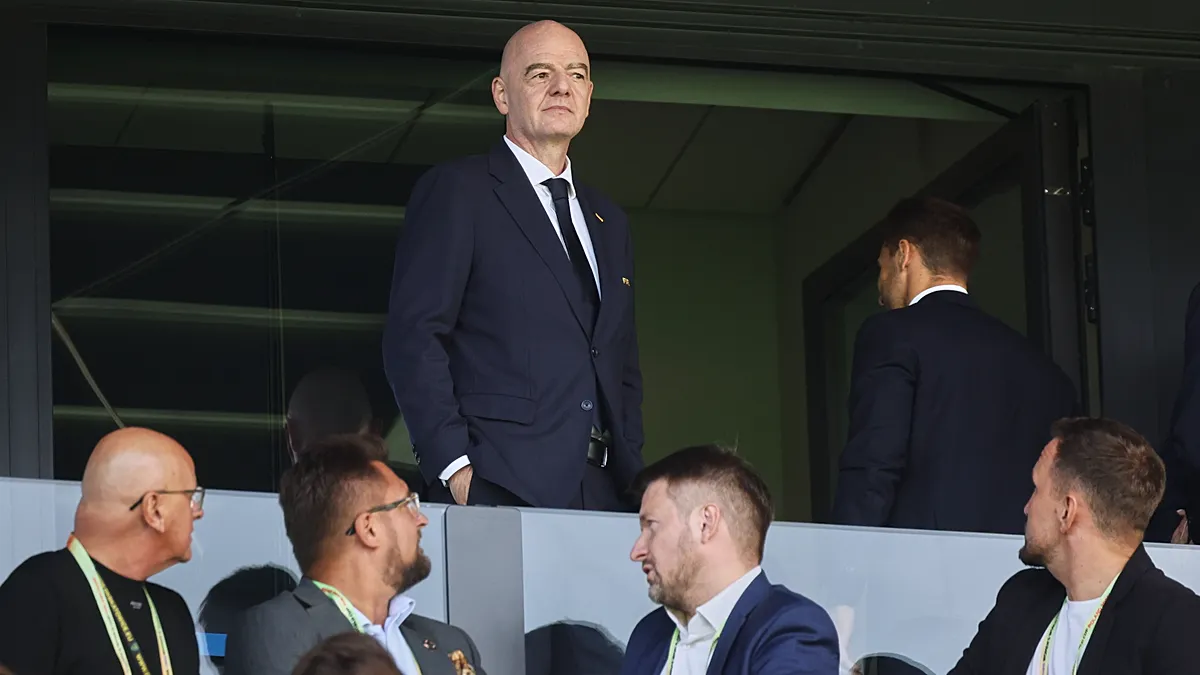
Table of Contents
Infantino to Seek Second Term as FIFA President at March 2027 Congress
Poinews.com – The man who has steered world football’s central authority since 2016 is preparing to put his leadership on the ballot once again. Gianni Infantino will contest the FIFA presidential election scheduled for 18 March 2027, when the 77th FIFA Congress convenes in Rabat, Morocco. The confirmation, relayed through an official statement from the organisation, closes a period of intense internal turbulence that briefly threatened to fracture the global football establishment over whether its chief executive should remain in office.
The statement issued by FIFA’s communications desk was brief and categorical:
“The Fifa president announced in April that he will stand for re-election in 2027. Of course, nothing has changed. Mr Infantino will be standing for re-election.”
A Near-Death Blow: The FIFA Forward Enterprise Fiasco
Infantino’s path to a second term was anything but smooth. In late July of this year, the governing body unveiled a commercial strategy known as the FIFA Forward Enterprise, or FFE. Under the scheme, outside investors would have been permitted to acquire equity stakes in a newly created subsidiary tasked with managing FIFA’s commercial assets. The announcement landed like a shockwave across the sport’s ecosystem. National federations, continental confederations, players’ unions, and fan groups reacted with alarm, many framing the proposal as an attempt to commodify and effectively “sell” football’s institutional identity to private capital.
The backlash was swift and severe. Within weeks, a visible schism had opened between Infantino’s supporters and his detractors. Several regional confederations and individual member associations publicly questioned whether the president should continue to lead the organisation. The controversy escalated to the point where European nations signalled a willingness to boycott FIFA-sanctioned competitions unless the FFE plan was abandoned.
UEFA, the European confederation, ultimately walked back that boycott threat after receiving what it described as formal guarantees from FIFA’s leadership. The European body confirmed it had obtained assurances that the commercial-venture proposal had been
“irrevocably and permanently withdrawn” and that it “will not re-appear in any other shape, construction, name or form.”
Yet the episode left lasting scars. UEFA continued, even after the plan’s scrapping, to press for Infantino’s departure from the presidency, arguing that the episode exposed a governance culture at FIFA’s apex that needed fundamental restructuring. The episode also complicated Infantino’s standing with smaller federations that had felt excluded from the decision-making process behind the FFE announcement.
The Vancouver Pledge
Infantino himself addressed the membership directly earlier this year at the 76th FIFA Congress, held in Vancouver, Canada. Speaking before delegates representing the organisation’s full membership, he made his candidacy explicit and framed it as a continuation of a decade-long project rather than a fresh start.
“I want to tell you first – the 211 (FIFA) Member Associations – that I will be (a) candidate for the election of FIFA President next year,” he told the assembled delegates. “Thank you for your support over the last 10 years, your support today, your work, your progress, your love for the game, your commitment, and your passion.”
The choice of venue and timing was notable. Vancouver, a city with deep roots in international sport governance, provided a neutral backdrop for a message that Infantino clearly intended as both a declaration of intent and a plea for continued loyalty from the membership base that had carried him through the FFE storm.
What the Election Means for Global Football
FIFA’s presidential election is not a simple popularity contest. The 211 member associations vote through a congress mechanism in which continental confederations carry significant bloc weight. A candidate’s ability to secure endorsements from UEFA, CAF, AFC, CONCACAF, CONMEBOL, and OFC shapes the arithmetic of the ballot. Infantino’s first election in 2016 saw him defeat former UEFA president Michel Platini in a contest that was itself marred by allegations of procedural irregularity. A second-term bid in 2027 will be judged against a very different backdrop: a post-FFE governance environment in which questions about transparency, commercial independence, and the balance of power between FIFA’s headquarters in Zurich and its member bodies remain unresolved.
The Rabat congress, set for Thursday, 18 March 2027, will therefore serve not merely as a formality of re-confirmation but as a referendum on how the sport’s central institution manages its commercial ambitions without alienating the federations that constitute its membership. Infantino’s opponents will likely argue that the FFE episode demonstrated a pattern of top-down decision-making incompatible with the collaborative model FIFA claims to uphold. His allies will counter that the plan was withdrawn precisely because the organisation listened, and that the president’s willingness to reverse course is evidence of accountability rather than weakness.
For the 211 member associations, the coming months will be defined by coalition-building, back-channel negotiations, and the quiet arithmetic of conference votes. Whatever the outcome in Rabat, the episode of 2026’s FFE controversy will remain the defining stress test of Infantino’s first decade in office — and the lens through which delegates will weigh whether a second term serves the sport’s interests or entrenches the very tendencies that nearly split it apart.
Related Reading
Frequently Asked Questions
What is FIFA chief Gianni Infantino to stand?
FIFA chief Gianni Infantino to stand is the main topic of this guide. The article explains the context, practical details, and next steps readers should understand.
Why does FIFA chief Gianni Infantino to stand matter?
FIFA chief Gianni Infantino to stand matters because readers are looking for a useful answer, not just a short summary. Good content should match search intent and help them decide what to do next.