How neutral should Switzerland be? Voters deliver decisive verdict
Swiss voters have delivered a clear rejection of plans that would have imposed stricter constitutional limits on the country’s traditional neutrality. In

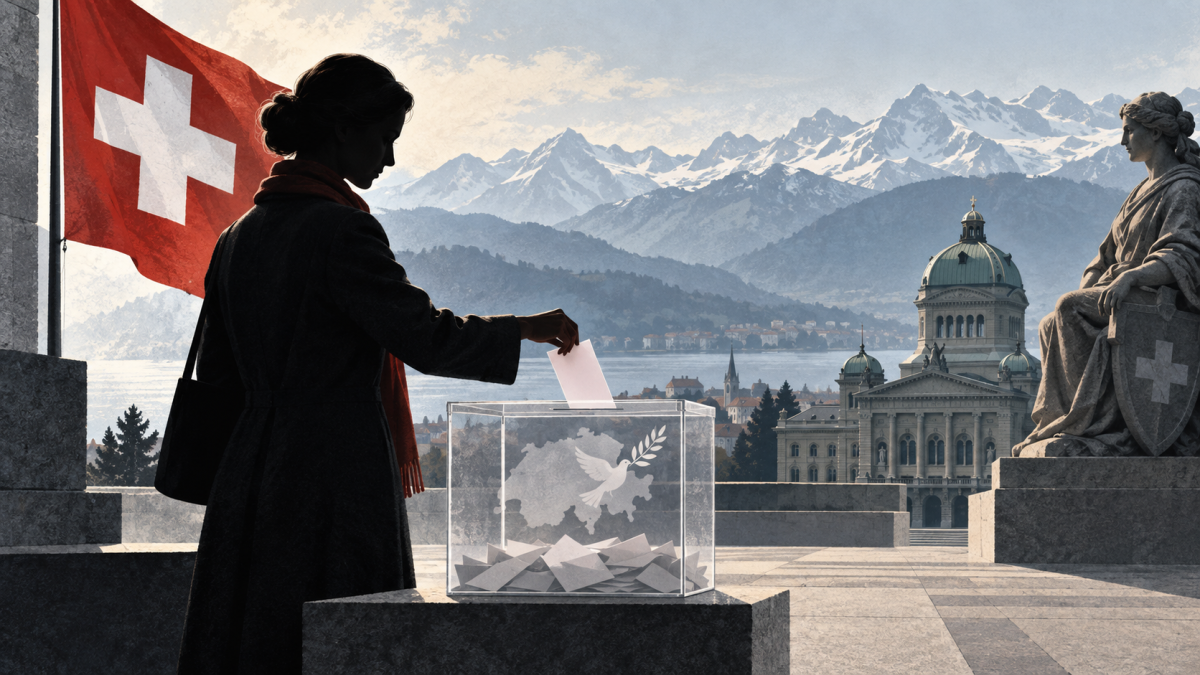
Table of Contents
Swiss voters reject tighter neutrality rules in nationwide referendum
Poinews.com – Swiss voters have delivered a clear rejection of plans that would have imposed stricter constitutional limits on the country’s traditional neutrality. In Sunday’s referendum, roughly 70% of voters opposed the proposal, which failed in each of Switzerland’s 26 cantons.
The vote focused on how Switzerland should apply neutrality in an increasingly unsettled international environment. While the country remains outside military alliances, the defeated initiative would have narrowed the government’s room to act on foreign-policy measures, especially economic sanctions.
Sanctions at the centre of the debate
The proposal would have allowed Switzerland to impose sanctions on another country only when the United Nations had authorised them. In practice, that condition could have prevented Switzerland from adopting measures against Russia, because Moscow has a veto as one of the five permanent members of the UN Security Council.
Switzerland has imposed sanctions connected to Russia’s full-scale war against Ukraine, aligning in significant areas with European Union measures. The referendum therefore became a wider test of whether Swiss neutrality should be defined more rigidly or continue to allow flexibility when the government believes international law requires action.
Its supporters argued that Switzerland had moved too closely toward the EU and NATO in the years since the invasion of Ukraine. The campaign was led by the far-right Swiss People’s Party, known as the SVP, and prominently backed by Christoph Blocher, the 85-year-old billionaire and longstanding force within the party.
Campaign material for the measure, described as the “neutrality initiative,” used the slogan “No to war.” Blocher devoted substantial resources to the effort, spending 3.8 million Swiss francs. The contribution was described as the largest ever made by one person to a Swiss referendum campaign.
Government says neutrality remains intact
Foreign Minister Ignazio Cassis stressed after the result that voters had not turned away from neutrality as a national principle. Instead, they had declined to adopt a version that critics believed would limit Switzerland’s ability to respond to international crises.
“This result is not a vote against neutrality,” Swiss Foreign Minister Ignazio Cassis said at a press conference on Sunday as the referendum results were announced.
“Switzerland was neutral yesterday, it will be neutral today and it will remain neutral,” he stressed.
The federal government supports what it calls “cooperative neutrality.” Under that approach, Switzerland avoids military alignment while preserving the option to introduce sanctions when officials consider them necessary in defence of international law.
That distinction has become particularly important since the war in Ukraine intensified European security concerns. Switzerland is not a member of NATO, but Defence Minister Martin Pfister has advocated closer cooperation with the alliance. The rejected initiative would have set much tighter boundaries on military links with NATO, permitting cooperation only when a military attack appeared imminent.
Critics warn of rigid constitutional limits
Opponents of the measure argued that permanently fixing such a narrow definition in the constitution would make it harder for Switzerland to adapt its response to changing circumstances. They said the country could be left unable to take action against an aggressor even when military non-alignment remained unchanged.
“The initiative would have set neutrality in stone and would no longer have allowed an adequate response to a given situation,” argued said Susanne Vincenz-Stauffacher, a member of the Swiss National Council, referring to Russia’s war against Ukraine.
“At the end of the day you are not neutral but on the aggressor’s side,” she said.
Marianne Binder, a Centre Party member of the Council of States representing Aargau, was equally critical of Blocher’s campaign.
“Blocher has completely lost his way here,” said Marianne Binder, a Centre Party member of the Council of States representing Aargau.
The proposal had sought to establish “perpetual and armed neutrality” in the Swiss constitution. Its defeat does not signal declining public attachment to neutrality itself. An opinion survey cited during the debate found that 82% of respondents still supported Switzerland remaining neutral.
A familiar question in Swiss democracy
Neutrality has been central to Switzerland’s political identity for generations, but its practical meaning has never been entirely fixed. The country has long avoided joining military alliances, yet it also participates in international diplomacy and faces repeated questions over how to respond when major powers violate international norms.
Sunday’s vote suggests that a large majority of voters want to retain the principle without accepting constitutional restrictions that could limit future governments’ diplomatic and economic choices. The outcome preserves the present framework, leaving elected officials with discretion over sanctions and security cooperation while keeping Switzerland militarily non-aligned.
The neutrality referendum was one item in a wider national and local voting day. Switzerland’s direct-democracy system gives citizens frequent opportunities to decide on legislation, constitutional changes and policy proposals, with nationwide ballots commonly held four times annually. In this case, voters decisively chose a more flexible interpretation of a principle that remains deeply valued across the country.
Related Reading
Frequently Asked Questions
What is How neutral should Switzerland be Voters?
How neutral should Switzerland be Voters is the main topic of this guide. The article explains the context, practical details, and next steps readers should understand.
Why does How neutral should Switzerland be Voters matter?
How neutral should Switzerland be Voters matters because readers are looking for a useful answer, not just a short summary. Good content should match search intent and help them decide what to do next.