IRGC denies direct hotline with US, as Trump warns of ceasefire violations in Strait of Hormuz
IRGC Denies Direct Hotline with US Amid Hormuz Tensions IRGC denies direct hotline with US - The Islamic Revolutionary Guard Corps (IRGC) of Iran has rejected

IRGC Denies Direct Hotline with US Amid Hormuz Tensions
Poinews.com – The Islamic Revolutionary Guard Corps (IRGC) of Iran has rejected claims of a direct communication line with the United States, asserting that such a hotline does not exist. This denial comes as US President Donald Trump accused Iran of breaching a ceasefire by launching attacks on vessels in the Strait of Hormuz. The incident has reignited concerns over escalating military confrontation between the two nations, with Trump highlighting the strategic significance of the waterway in global oil trade.
Trump’s Allegations and the Ceasefire Breach
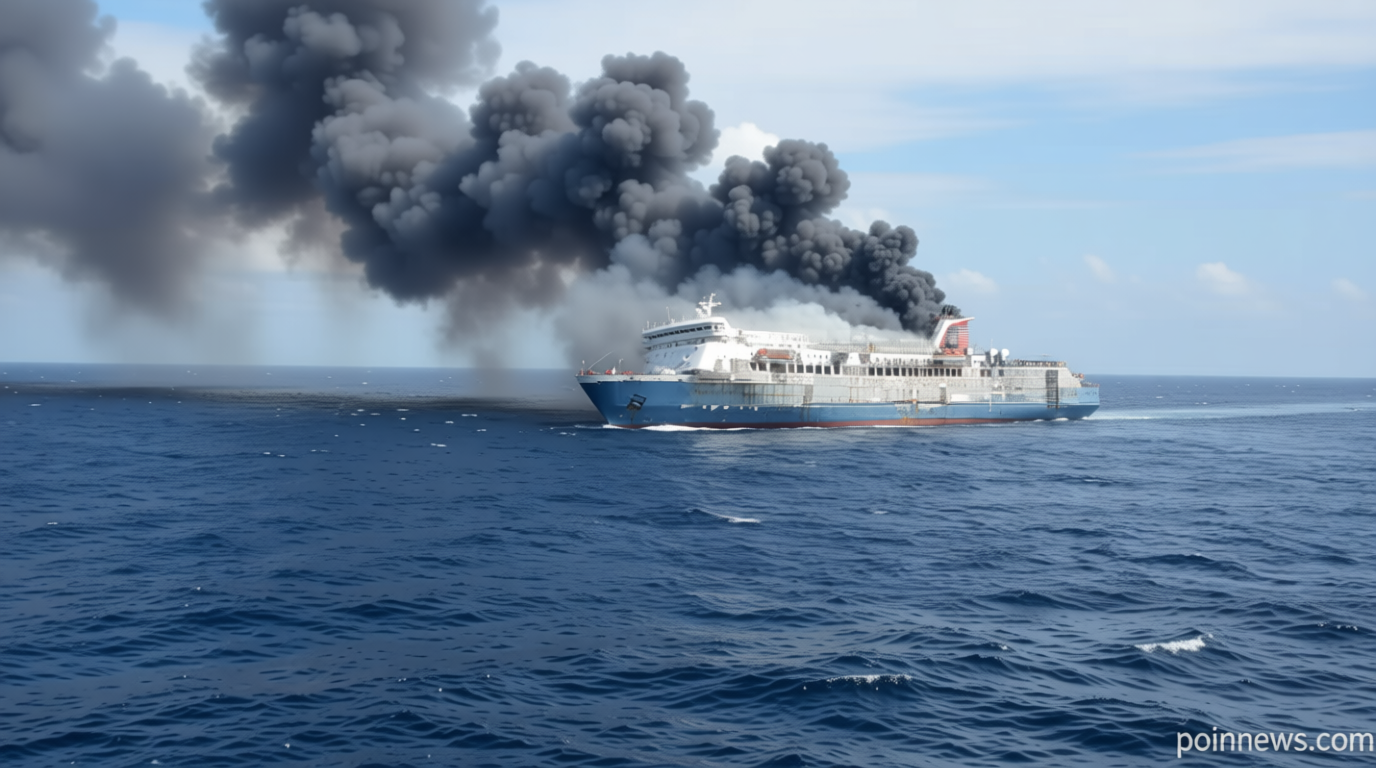
On social media, Trump reiterated his accusations that Iran had violated a ceasefire by deploying at least four suicide drones toward ships passing through the Strait of Hormuz. He claimed one drone struck a cargo vessel’s upper deck, causing damage, while the others were intercepted. “This is a foolish violation of the ceasefire agreement,” Trump wrote, framing the attack as a deliberate act of aggression aimed at destabilizing the region.
“The Islamic Republic of Iran has launched at least four one-way attack drones toward ships passing through the Strait of Hormuz,” Trump stated on Truth Social. “The ship was damaged but managed to continue its course.”
The IRGC has since distanced itself from the accusation, emphasizing that the direct hotline with the US is a myth. The group’s spokesperson, General Mohabi, called the claims “false” and insisted that Iran’s military operations are independent of any communication channels with Washington. This stance underscores the IRGC’s commitment to maintaining sovereignty in its actions.
Strategic Significance of the Strait of Hormuz
The Strait of Hormuz, a vital chokepoint for global oil transportation, has become a focal point of geopolitical tension. Over 20% of the world’s oil passes through this narrow waterway, making it a critical area for both economic and military interests. The recent drone attacks have raised alarms about the potential for a full-scale conflict, with experts warning of disruptions to international energy markets.
“The Strait of Hormuz is not just a waterway—it’s a lifeline for global energy security,” noted an analysis by the International Maritime Organisation (IMO). “Any escalation here could have far-reaching consequences for economies worldwide.”
While the IRGC denies direct contact with the US, the incident has prompted renewed scrutiny of Iran’s military capabilities and its readiness to engage in confrontations. The group has also reaffirmed its control over the region, with Mohabi stating that the Strait of Hormuz is “Iranian territory” and that any attacks there are acts of self-defense.
Diplomatic Responses to the Hotline Dispute
In response to Trump’s allegations, Iranian officials have reiterated their position that the IRGC’s actions are not influenced by direct communication with the US. The Islamic Republic’s foreign ministry emphasized that the hotline denial is part of a broader effort to assert autonomy in regional affairs. “Iran’s military decisions are made independently, without reliance on American coordination,” a statement from the ministry claimed.
“The existence of a direct hotline with the US does not affect our military posture or our right to defend our interests,” said an Iranian Foreign Ministry spokesperson. “We are prepared to act decisively to protect our sovereignty.”
Analysts suggest that the IRGC’s denial of a hotline may reflect a desire to project strength and control over its narrative. The US, meanwhile, has used the incident to reinforce its position as a key player in the region, accusing Iran of undermining diplomatic efforts to de-escalate tensions. The situation highlights the fragility of ceasefire agreements and the challenges of maintaining communication in a high-stakes geopolitical environment.
Meanwhile, the IMO reported that 115 ships and 2,500 seafarers had been evacuated from the Strait of Hormuz since Tuesday, June 23, as security concerns mounted. This evacuation reflects the international community’s growing awareness of the risks associated with the US-Iran standoff, particularly in critical shipping lanes. The IRGC’s denial of a direct hotline adds to the perception of Iran as a strategic actor operating without clear alignment with Washington.
Historical Context and Escalating Tensions
The dispute over the hotline comes amid a long-standing rivalry between the IRGC and the US, dating back to Iran’s 1979 revolution. The US has often criticized Iran’s military actions, including its naval presence in the Strait of Hormuz, while Iran has accused Washington of imposing sanctions and interfering in its regional influence. This latest incident is seen as a continuation of that dynamic, with both sides using the crisis to assert their positions.
“The US has repeatedly failed to engage in meaningful dialogue with Iran,” said a Middle East analyst. “By denying the hotline, the IRGC is signaling that it is not bound by past agreements and is ready to take a harder line.”
Recent tensions have been exacerbated by Iran’s development of advanced drone technology, which it claims is essential for defending its interests. The IRGC’s spokesperson, Mohabi, defended the use of drones as a necessary measure, stating that the attack was a “legitimate response” to perceived threats. This framing suggests that the group sees the hotline denial as a way to justify its military maneuvers without being tethered to US strategy.
Global Implications and Future Outlook
The denial of a direct hotline by the IRGC has broader implications beyond the immediate conflict. It signals a potential shift in Iran’s approach to diplomatic engagement, with the group appearing to prioritize military independence over direct negotiations with the US. Analysts warn that this could lead to a more unpredictable escalation, particularly if Iran continues to challenge US interests in the region.
As the situation unfolds, the focus keyword “IRGC denies direct hotline with US” remains central to understanding the strategic calculus at play. The US, meanwhile, is likely to use the incident to rally support for tougher measures against Iran, including increased military presence in the Persian Gulf. The IRGC’s stance on the hotline may influence how international allies perceive Iran’s commitment to ceasefire terms in the future.