Italy’s Cinque Terre coastline could be hit by 13-metre waves by 2150 as sea levels rise
Italy’s Cinque Terre Coastline Faces 13-Metre Wave Threat by 2150 Amid Rising Sea Levels Historic Coastal Region at Risk Italy s Cinque Terre coastline could

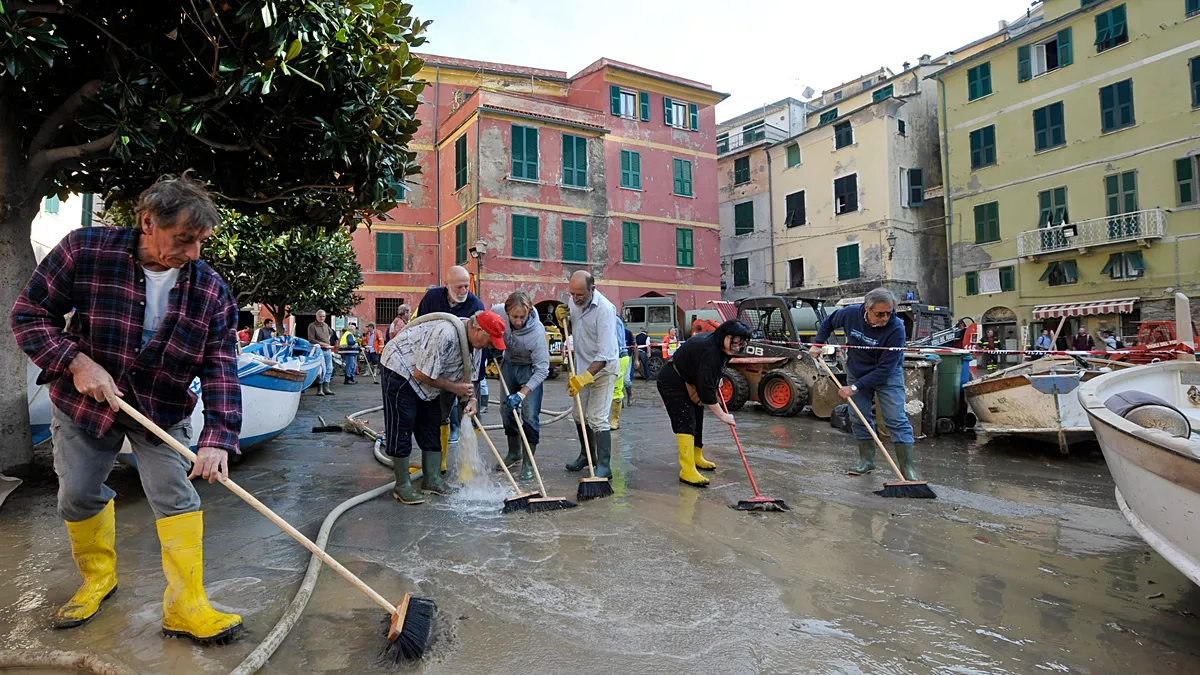
Italy’s Cinque Terre Coastline Faces 13-Metre Wave Threat by 2150 Amid Rising Sea Levels
Historic Coastal Region at Risk
Poinews.com – The Italy s Cinque Terre coastline, a UNESCO World Heritage Site renowned for its breathtaking landscapes and centuries-old villages, is under increasing pressure from climate change. This iconic stretch of land along the Ligurian Sea, characterized by its terraced hills, colorful buildings, and historic fishing ports, has drawn millions of visitors annually. However, new scientific projections reveal that by the middle of the 22nd century, this picturesque region may face extreme flooding risks, with waves as high as 13 metres threatening its fragile ecosystems and infrastructure.
Researchers warn that the combination of rising sea levels and intensified storm activity could reshape the coastline dramatically. The Cinque Terre’s unique geography—cliffs, narrow roads, and small harbors—makes it particularly vulnerable to catastrophic flooding. Local communities, which rely heavily on tourism and maritime trade, may need to adapt rapidly to these changing conditions or risk losing key parts of their cultural and economic heritage.
Sea Level Projections and Coastal Vulnerability
A recent study conducted by an international team of scientists has analyzed the potential impacts of climate change on the Cinque Terre coastline. Published in the Remote Sensing journal, the research uses data from the Intergovernmental Panel on Climate Change (IPCC) to predict a sea level rise of between 0.60 and 1.17 metres by 2150. This projection highlights how low-lying areas, such as Monterosso and Vernazza, could be submerged under water during severe weather events.
The study emphasizes a “non-stationary” trend in sea level rise, indicating that the rate of change is accelerating. In the worst-case climate scenarios, this acceleration could lead to waves exceeding 13 metres, which would not only flood coastal settlements but also disrupt the region’s vital railway systems. These trains connect the five villages of the Cinque Terre and are crucial for both residents and tourists navigating the steep terrain.
“Our research shows that small beaches and port zones are the first to face risks during extreme weather events,” said Marco Anzidei, a research director at Italy’s National Institute of Geophysics and Volcanology (INGV), and Alessandro Bosman, a senior researcher at the Institute of Environmental Geology and Geoengineering (IGAG-CNR). “The Cinque Terre’s cliffs and docks will require urgent adaptation measures to prevent irreversible damage.”
Climate Change and Regional Impacts
The Cinque Terre’s historic architecture and cliffside homes are particularly at risk from these rising waters. Coastal erosion, saltwater intrusion, and the loss of protective stone walls could compromise the structural integrity of these buildings. The region’s agricultural heritage, which includes terraced vineyards and olive groves, may also suffer as saltwater seeps into the soil, affecting crop yields and traditional farming practices.
Moreover, the tourism industry, a cornerstone of the Cinque Terre’s economy, could face significant challenges. High waves might damage visitor attractions like the famous hiking trails and coastal viewpoints, potentially deterring tourists from visiting. Local businesses, including seafood restaurants and artisan shops, could also be impacted as saltwater floods roads and docks, disrupting supply chains and daily operations.
Adaptation Strategies for the Future
Experts are calling for immediate action to safeguard the Cinque Terre coastline. One key strategy involves raising the elevation of docks and seawalls to prevent water from encroaching on coastal areas. Upgrading drainage systems and implementing green infrastructure, such as mangrove reforestation, could also help absorb excess water during storms. The Cinque Terre National Park has already launched a climate adaptation plan, focusing on preserving its natural and cultural assets through targeted interventions.
Local leaders and scientists are working together to develop sustainable solutions. Lorenzo Viviani, the park’s president, stressed the importance of community involvement: “Protecting the Italy s Cinque Terre coastline requires a multidisciplinary effort involving scientists, local leaders, and the community itself.” These collaborations are essential for creating long-term resilience against the growing threat of extreme weather and rising seas.
Global Context and Local Implications
The challenges facing the Cinque Terre are part of a broader global issue. Coastal regions worldwide are experiencing similar risks as climate change accelerates. However, the Italy s Cinque Terre coastline stands out for its unique blend of natural beauty and historical significance. The region’s UNESCO status means that its preservation is not just a local concern but a matter of international importance.
As the threat of 13-metre waves looms, the Cinque Terre’s future depends on how effectively its stakeholders can implement adaptation measures. The study’s findings serve as a wake-up call for policymakers and residents alike, urging them to prioritize coastal protection in their long-term planning. Without urgent action, the iconic villages that have drawn visitors for generations could become submerged, altering the region’s identity forever.