Macron warns student anger is being exploited as France braces for more protests
France is preparing for another day of demonstrations on Saturday 17 October as secondary school students maintain pressure through protests and school

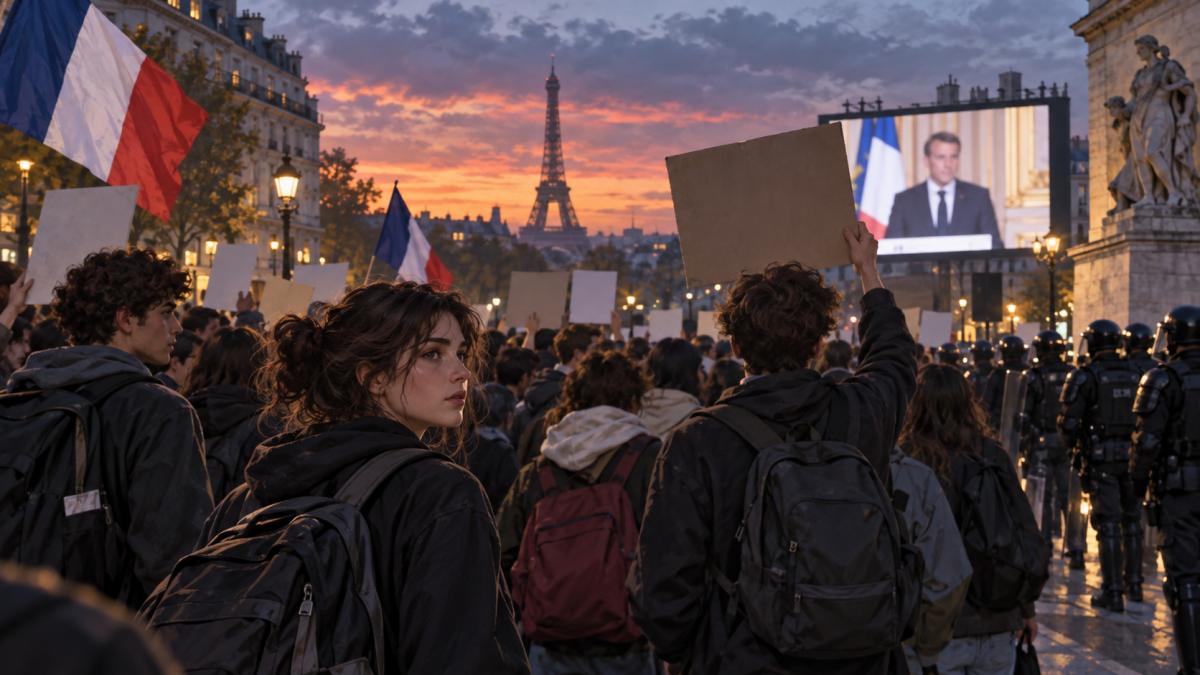
Table of Contents
France Prepares for Fresh Protests as Student Mobilisation Continues
Poinews.com – France is preparing for another day of demonstrations on Saturday 17 October as secondary school students maintain pressure through protests and school blockades across the country. While many of the actions have remained peaceful, recent episodes of violence have heightened concern among authorities and placed the student movement at the centre of an increasingly tense public debate.
The government has sought to draw a distinction between the concerns voiced by young people and the disorder that has accompanied parts of the mobilisation. Officials say students’ fears deserve to be heard, but warn that some groups are attempting to use those concerns for political purposes and to fuel urban violence.
The President of the Republic stressed that young people are expressing legitimate anxieties, but that these anxieties are being exploited politically and turned into urban violence, with scenes that are unacceptable.
The statement, delivered by government spokesperson Maud Bregeon, reflects the administration’s effort to acknowledge dissatisfaction among lycée students while also defending the security response ahead of the weekend protests.
Large number of minors detained
Since the movement began, more than 6,800 people have been taken into police custody. Minors account for 86% of those detained, underlining the scale of young people’s involvement in the demonstrations and the seriousness with which the authorities are treating the unrest.
The policing of the protests has also come under scrutiny. Thirty-six investigations have been opened by the IGPN, the police oversight body, during the same period. Those inquiries form part of the wider focus on how law-enforcement officers have handled demonstrations involving large numbers of school-age participants.
For students and families, the figures illustrate how quickly a campaign centred on education and young people’s anxieties has developed into a broader confrontation involving schools, police and government officials. Peaceful blockades may be intended as a visible form of protest, but they can also disrupt daily school life and create difficult choices for students, teachers and parents.
Government measures fail to ease frustration
In an attempt to reduce tensions, the government recently announced a package of measures for affected schools. One of its main steps was the planned deployment of 3,000 substitute teachers to selected establishments.
Students, however, have judged the response inadequate. Their reaction suggests that the dispute is not limited to an immediate shortage of staff or the practical disruption caused by demonstrations. The measures have not persuaded many participants that their underlying worries are being addressed.
That gap between the government’s response and the expectations of student protesters is likely to remain a central issue as demonstrations continue. Announcing additional staffing can offer short-term support to schools facing strain, but it does not automatically resolve the anger that has brought students into the streets and to school entrances day after day.
A Delicate Balance Ahead of Saturday
Authorities now face the challenge of allowing peaceful protest while preventing further violence. Security forces are preparing for Saturday’s mobilisation with the memory of earlier incidents still fresh. The government’s language has made clear that it sees a risk of legitimate student concerns being redirected by political actors or used to justify behaviour beyond peaceful demonstration.
At the same time, the prominence of minors in the movement makes the situation particularly sensitive. School protests involve young people who are expressing frustration in public, often for the first time, while institutions must balance their right to demonstrate with the need to safeguard them and keep schools functioning.
The coming protests will be watched closely for signs of whether tensions can be contained. A largely peaceful day could strengthen calls for dialogue and renewed attention to students’ concerns. Further clashes, by contrast, could deepen the divide between protesters and the authorities, while placing even greater emphasis on policing, accountability and the protection of minors.
For now, the student mobilisation remains active, and the government’s proposed measures have not brought it to an end. With another protest day approaching, France is confronting both an immediate security challenge and a wider question: how to respond to young people who say their anxieties require more than temporary solutions.
Related Reading
Frequently Asked Questions
What is Macron warns student anger is being?
Macron warns student anger is being is the main topic of this guide. The article explains the context, practical details, and next steps readers should understand.
Why does Macron warns student anger is being matter?
Macron warns student anger is being matters because readers are looking for a useful answer, not just a short summary. Good content should match search intent and help them decide what to do next.