Peace is possible, Aliyev tells global media forum in Shusha
Peace Remains Within Reach, Says Azerbaijan's Leader at Media Summit Peace is possible Aliyev tells global - In a landmark address at the Shusha Global Media

Peace Remains Within Reach, Says Azerbaijan’s Leader at Media Summit
Poinews.com – In a landmark address at the Shusha Global Media Forum, Azerbaijan’s President Ilham Aliyev reaffirmed the potential for peace in a world often defined by conflict. Speaking to an international audience of journalists and thought leaders on Monday, Aliyev emphasized that the path to enduring stability is not only achievable but requires collective commitment from nations and media outlets alike. His remarks underscored Azerbaijan’s proactive stance in fostering dialogue and resolving disputes through diplomatic channels, particularly in the context of the Nagorno-Karabakh region.
Azerbaijan’s Geopolitical Strategy and Infrastructure Development
Aliyev highlighted the strategic importance of Azerbaijan’s position as a vital link between Europe and Asia, noting that the nation’s infrastructure projects are critical to maintaining regional connectivity. “Our energy corridors are not just economic lifelines—they are also symbols of unity and cooperation,” he stated. The president reiterated his government’s focus on modernizing transportation networks, which he argued would bolster Azerbaijan’s role as a bridge for trade and cultural exchange. This vision aligns with his broader goal of positioning the country as a stable partner in global affairs.
Addressing the economic dimension of peace, Aliyev detailed Azerbaijan’s recent expansion of gas exports to Germany and Austria, underscoring the country’s growing influence in the European energy market. “By securing these partnerships, we are not only diversifying our trade routes but also demonstrating the tangible benefits of peace-driven policies,” he explained. The president also mentioned ongoing negotiations with additional EU nations, aiming to further solidify Azerbaijan’s economic ties and showcase its capacity to contribute to international energy security.
Combating Disinformation and Strengthening Media Trust
Aliyev stressed the media’s pivotal role in preserving peace by countering disinformation and upholding truth. “Peace is possible Aliyev tells global when the media acts as a reliable source of information, not a tool for propaganda,” he asserted. He called for media outlets to prioritize factual reporting and transparency, arguing that misinformation can destabilize even the most well-intentioned diplomatic efforts. The president also noted the importance of international collaboration in addressing disinformation, citing the need for shared standards and accountability in news dissemination.
Quoting Aliyev,
“We need long-term partnerships with Europe to scale production, as sudden withdrawal could disrupt our progress.”
He further revealed Azerbaijan’s contemplation of exiting the Council of Europe, emphasizing that the nation’s decision hinges on the restoration of its voting rights. “Our return to the organization depends on the re-establishment of fair and impartial treatment,” he said. This move, Aliyev suggested, reflects Azerbaijan’s determination to assert its sovereignty in shaping global narratives.
The Role of Media in Shaping Peace Narratives
Other forum participants echoed Aliyev’s call for media to serve as a unifying force. Sohail Mahmood, Secretary General of the D-8 Organisation for Economic Cooperation, emphasized the need for ethical reporting in conflict zones. “Credibility is central to public trust in an era of information overload,” he remarked, highlighting how media can either escalate tensions or ease them through balanced coverage. Similarly, Dr. Zaid AlNawaiseh from Jordan’s Ministry of Government Communication framed journalism as a diplomatic asset, stating, “Media serves as soft power, acting as a bridge between peoples.” His comments underscored the responsibility of journalists to not only inform but also inspire hope and understanding.
Leon Cook, founder of Atticus Partners, pointed to disinformation as a major obstacle to peace. “The media can be both a problem and a solution,” he noted. “False narratives persist, but they can also be countered with transparency.” Cook’s perspective aligned with Aliyev’s vision, suggesting that media outlets must take an active role in verifying facts and promoting dialogue. Together, these insights painted a picture of media as a critical player in shaping perceptions and fostering cooperation among nations.
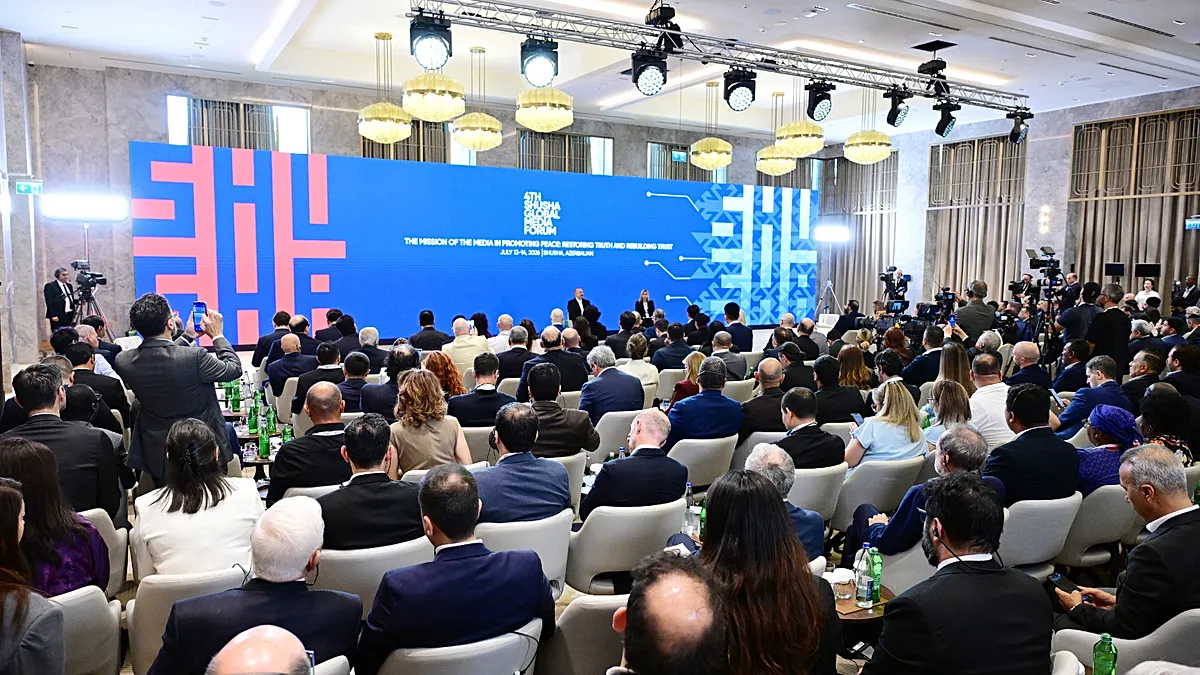
The Shusha Global Media Forum, themed “The Mission of the Media in Promoting Peace: Restoring Truth and Rebuilding Trust,” brought together over 200 participants from 40 countries. Discussions centered on the challenges of misinformation, the power of cross-border collaboration, and the potential for media to influence public opinion in conflict resolution. As the forum concluded, delegates acknowledged the shared responsibility of fostering peace through informed and responsible journalism. Aliyev’s message of “Peace is possible Aliyev tells global” resonated as a call to action, urging media professionals to prioritize truth in their reporting and support peacebuilding initiatives wherever they are needed.